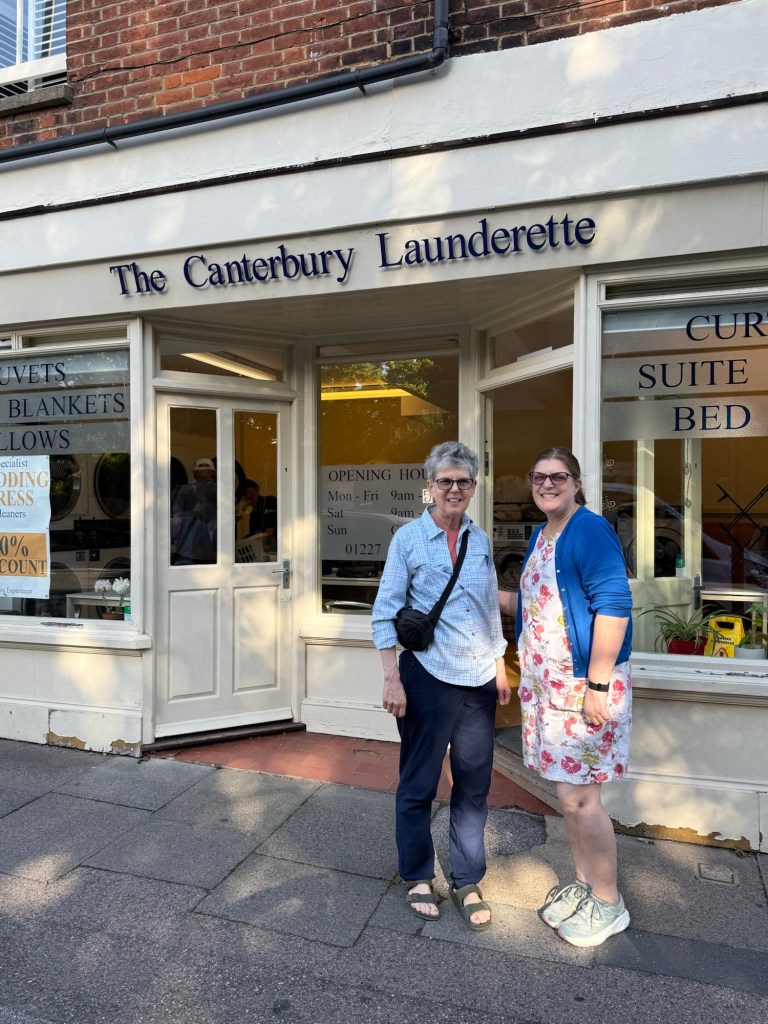
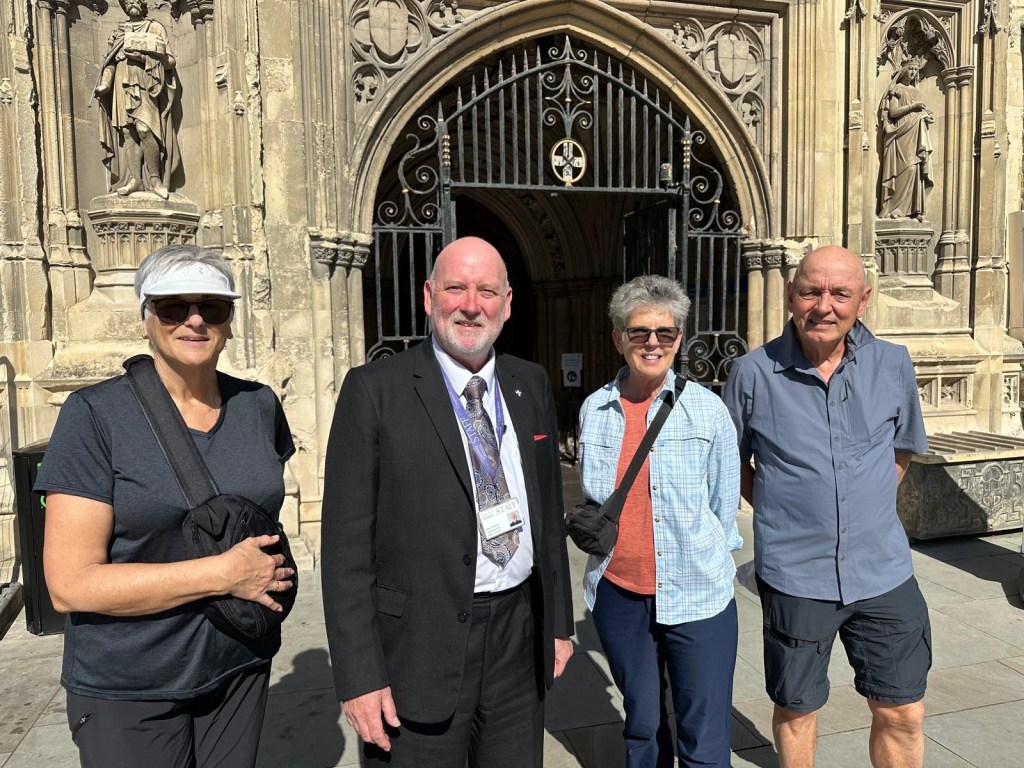
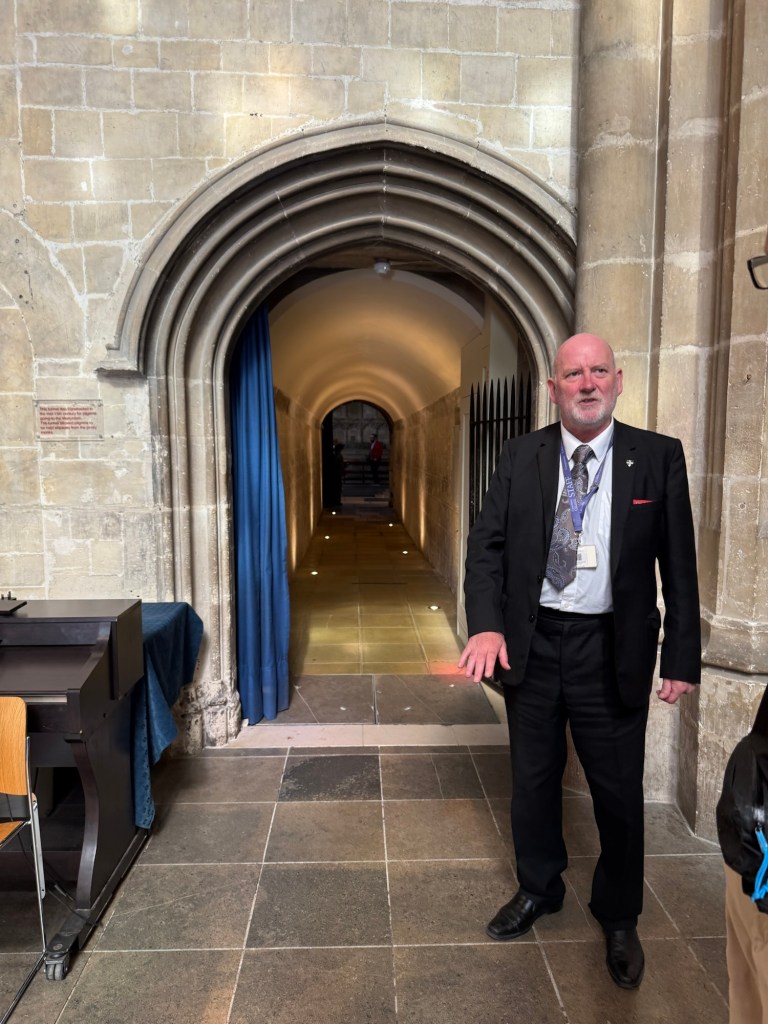
We made our routine trip to the laundromat after breakfast, then headed into Canterbury for some sightseeing. A real highlight of the day was meeting Torin, the Pilgrim Officer at the Cathedral. He shared lots of interesting insights and made us all feel a bit special about our pilgrimages. Lynn and I then treated ourselves to an hour of cat smooching at Canterbury Tails (a cat cafe) before a rest this afternoon then dinner at Pinocchios again for our last night here.
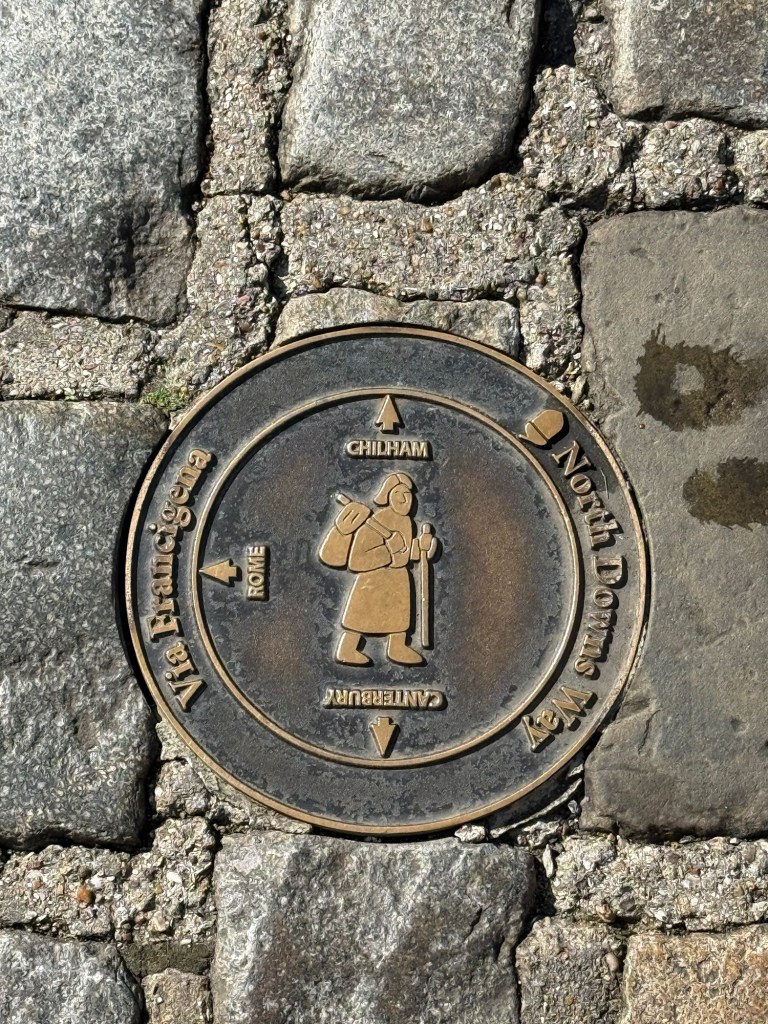
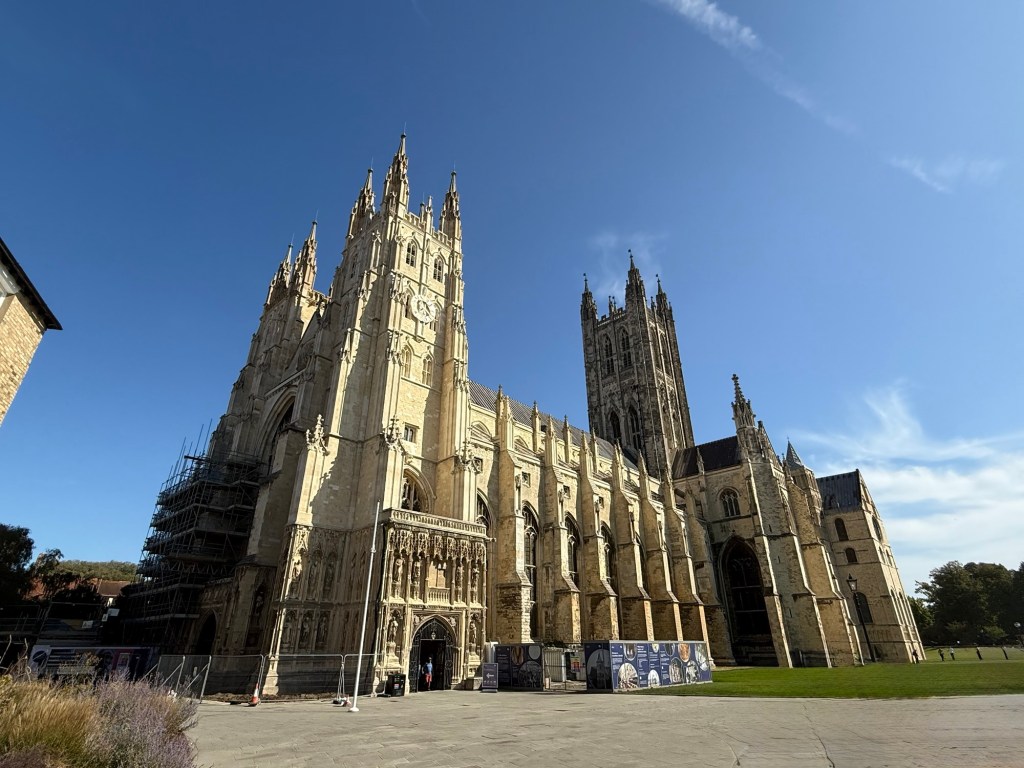
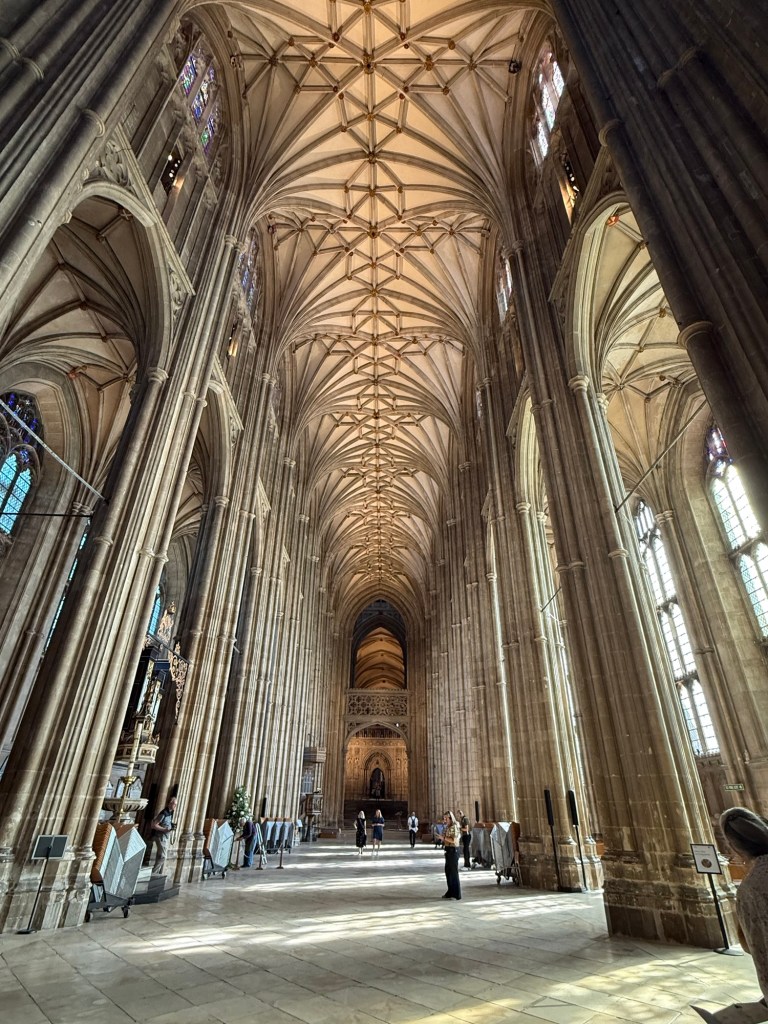
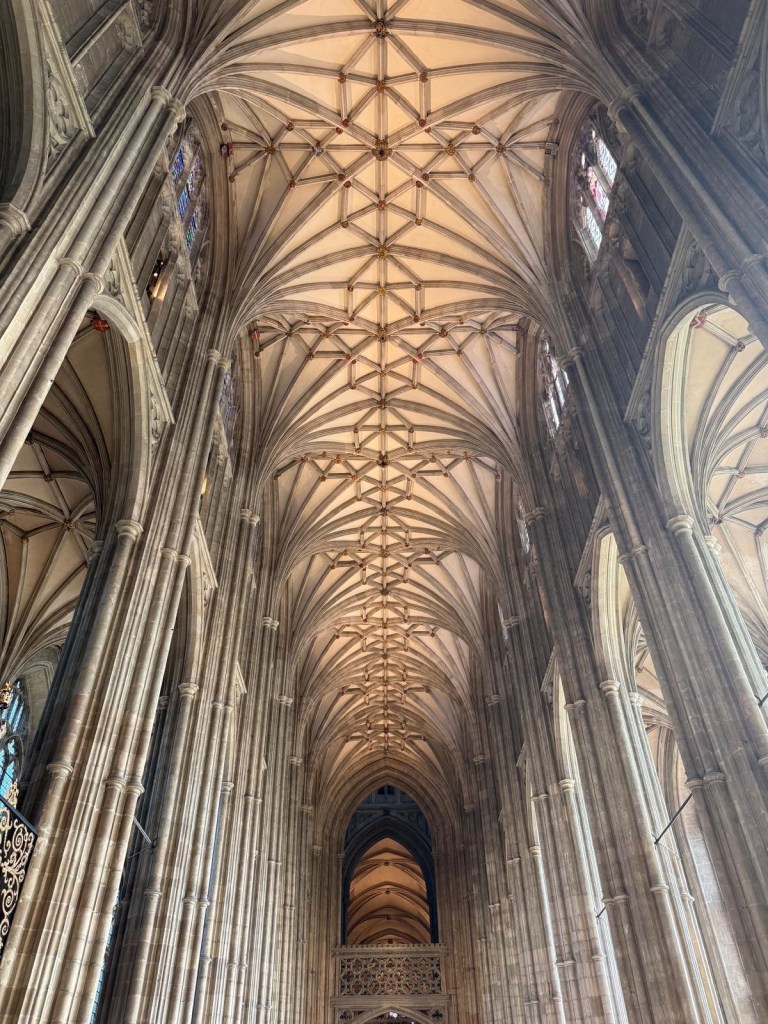
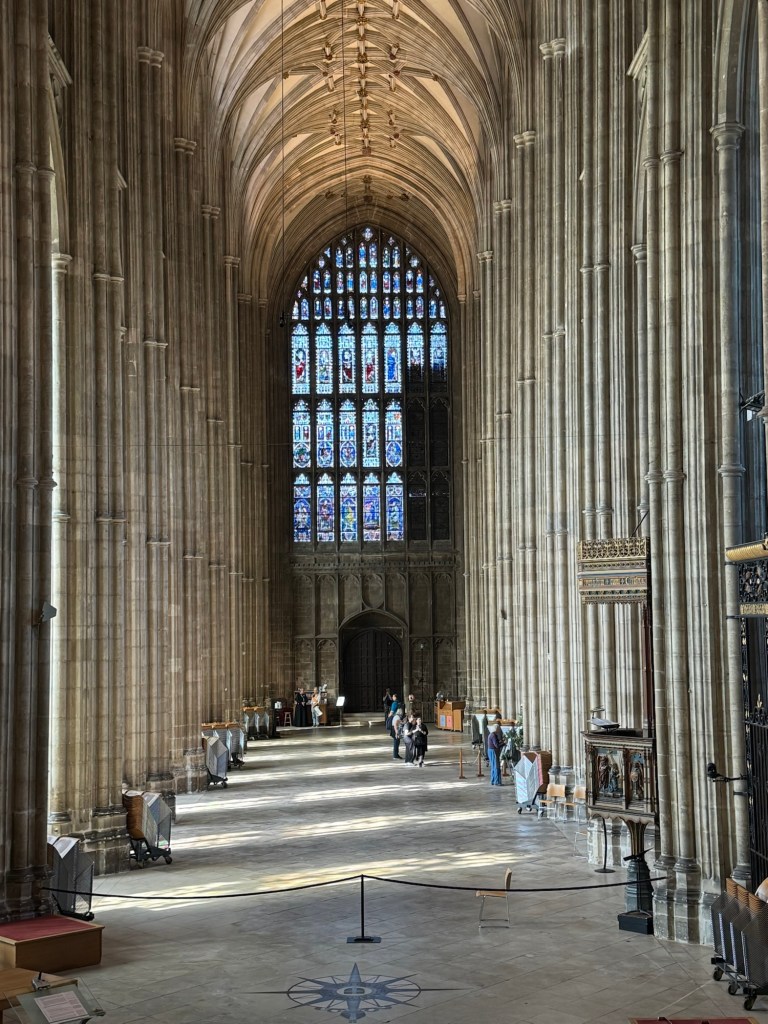
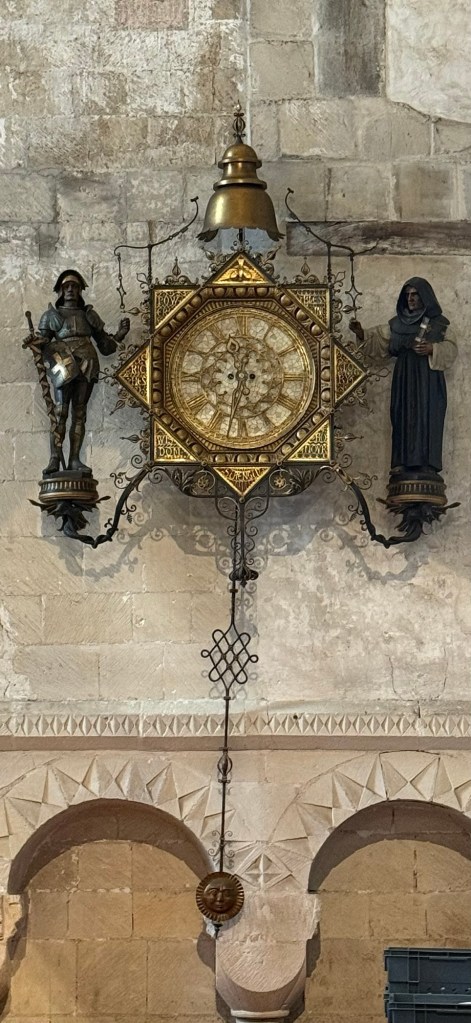
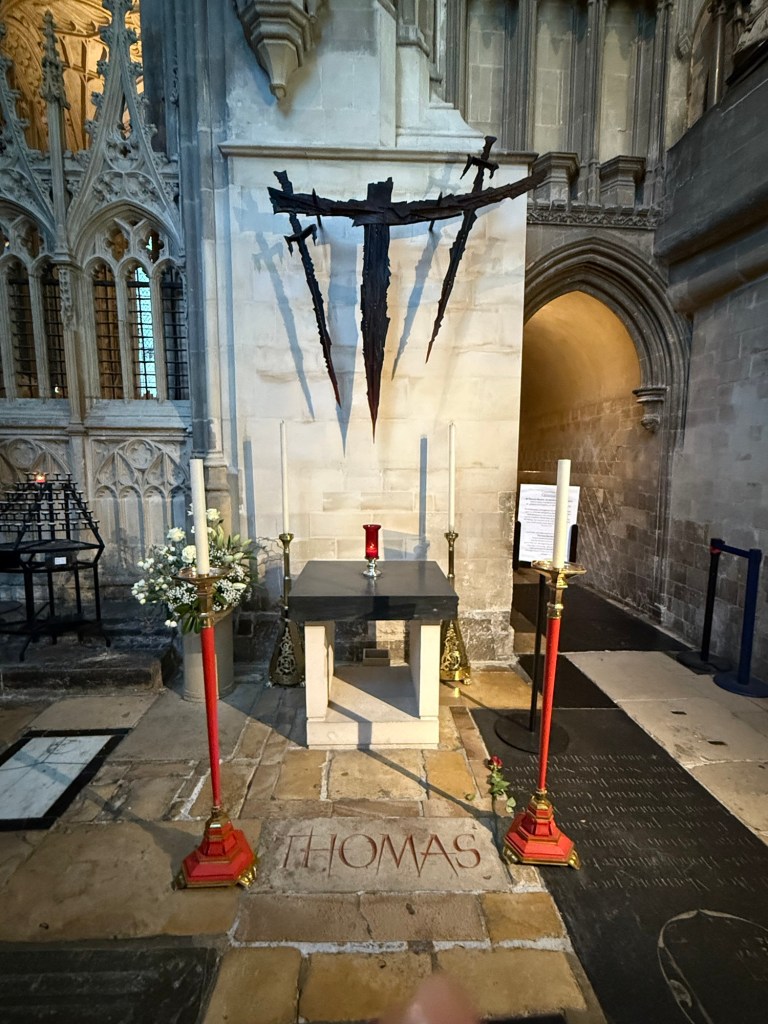
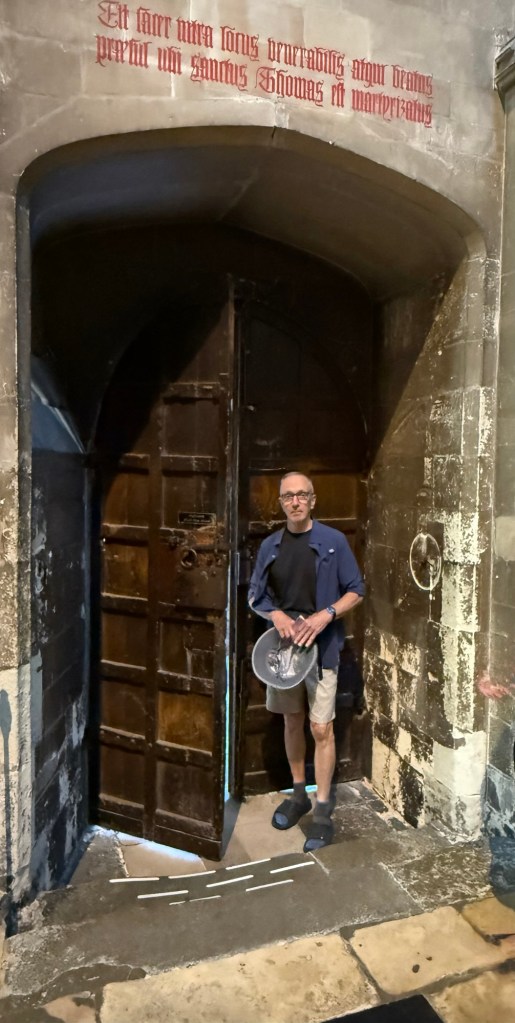
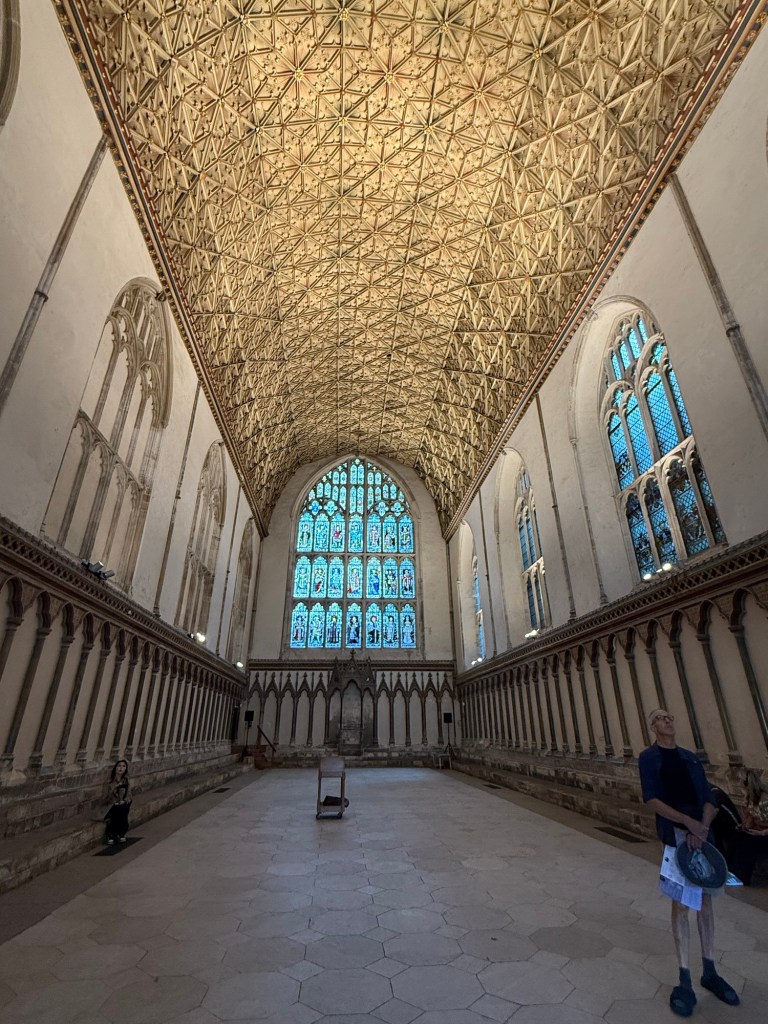
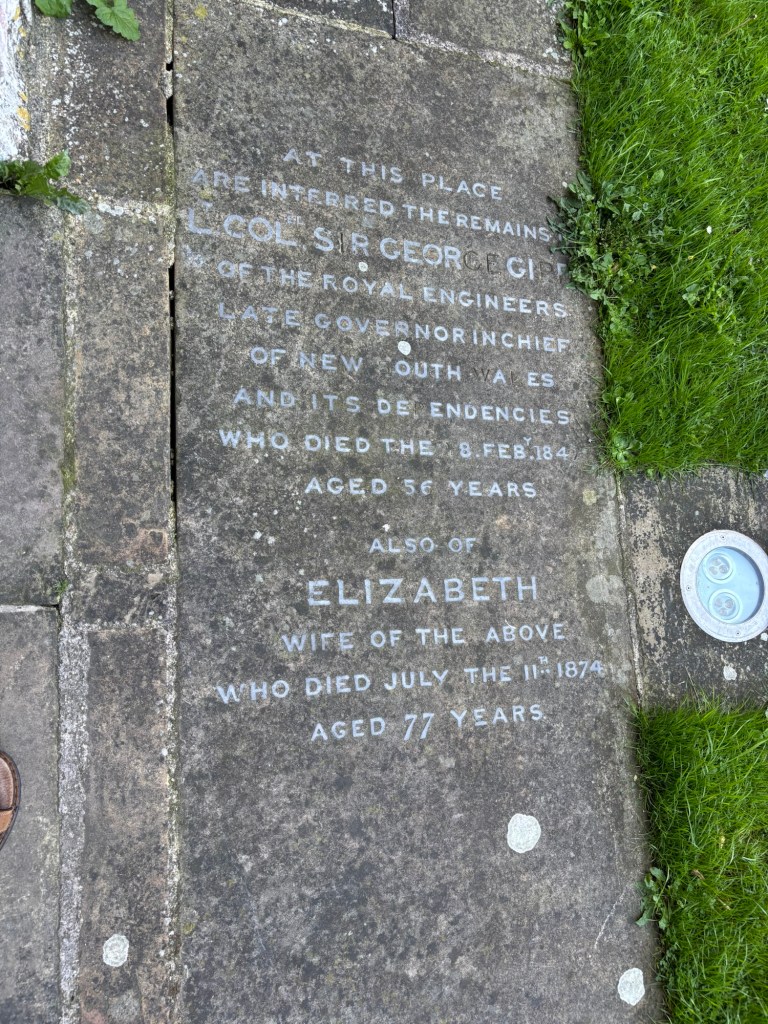
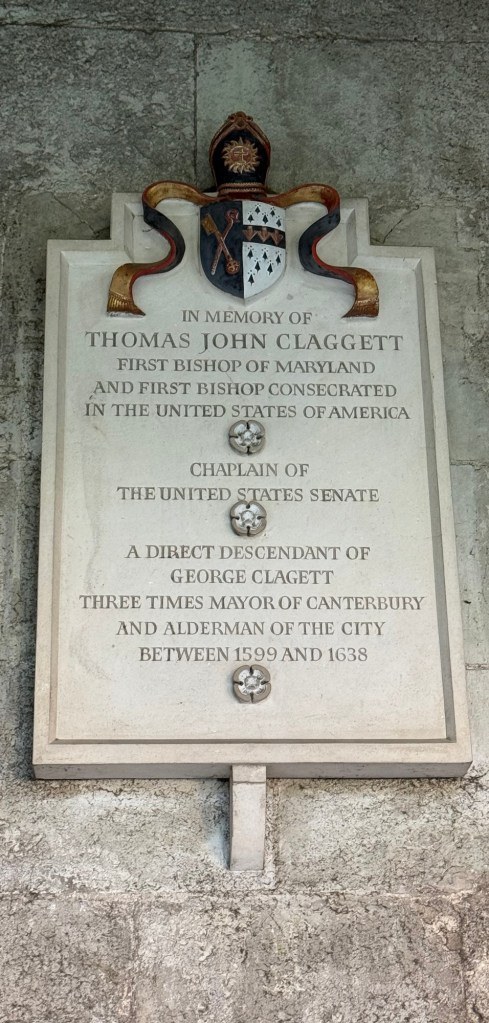
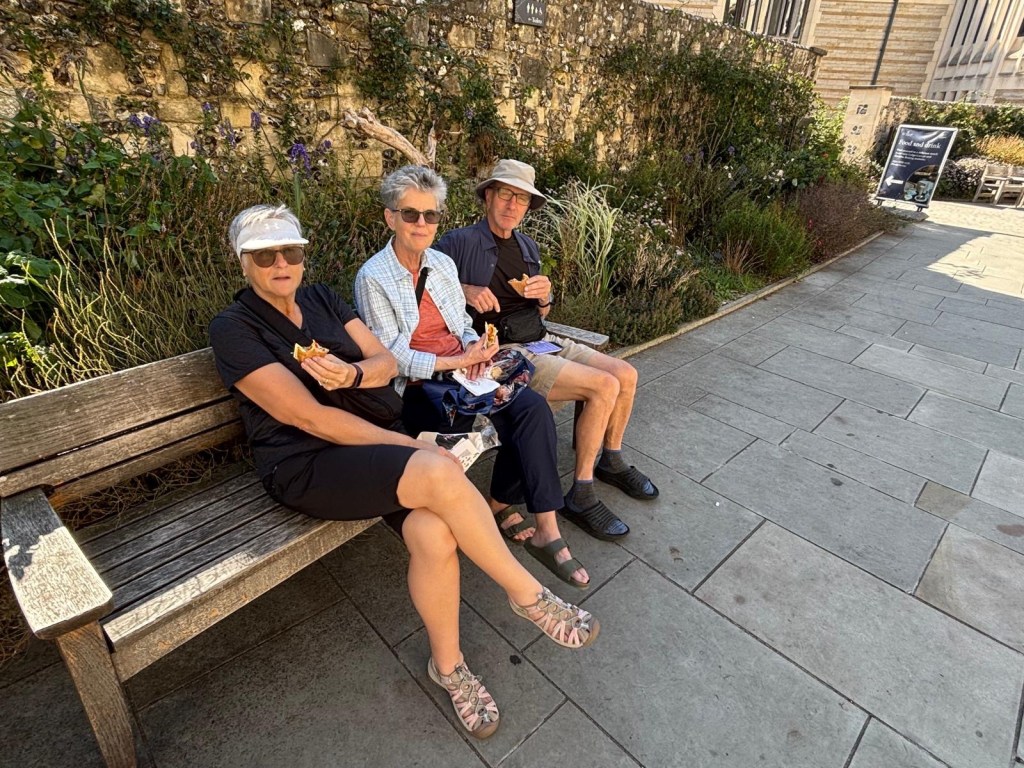
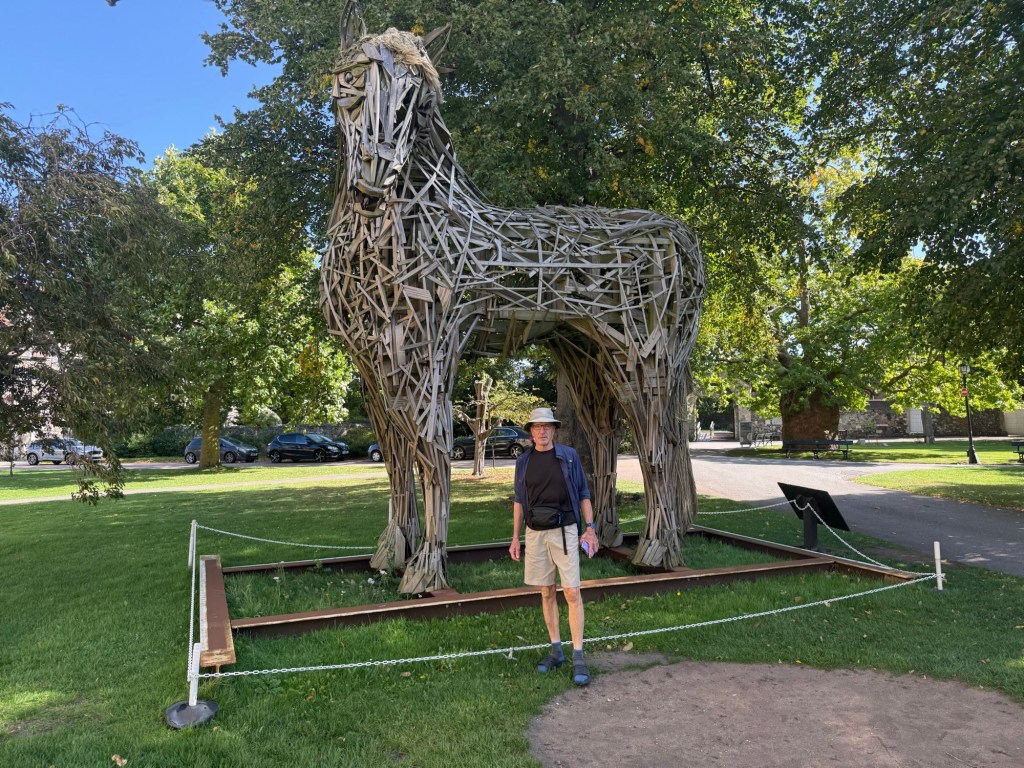
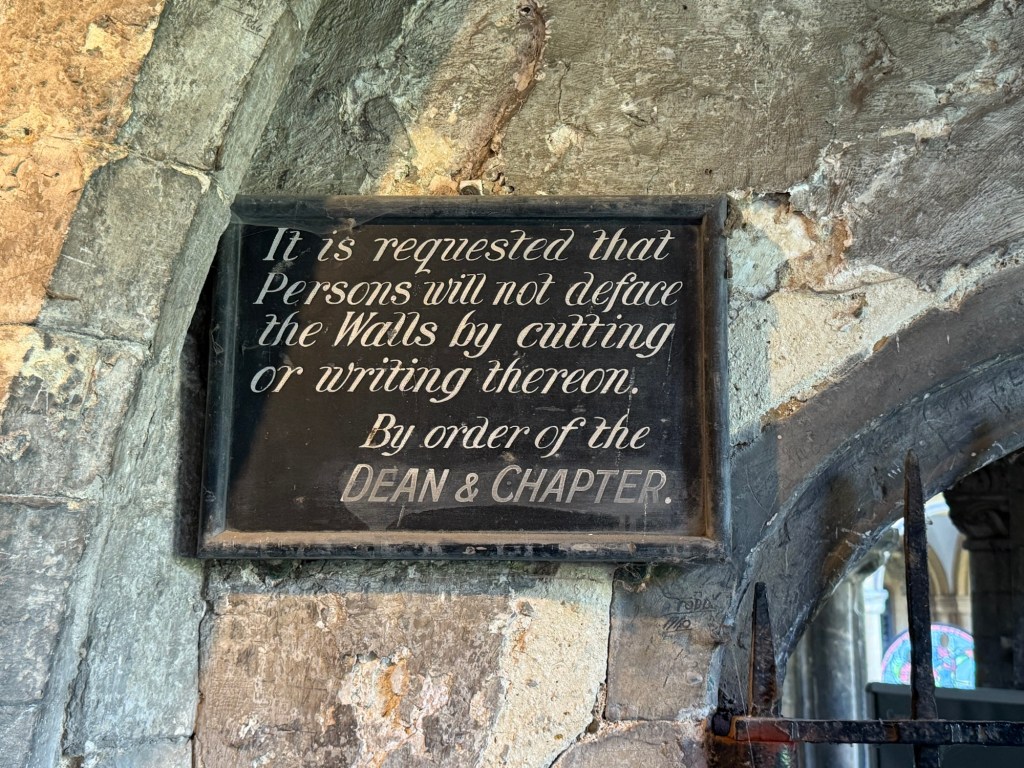
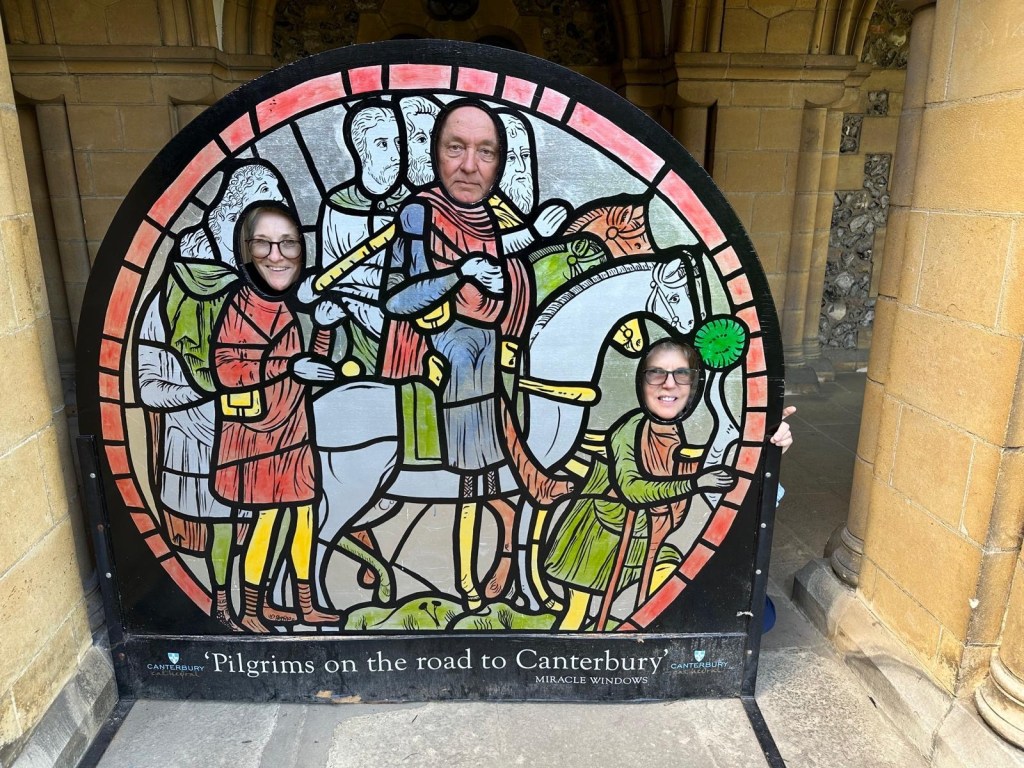
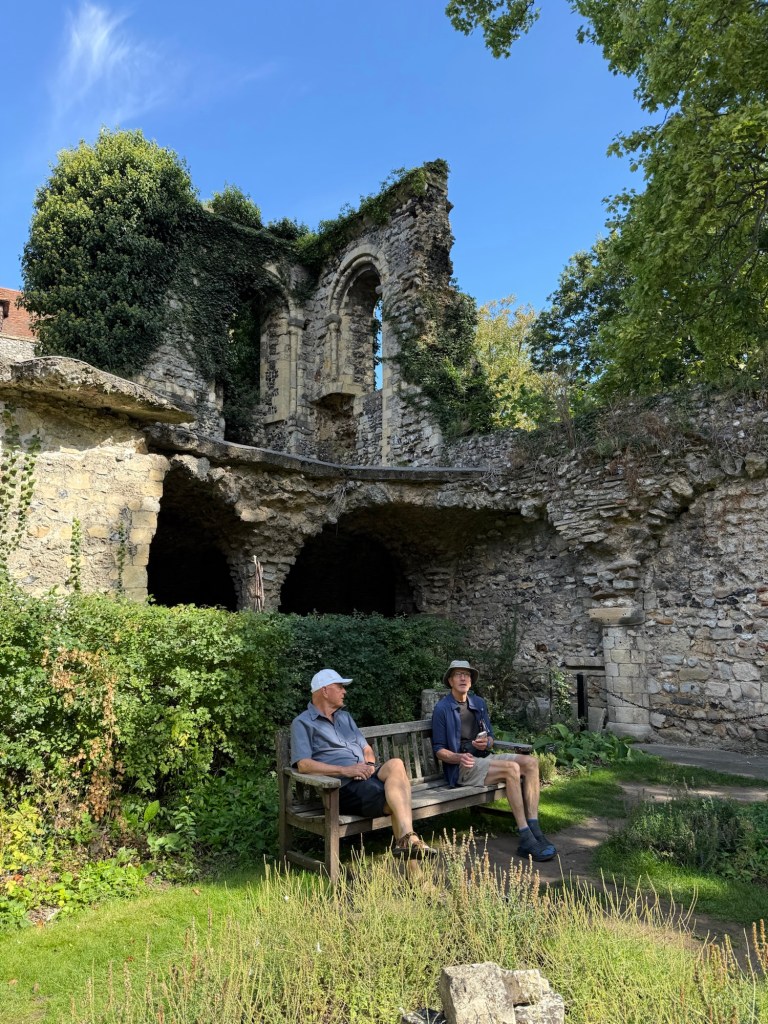
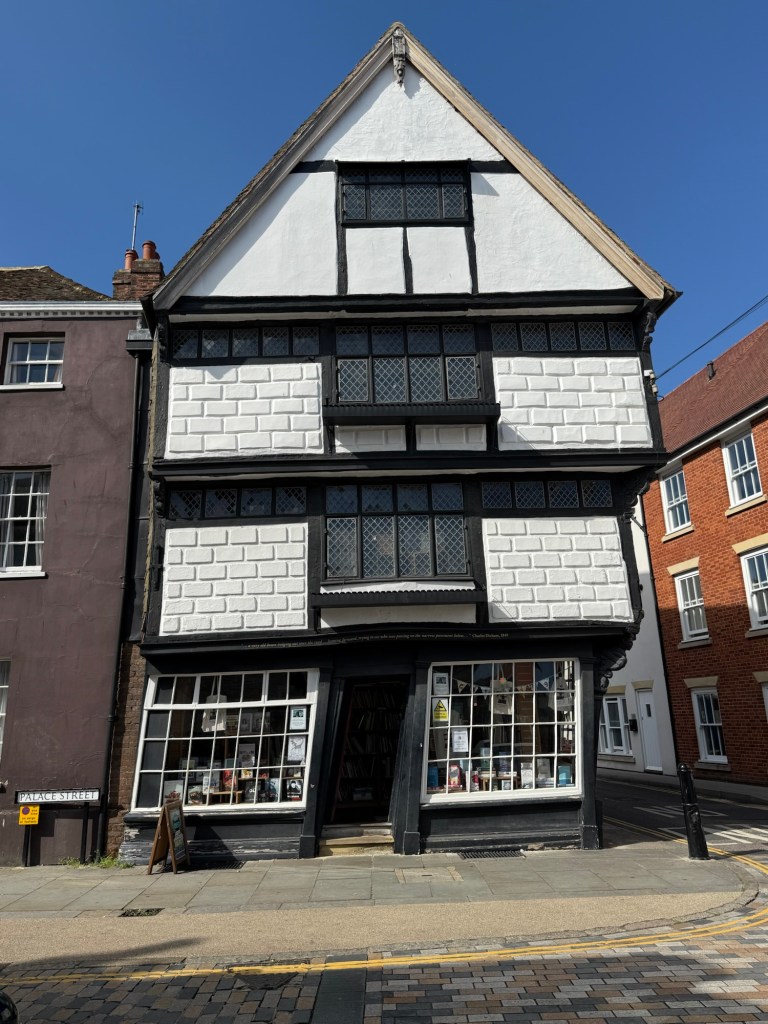
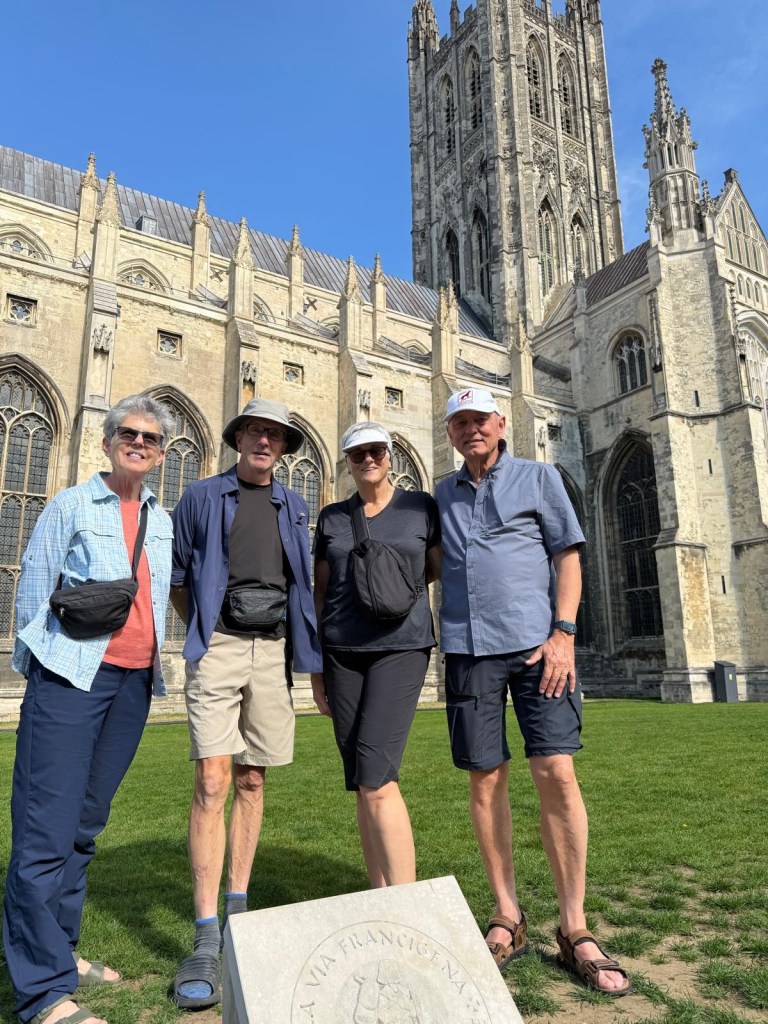
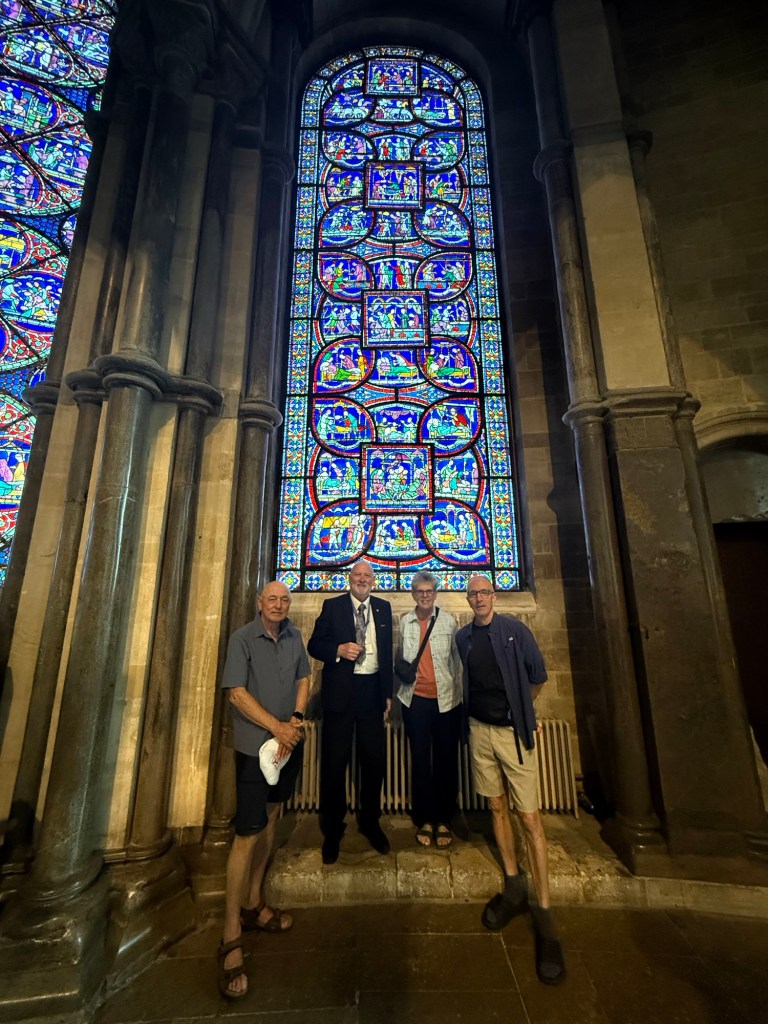
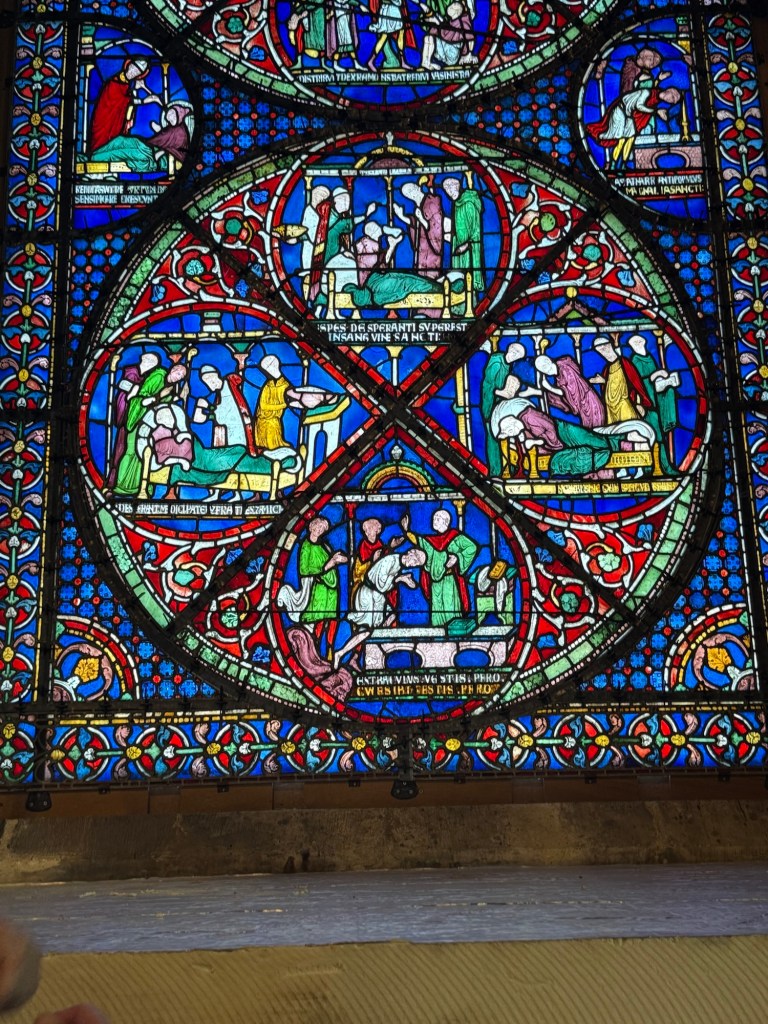
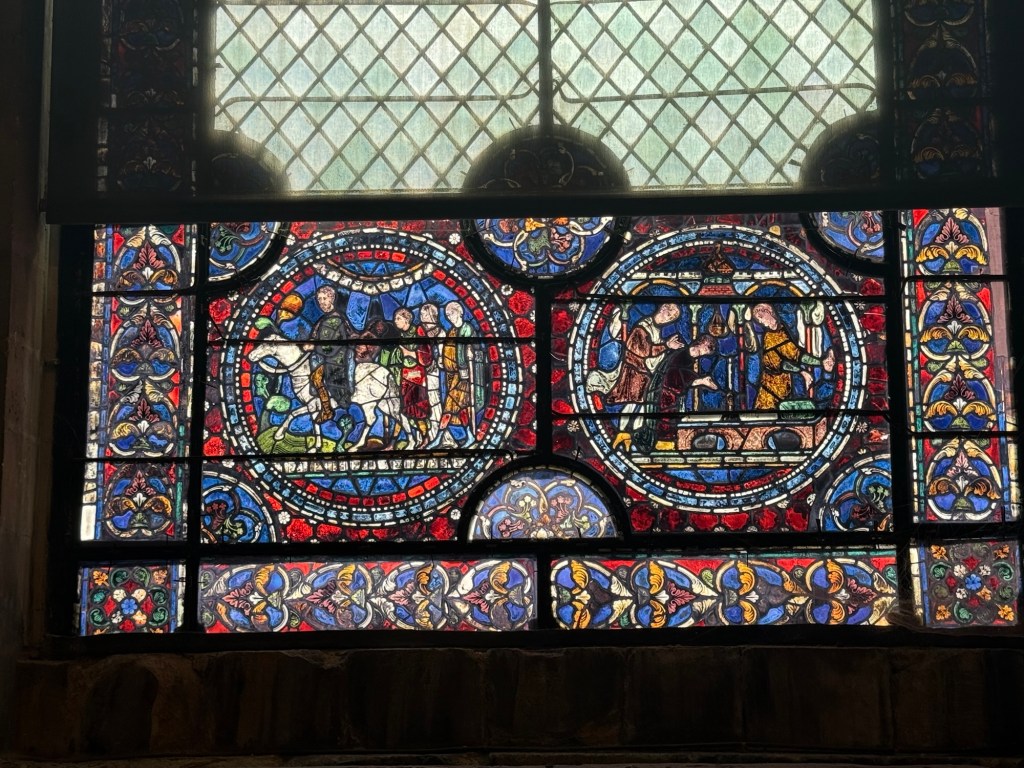
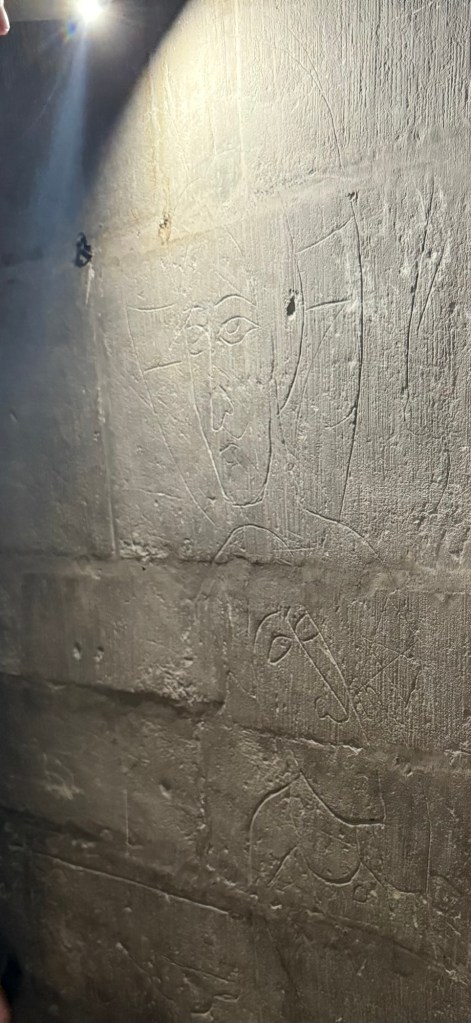
Typical, all on our phones With the very helpful CherylAnother waymarker near the Cathedral… note the arrows have moved to reflect the directionsCanterbury CathedralIn the Nave looking eastLooking up Looking westAn interesting clock in the Chapel of St AndrewThe pilgrims’ stairsThe Martyrdom, the site where Archbishop Thomas Becket (the ‘meddlesome priest’) was murdered in December 1170 by four knights of King Henry II thereafter making Canterbury one of the most important pilgrimage sites in Europe.Through the fabulous door leading to the Great CloisterChapter HouseView from the Great CloisterTomb of Sir George Gipps, Governor of New South Wales & ‘its dependencies’ (Australia) 1838-1846One of very few references to the USA lunch of yummy baguettes/wraps sitting admiring the Cathedral. Then there was an attack! A HUGE seagull swooped and stole Hans’ baguette from his hands! Like Flash Gordon Hans was up and dashed after the gull to retrieve his lunch. Although successful, it was irretrievably damaged. Fear not, he didn’t go without lunch.Gary returned from the loo with this photo of twinned Cathedral toilets from Rwanda & MalawiThe Canterbury War Horse. The info board states that … Over eight million horses died during the First World War, of which many travelled through Kent on their way to the continent. The Canterbury War Horse represents conflict and the loss of human and animal life without being over literal, and is presented with dignity, its head bowed in respect and solemnity in this place of quiet contemplation, reflection and remembrance.The Plane Tree, the info board states that: Canterbury is home to a striking variety of plane tree, which is easy to spot due to its impressively wide trunk. It is commonly known by the nickname of the ‘baobab’ plane, after its resemblance to the African trees of that name; which are noted for shedding strips of bark, and helping to fend off the effects of pollution.Really?Really???In the herb garden, relaxing on a bench given by the Robert Lee Blaffer Trust of Houston, TexasOutside the grounds, we passed the Crooked House. An internal chimney slipping gave the house its wonky appearance, but a steel frame now keeps it in place. Writing on the eaves states “a very old house bulging over the road… leaning forward, trying to see who was passing on the narrow pavement below..” Charles Dickens, 1849.Gary noticed a poster about this “0 mile marker” for the Via so we headed back into the Cathedral to see it. The steward then contacted the Pilgrim Officer (Torin), who came out to greet us and share some pilgrim historyWith TorinThanks Torin In front of one of a number of stained glass windows that recount the stories recorded from early pilgrims. This is unusual in Cathedrals as they usually focus on biblical characters and saints, not commoner pilgrimsOne of the pilgrim storiesA pilgrim riding a horse … apparently to ‘canter’ is derived from CanterburyTorin took us behind a pillar and showed us this historical “graffiti” showing a pilgrim praying and God listening… I figure very few people would have seen this!Outside the Pilgrim TunnelThe list of Archbishops – Sigeric the Serious (highlighted) was the first person to make a record of his pilgrimage to Rome following the Via Francigena to get his vestments in 990.
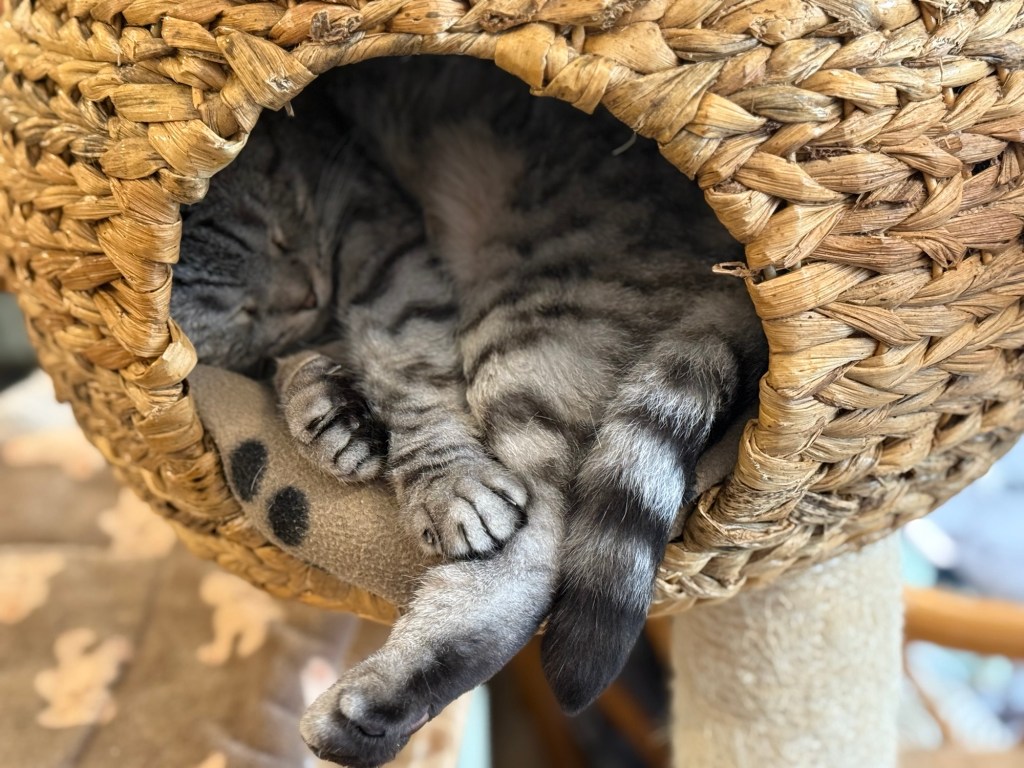
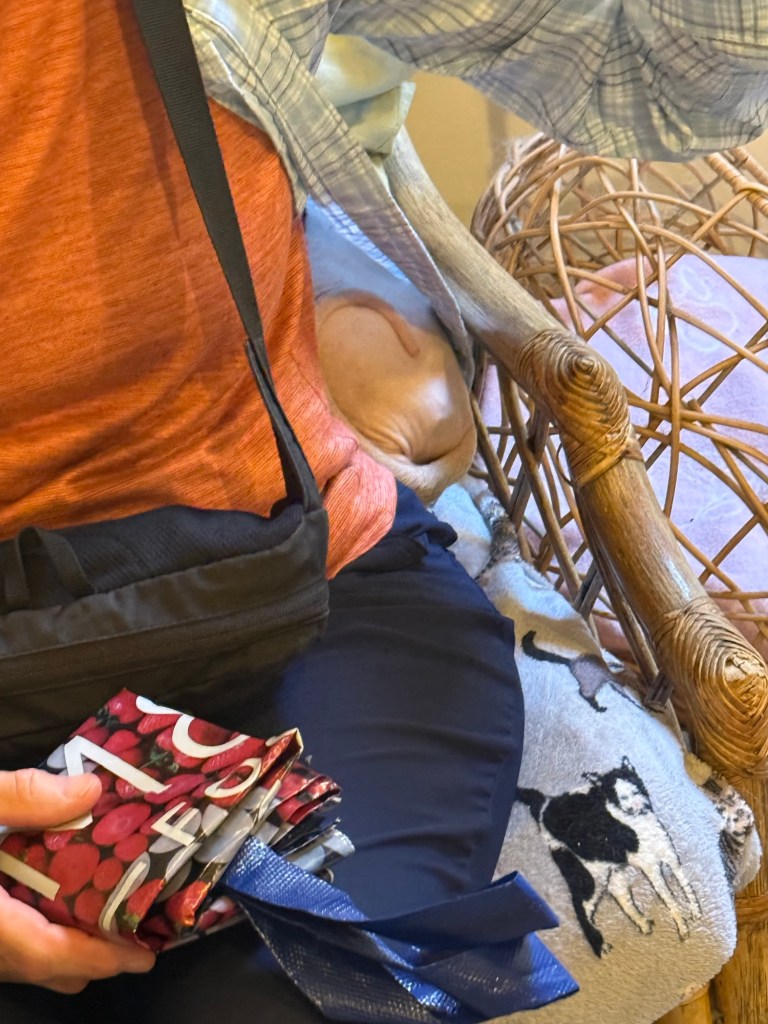
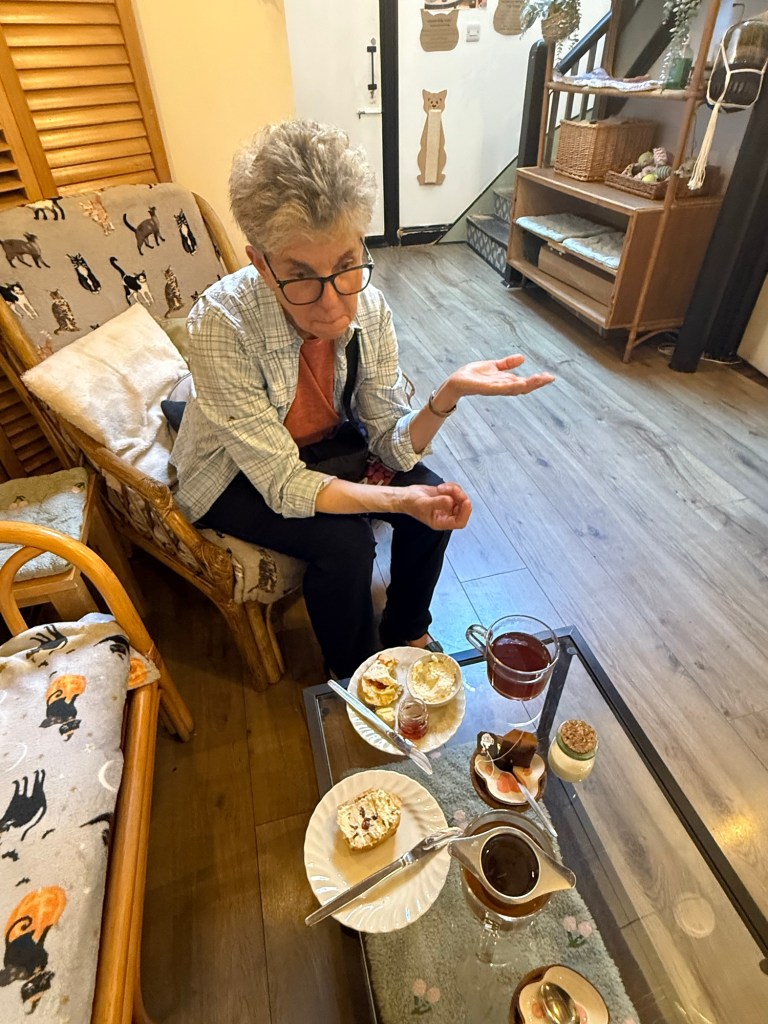
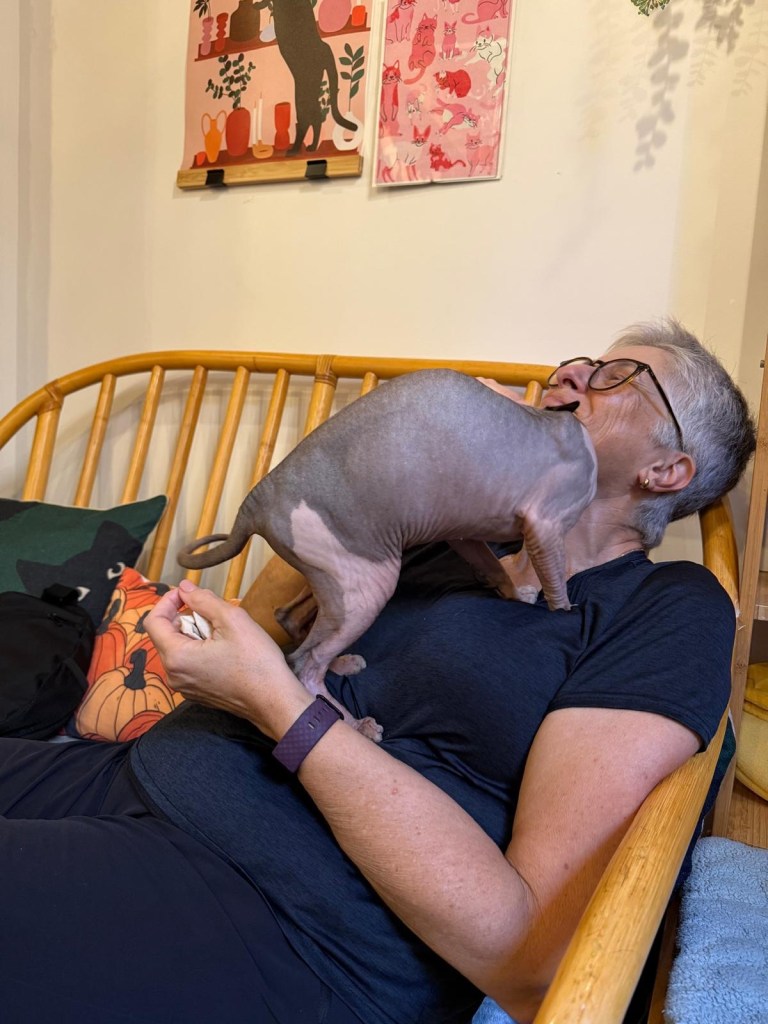
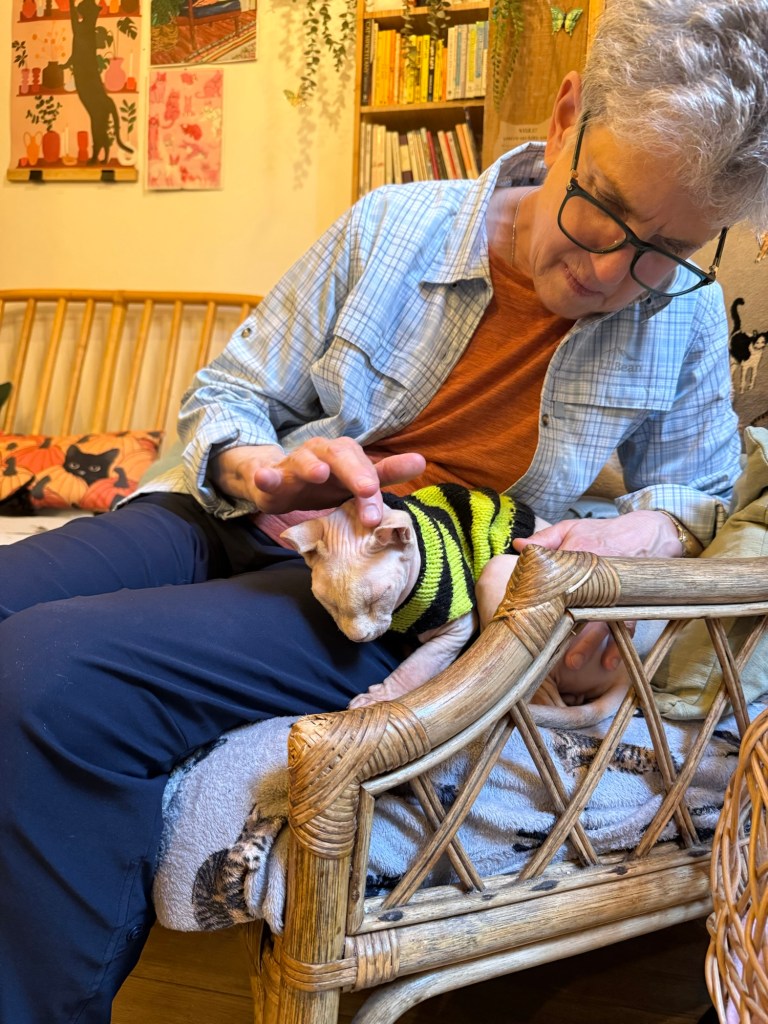
The Lyn/ns headed to Canterbury Tails, (the UK’s largest cat cafe with a feline family consisting of 27 rehomed cats) for a session of cat therapy.
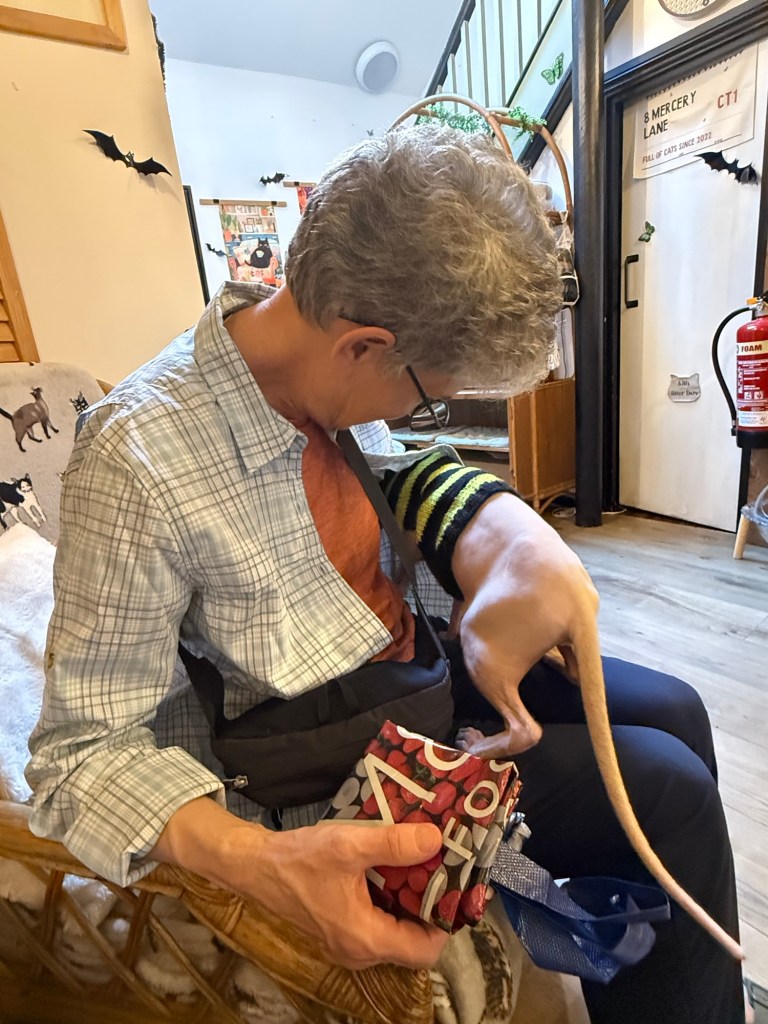
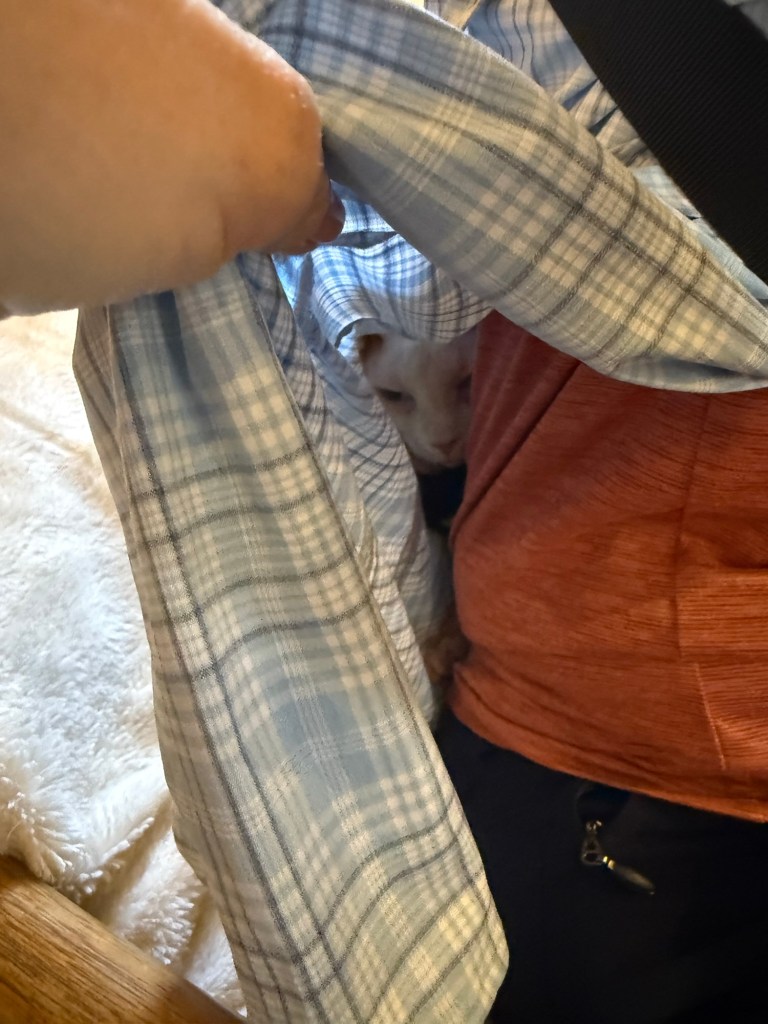
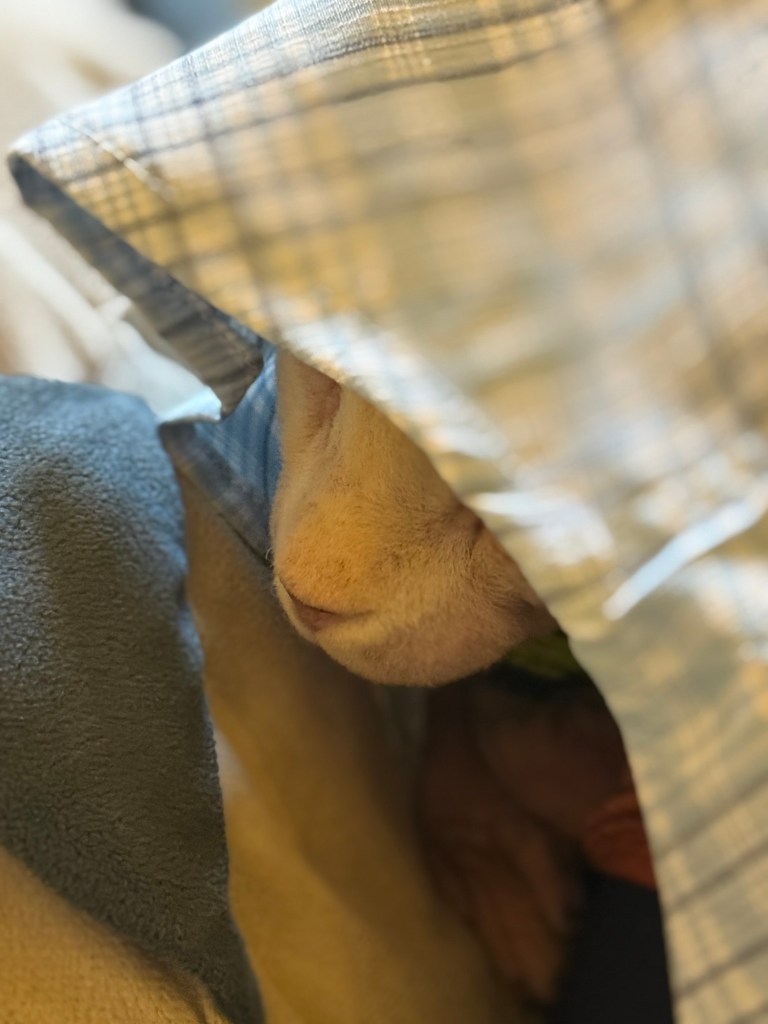
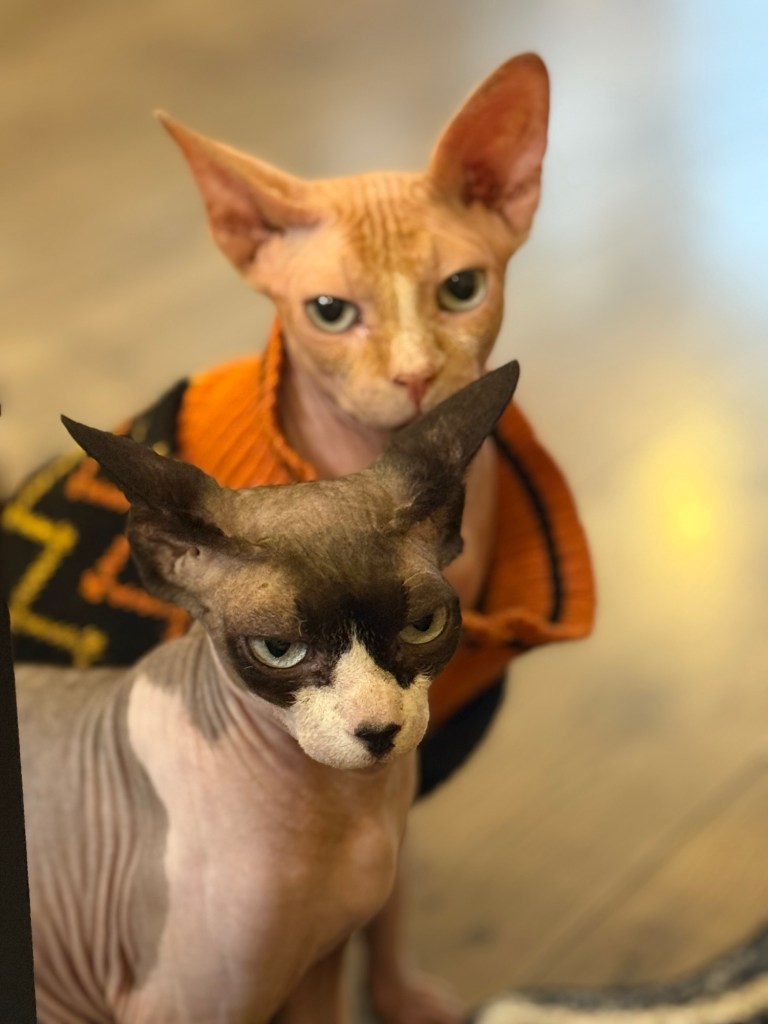
Getting acquainted with GaribaldiGetting a little too acquainted with Garibaldi as he burrowed inside Lynn’s shirtOur afternoon teaBinx and Clawdia (front)Up close and personal
Back outside for a bit more sightseeing…
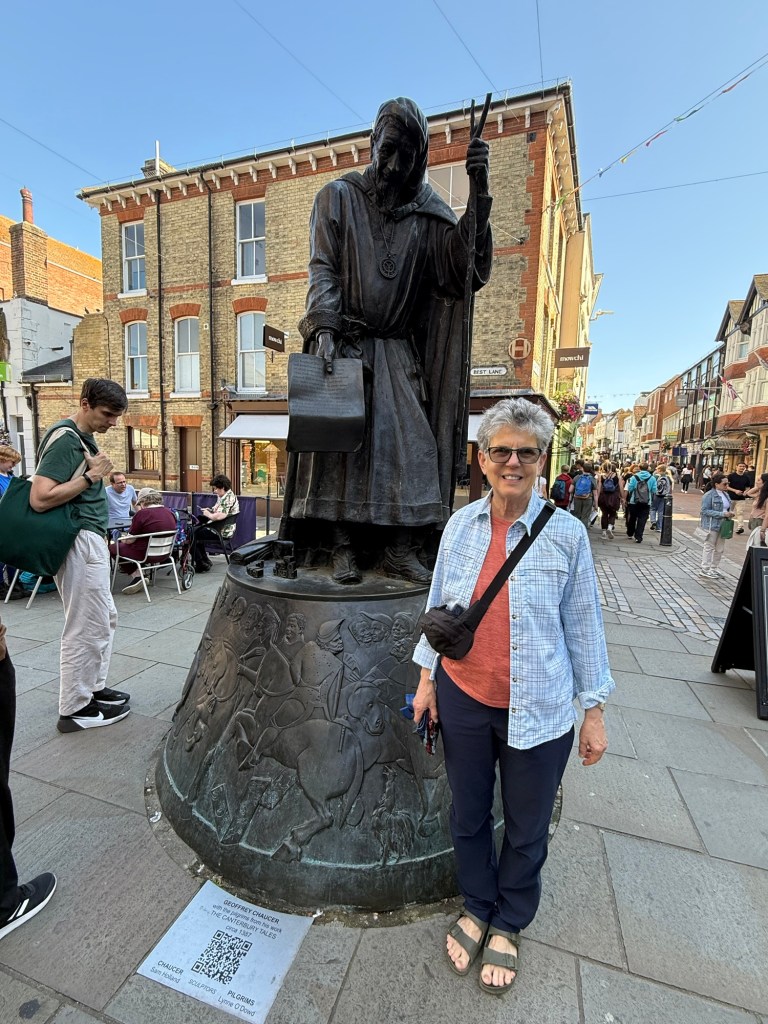
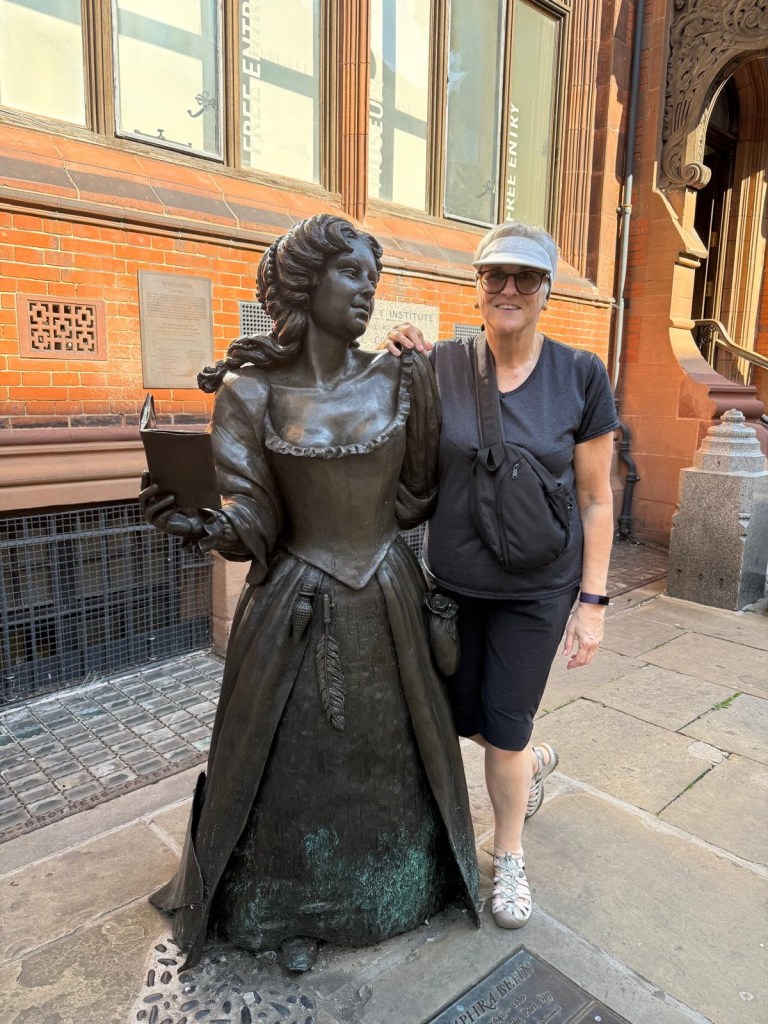
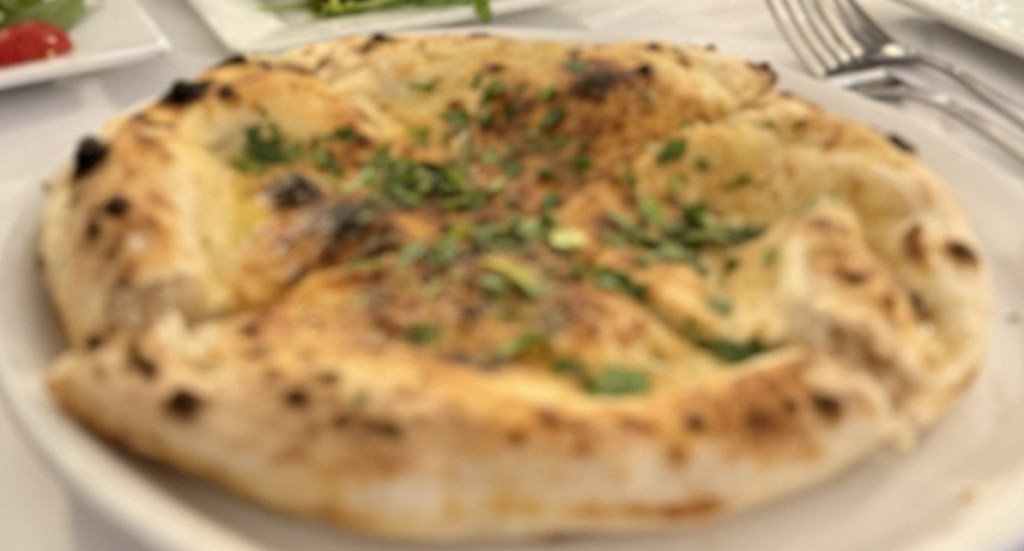
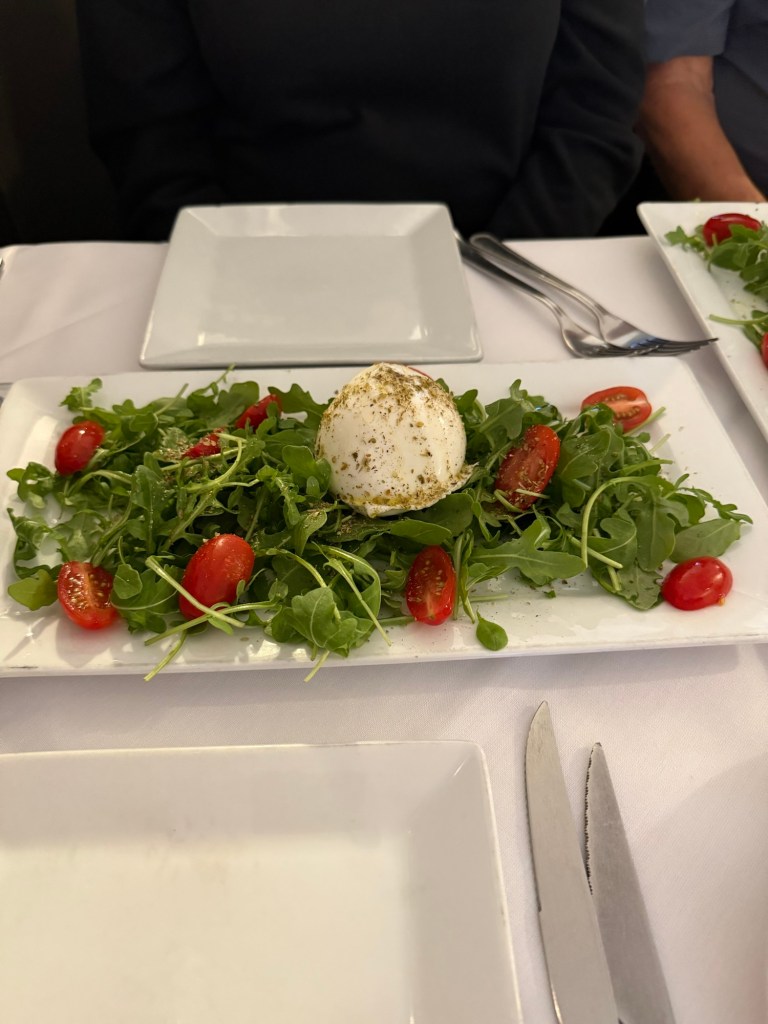
Geoffrey Chaucer statue. The plinth depicts the characters featured in Chaucer’s Prologue to the Canterbury Tales, but their faces are represented by locals with Canterbury connections.Aphra Behn, (1640-1689) playwright, poet, spy! As one of the first English women to earn her living by her writing, she broke cultural barriers and served as a literary role model for later generations of women authors.(Wiki)Dinner at pinocchios again tonight… pizza pane aglioli And Caprese salads for entrées, followed by tasty pastas & meatballs (unfortunately no photos)















 Morocco Food Tour