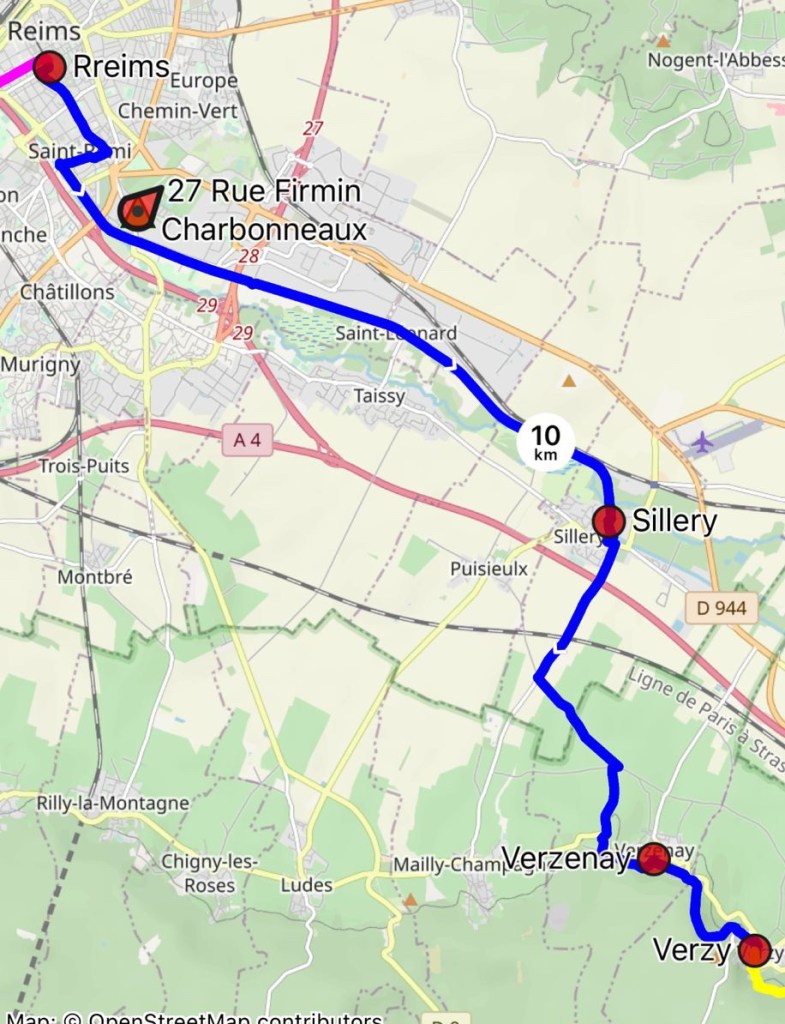
Stage 22 Wednesday 15 Oct: Reims to Verzy (20km/12.5m)
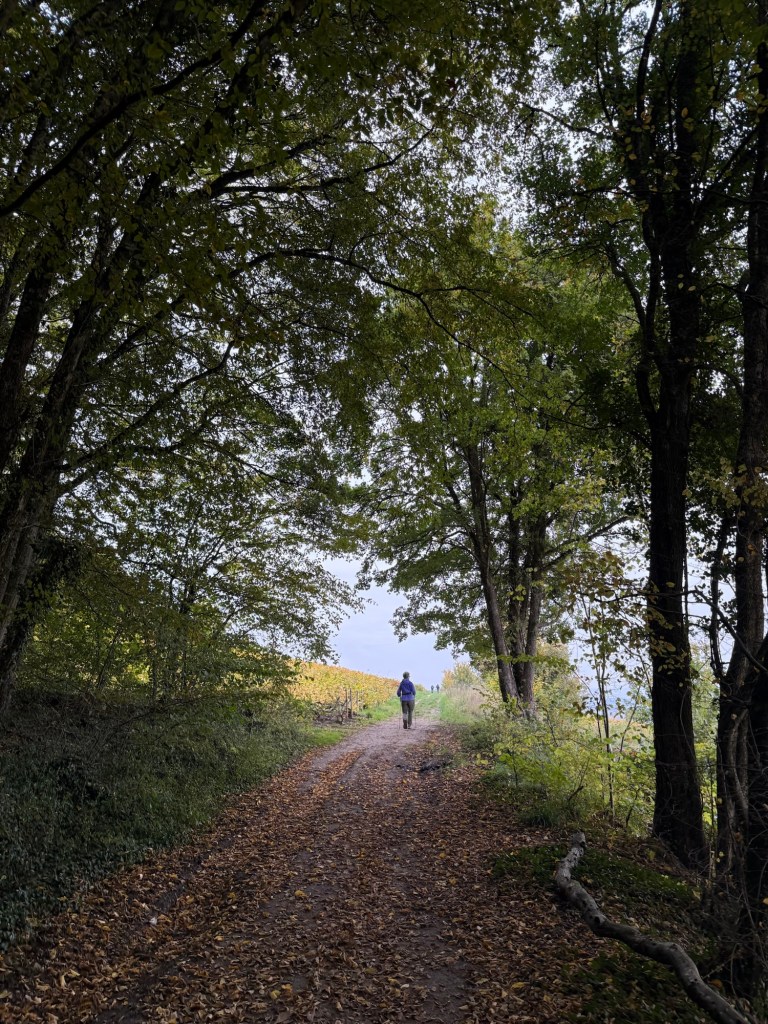
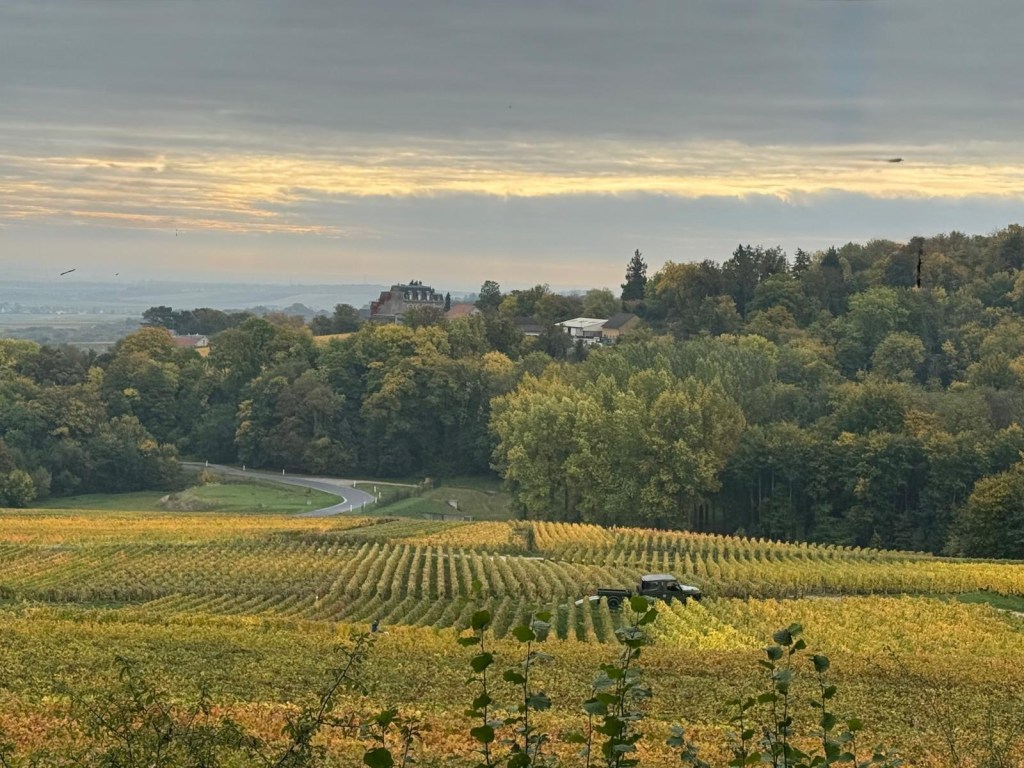
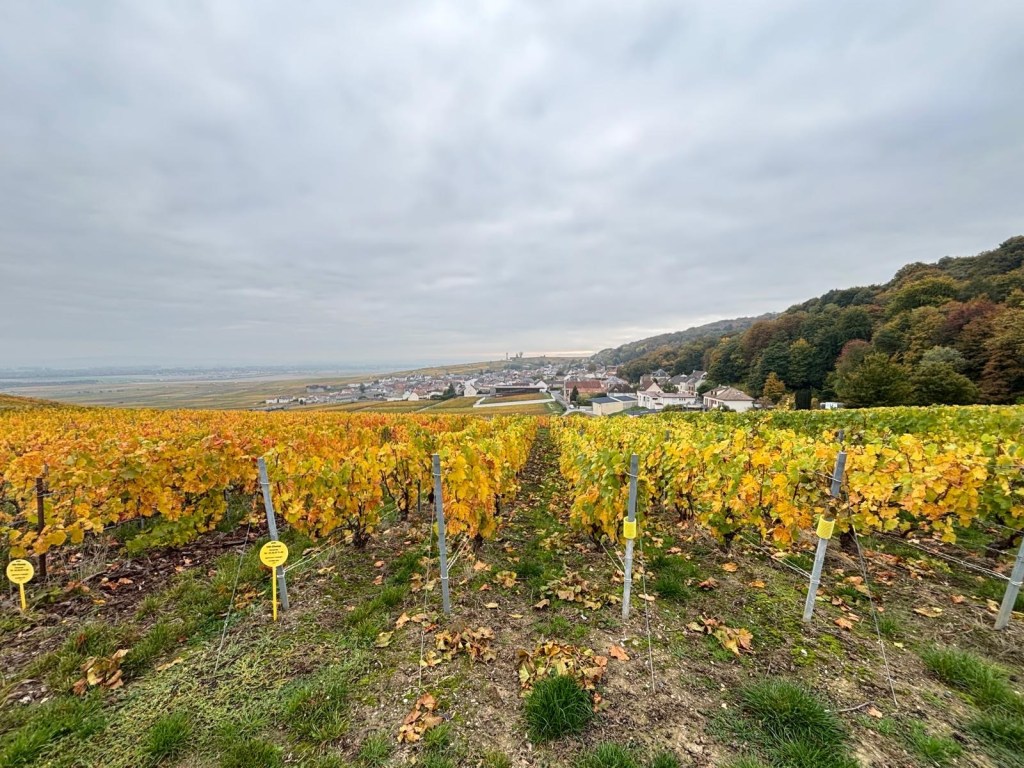
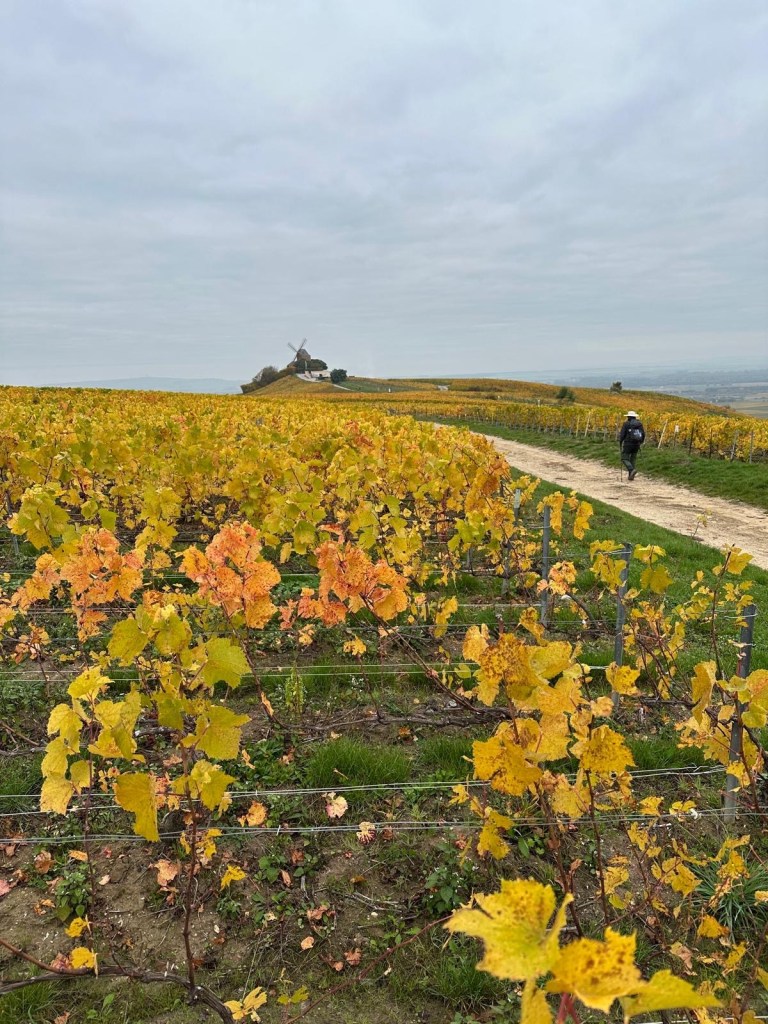
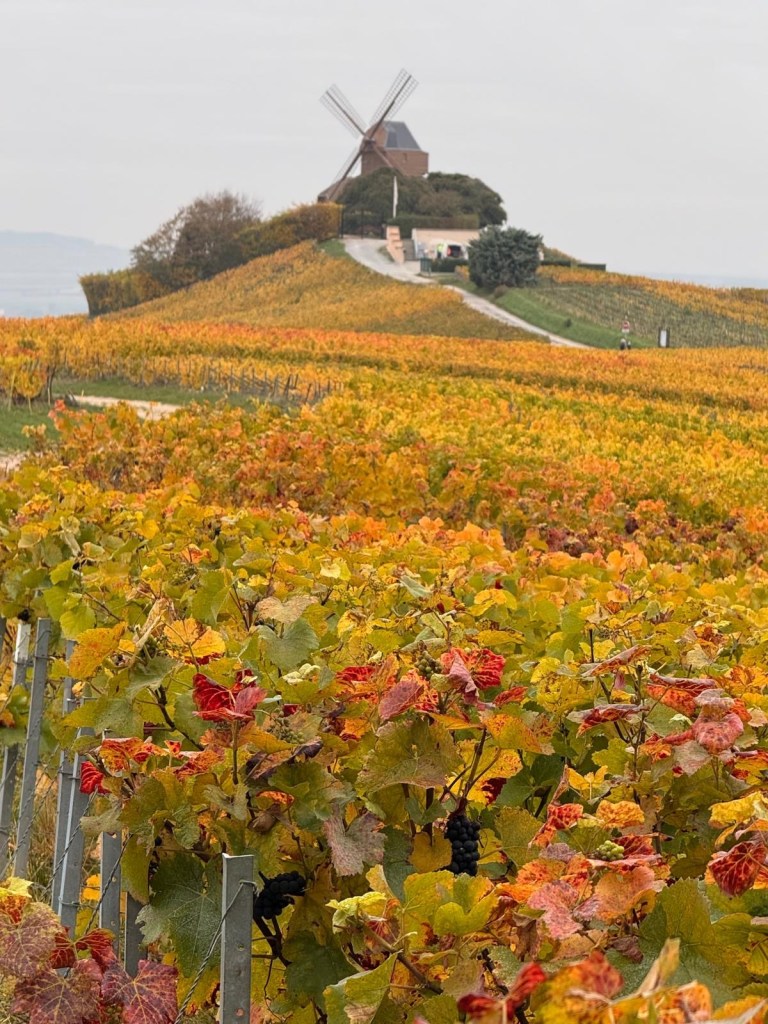
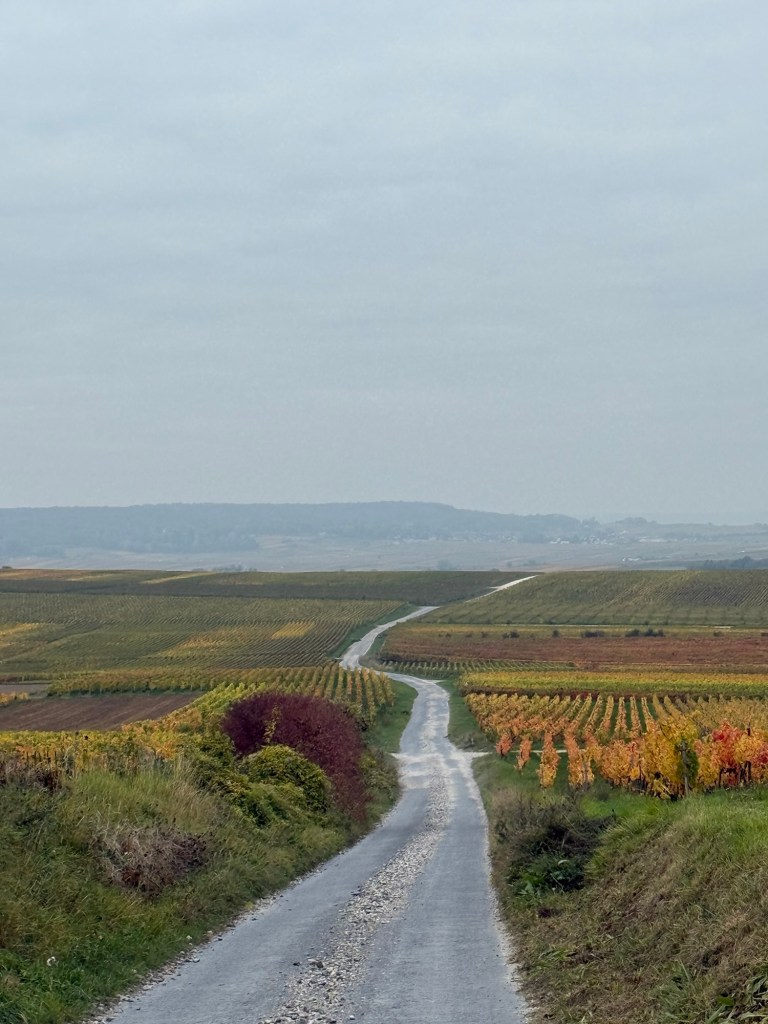
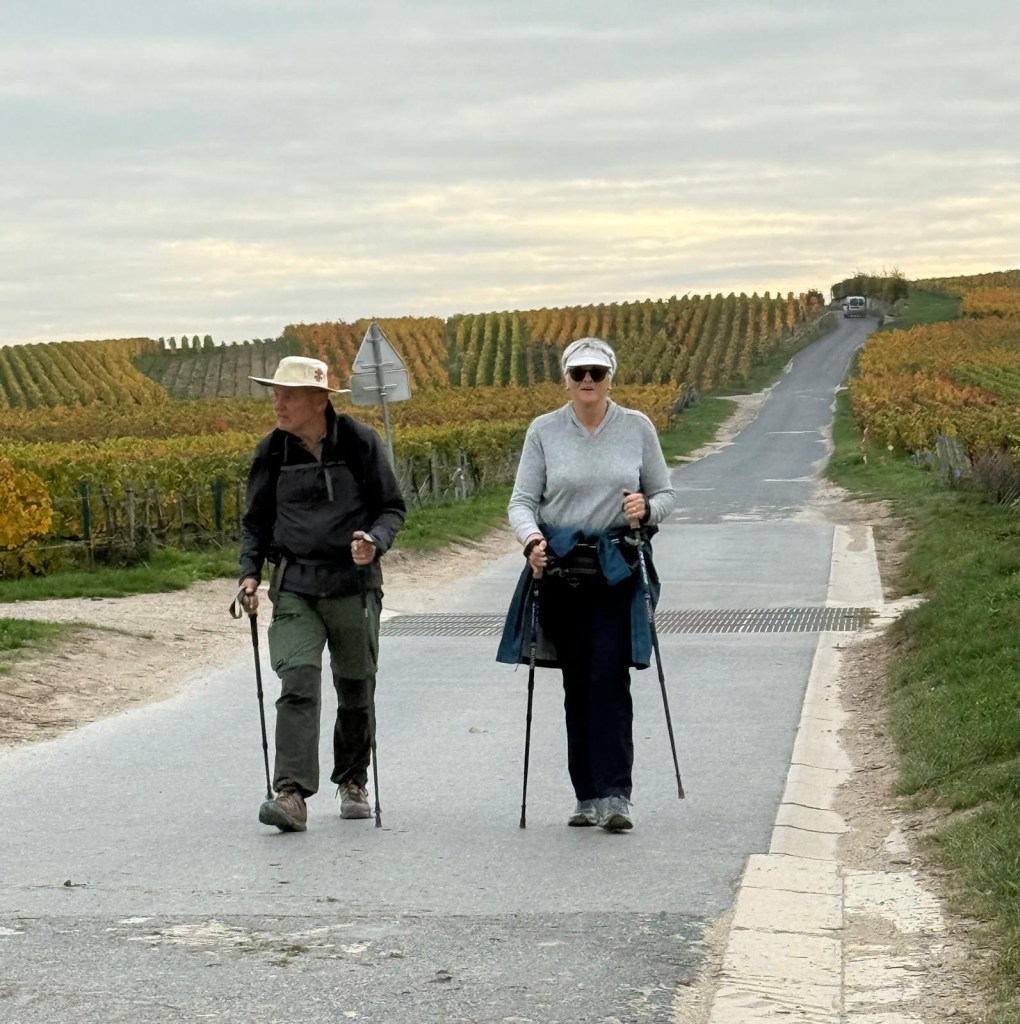
The walk through the champagne vines today was arguably the most beautiful of the trip to date. Even the section along the canal, while a bit repetitious of previous days, was easy walking and pleasant to look at… and we still have beautiful weather, even if a bit cloudy.
To top off a splendid day we took a tour of the Taittinger cellars this evening… impressive!
Waiting for an Uber that never came… we ended up driving out.Route direction ➡️; our direction ⬅️
It was an uphill start from our parking spot in Verzy, through the small town of grand cru champagne houses, then out into the world famous vineyards.
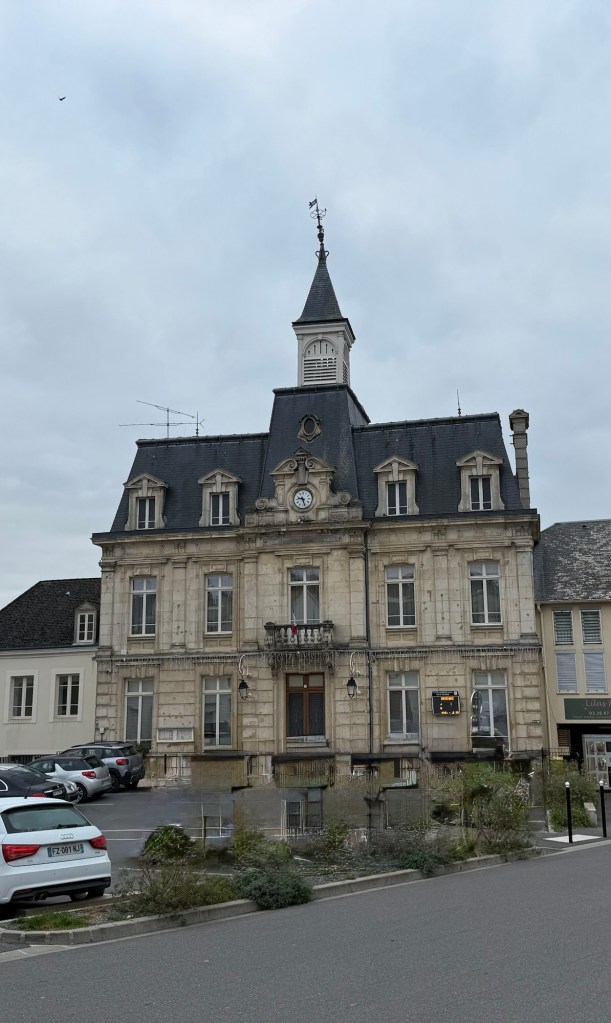
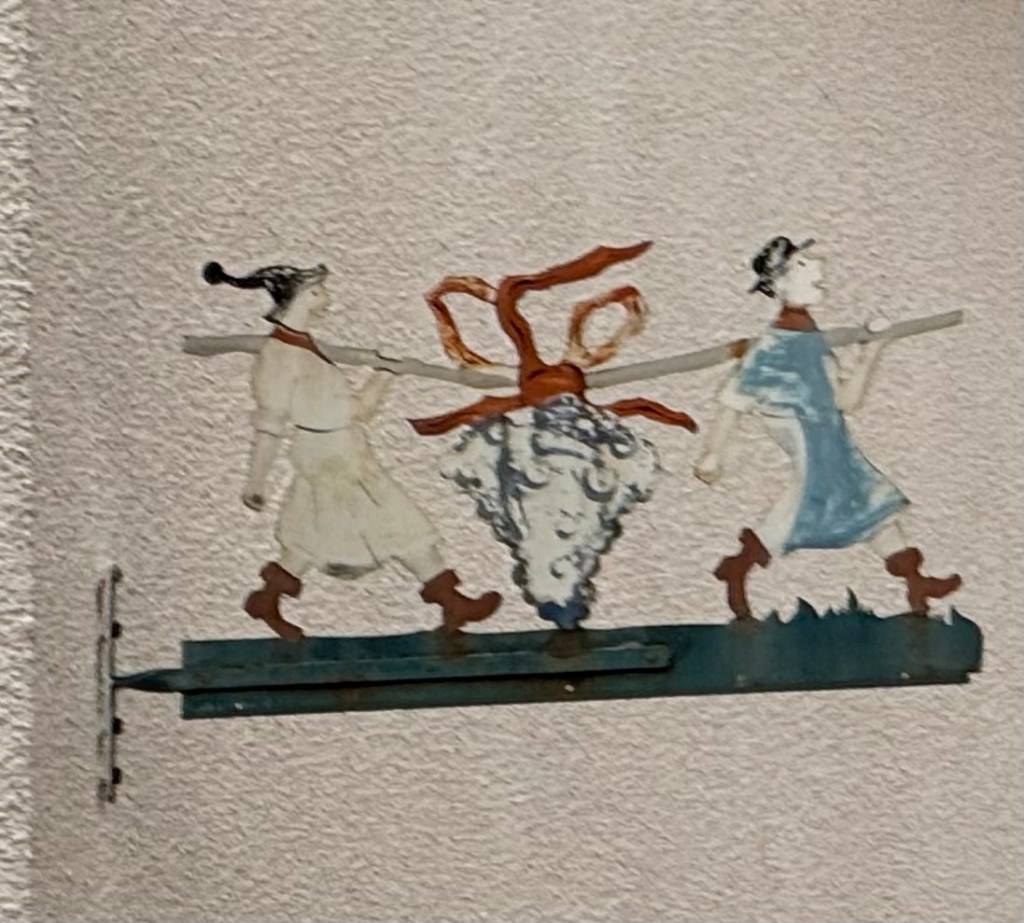
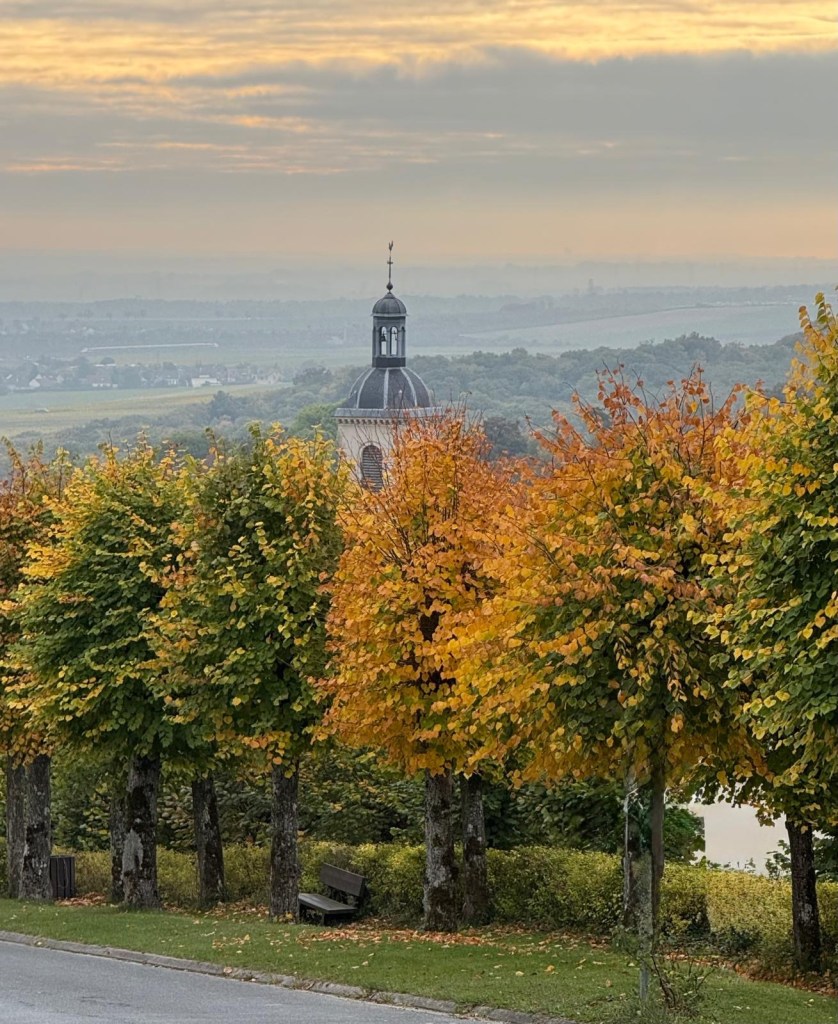
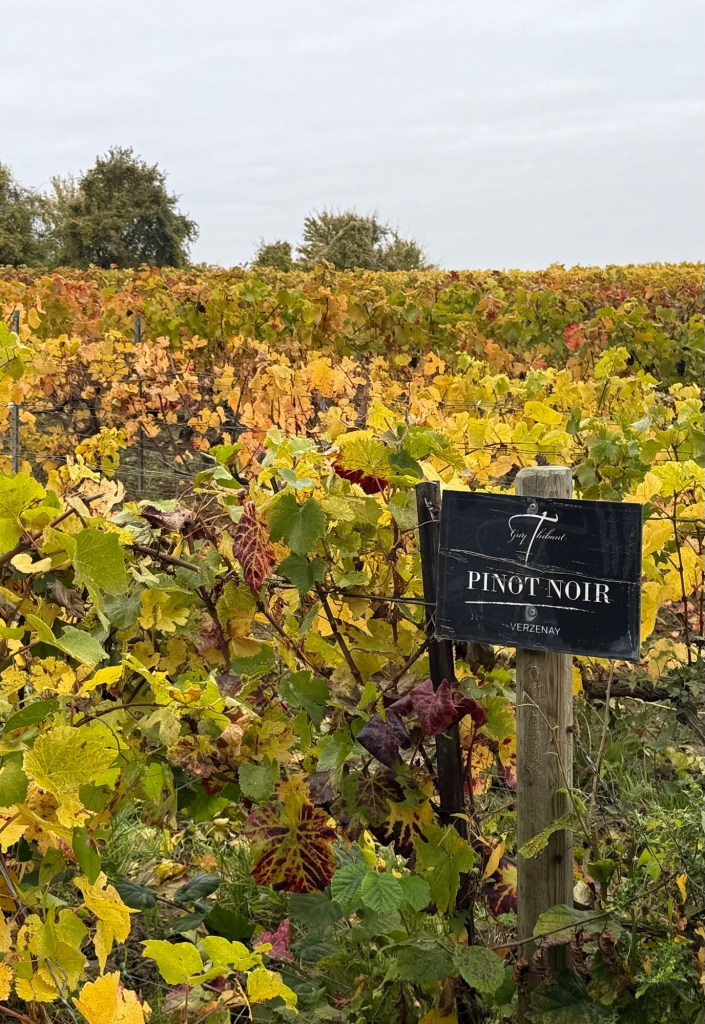
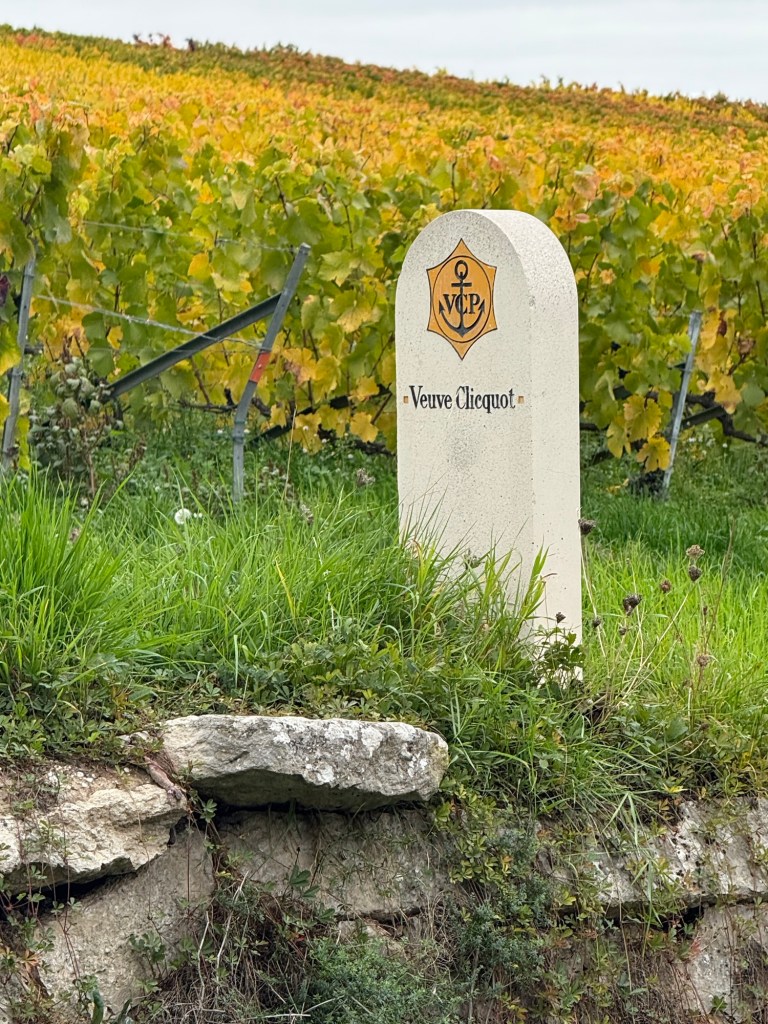
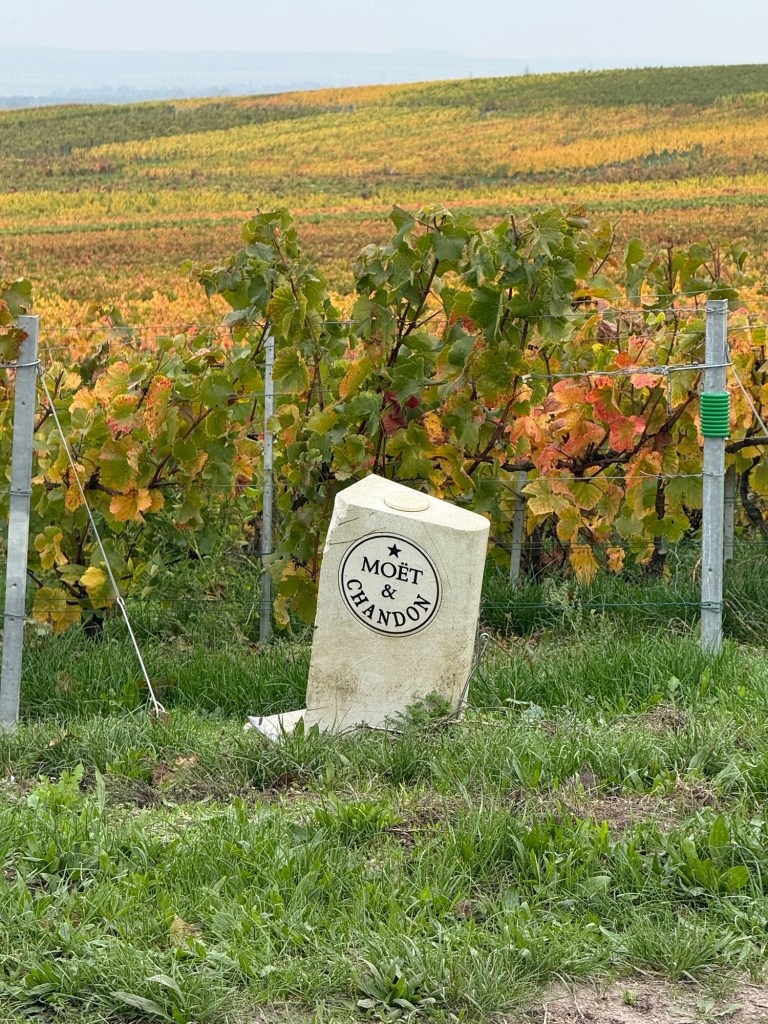
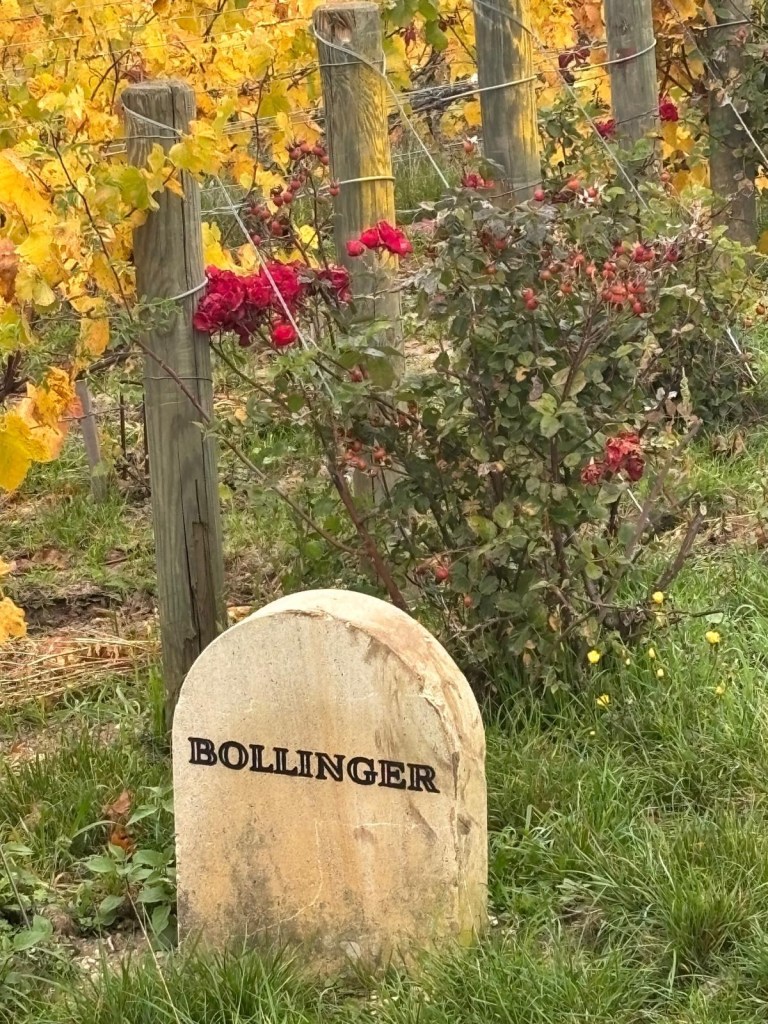
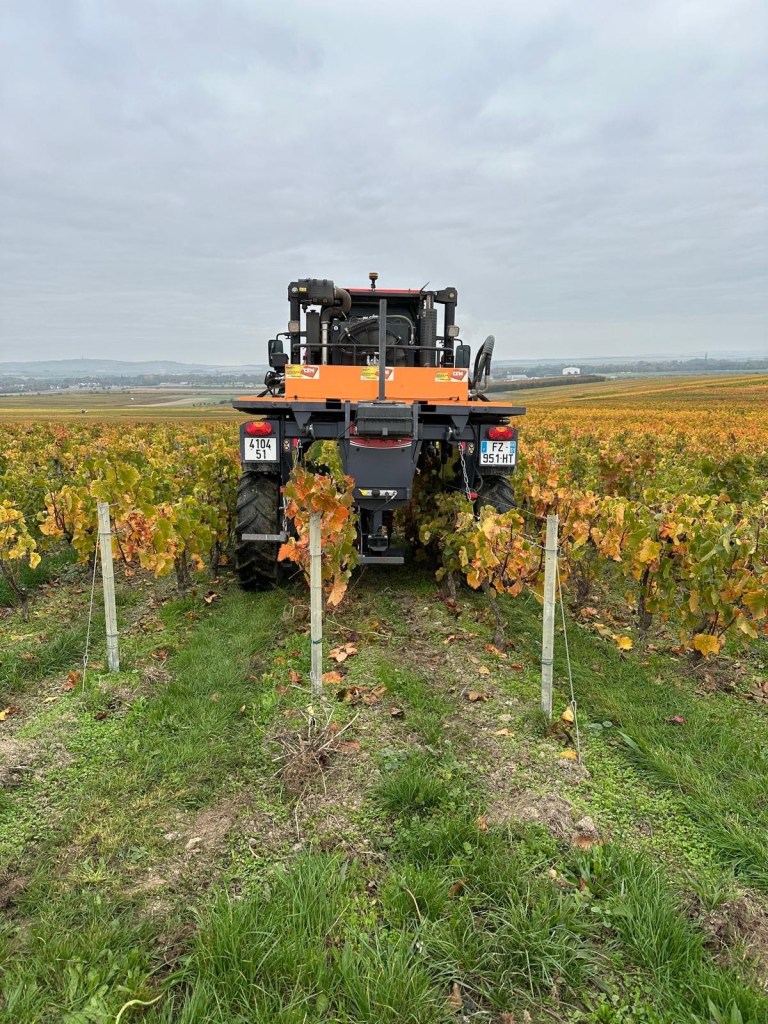
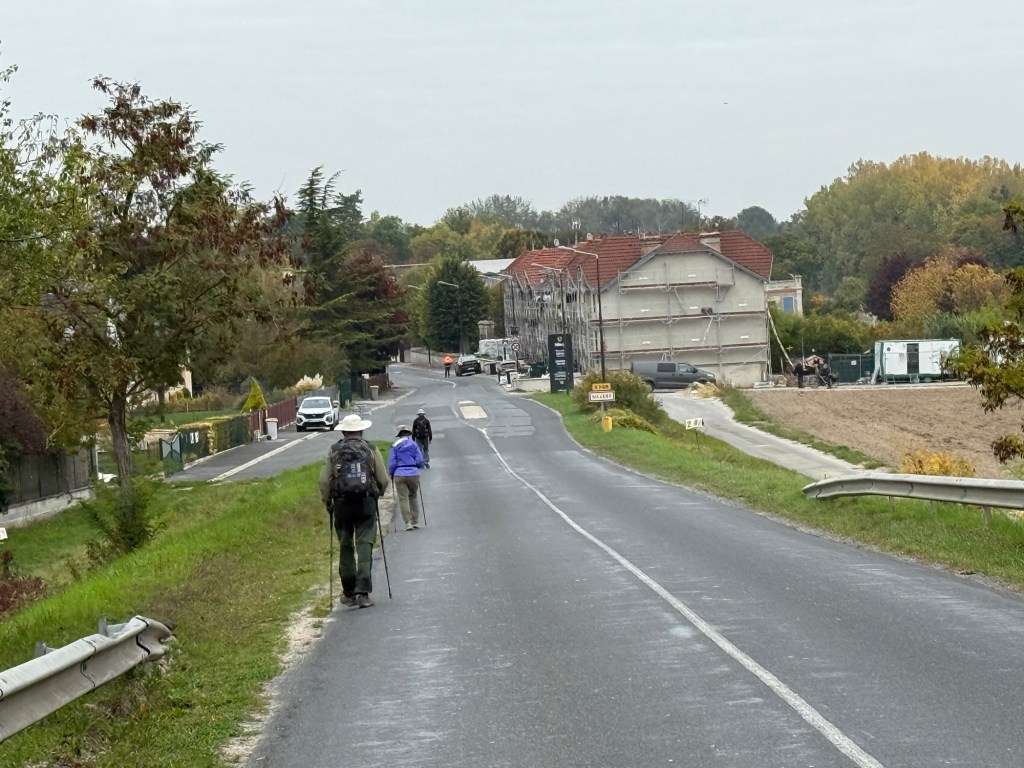
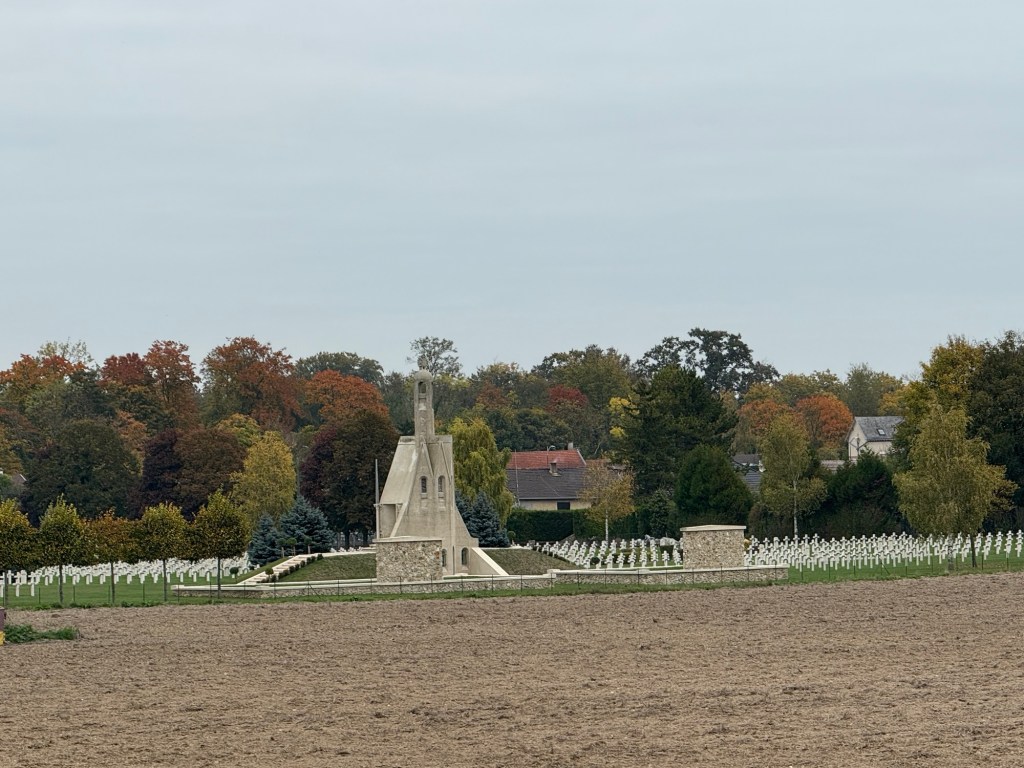
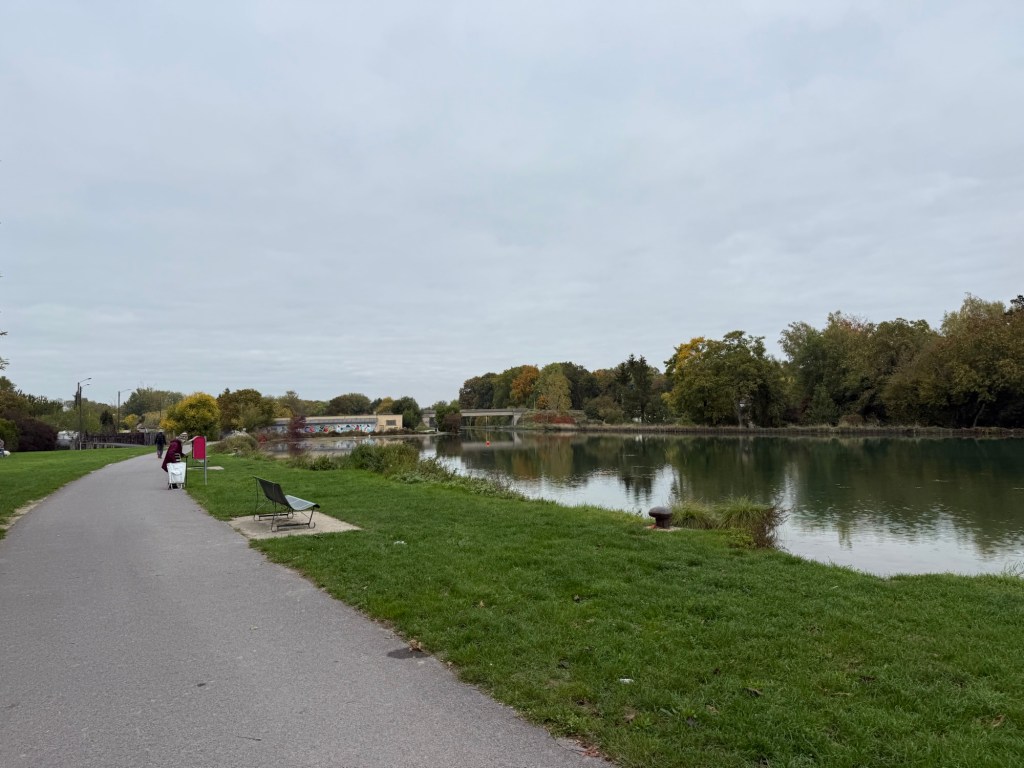
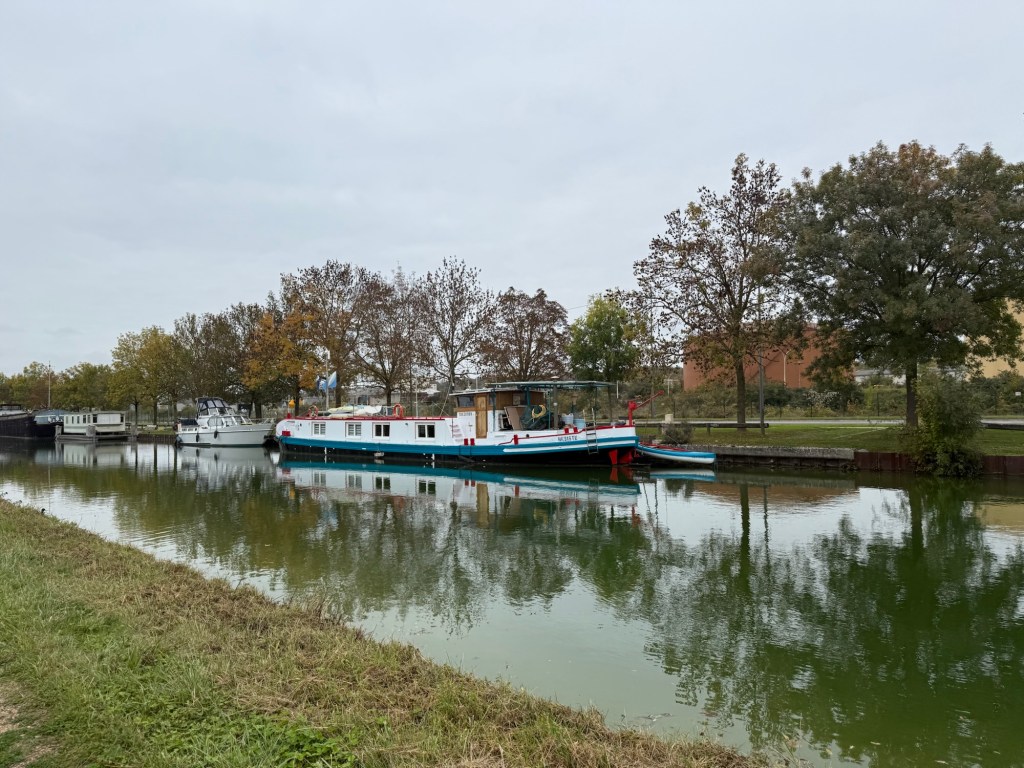
Verzy Town HallLooking back at Verzy from the hill topLooking towards Verzenay as we emerge from the forestTowards VerzenayThe Verzenay Lighthouse (tourist attraction with views)Old grape press in VerzenayOur guidebook states that Verzenay is noted for these “Pinot Noir grapes on north-facing vineyards.”Heading towards the Mumm museum located in an old windmillSome famous names… as Lynn noted, it’s hard to imagine that all those bottles of champagne, celebrating so many things around the world, all start here!Mowing between the vines Into Silley… no footpath, not much funAfter the frivolity of champagne we are reminded once again of the area’s historyBack onto the Canal de l’Aisne à la Marne Street art next to the canalAnd boats
Later…
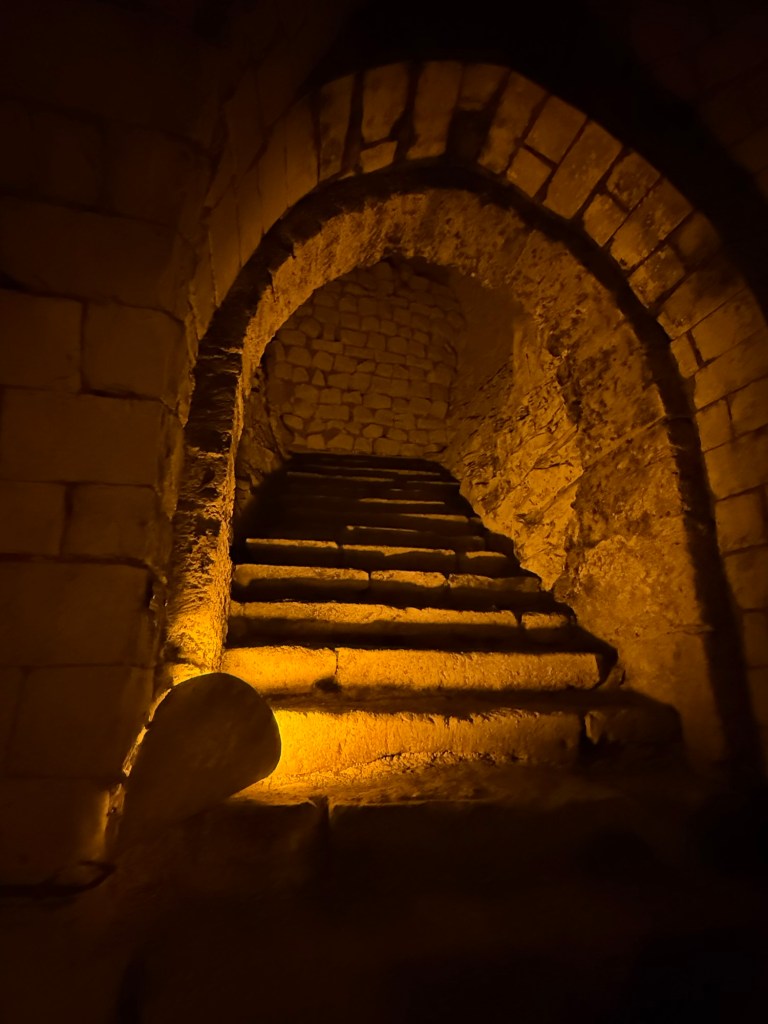
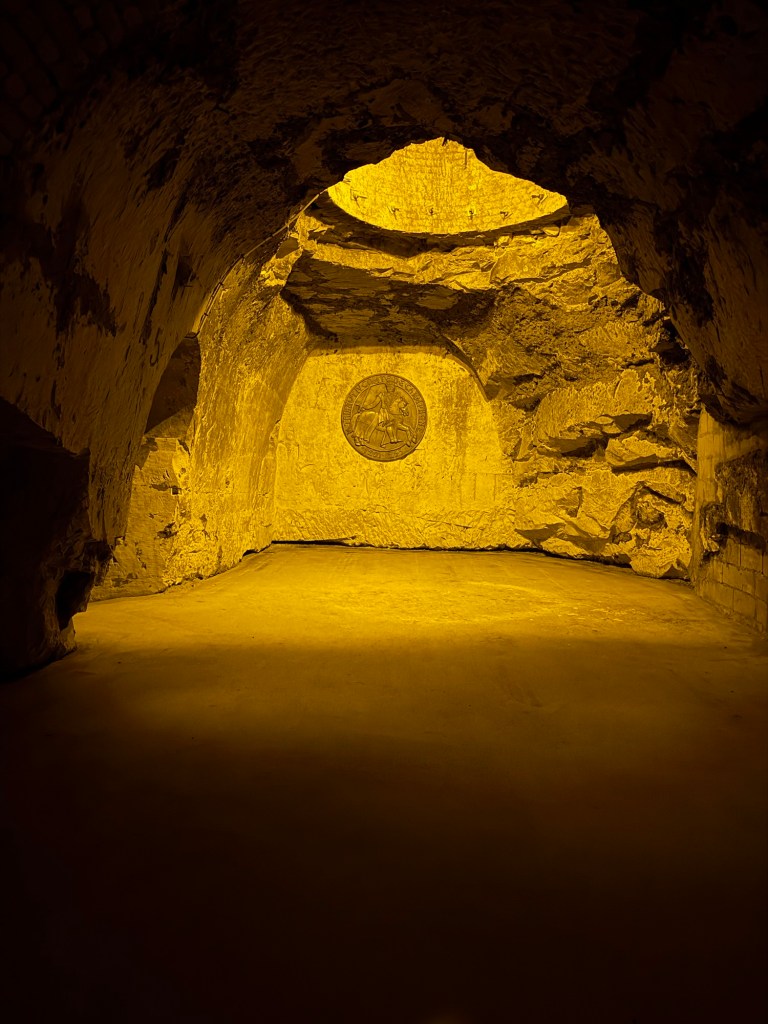
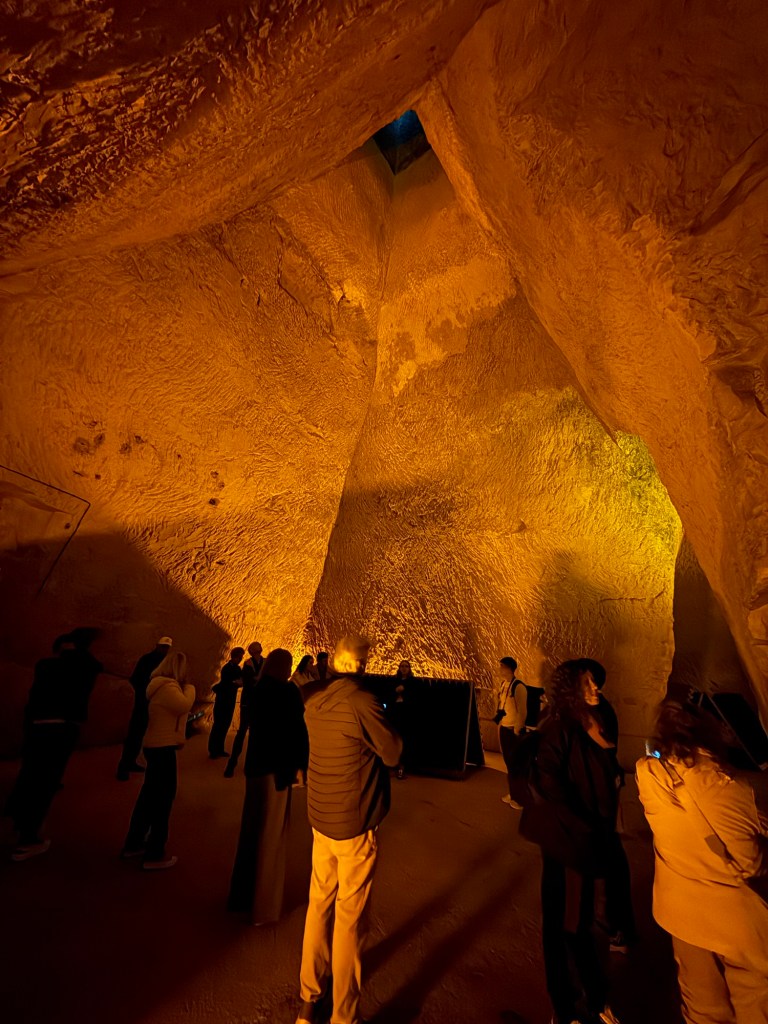
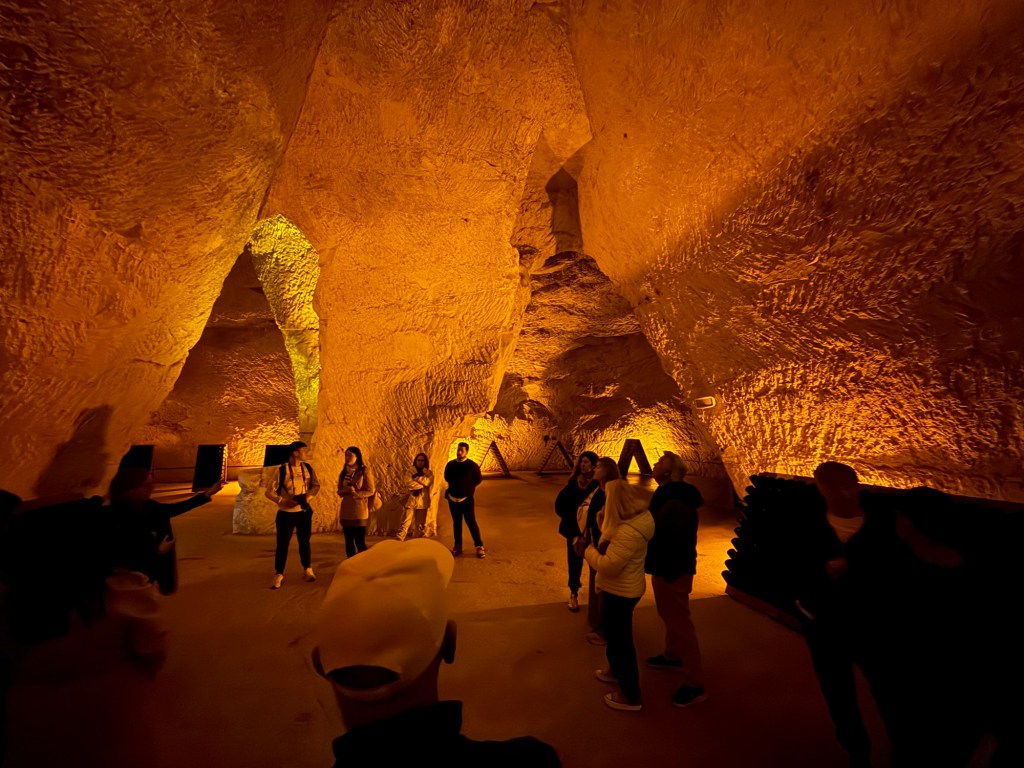
The Taittinger Champagne House was founded in 1932 and is now in the 4th generation hands. It was established on an old Benedictine Abbey site that was destroyed during the French Revolution. The caves and tunnels below the site date back to Roman times.
Our guide said that Taittinger is the 4th largest producer of champagne and sell 7 million bottles per year internationally (that’s about 20,000 bottles per day!) The top 5 consumer countries (other than France) in order are UK, US, Germany, Japan and Australia. Taittinger still pick their grapes by hand, engaging a team of 800 people to complete each harvest.
In 2017, Taittinger planted its first vines in England, near a village in Kent, for its venture into Englush sparkling wine as a strategy to prepare for global warming. (Thanks Wiki)
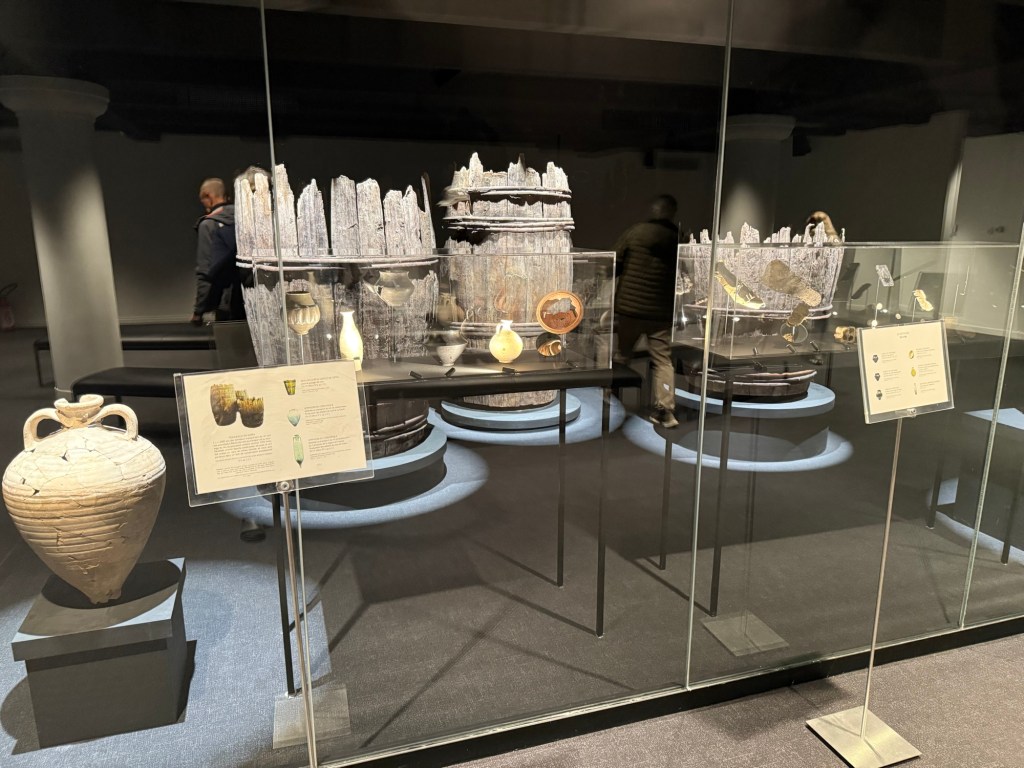
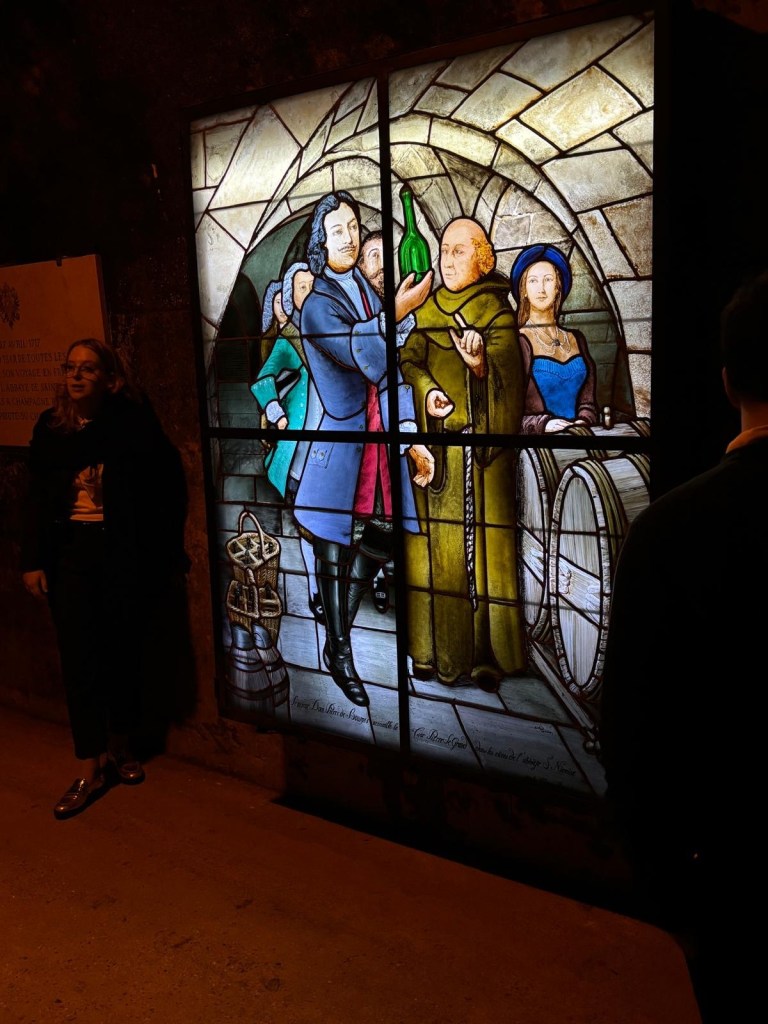
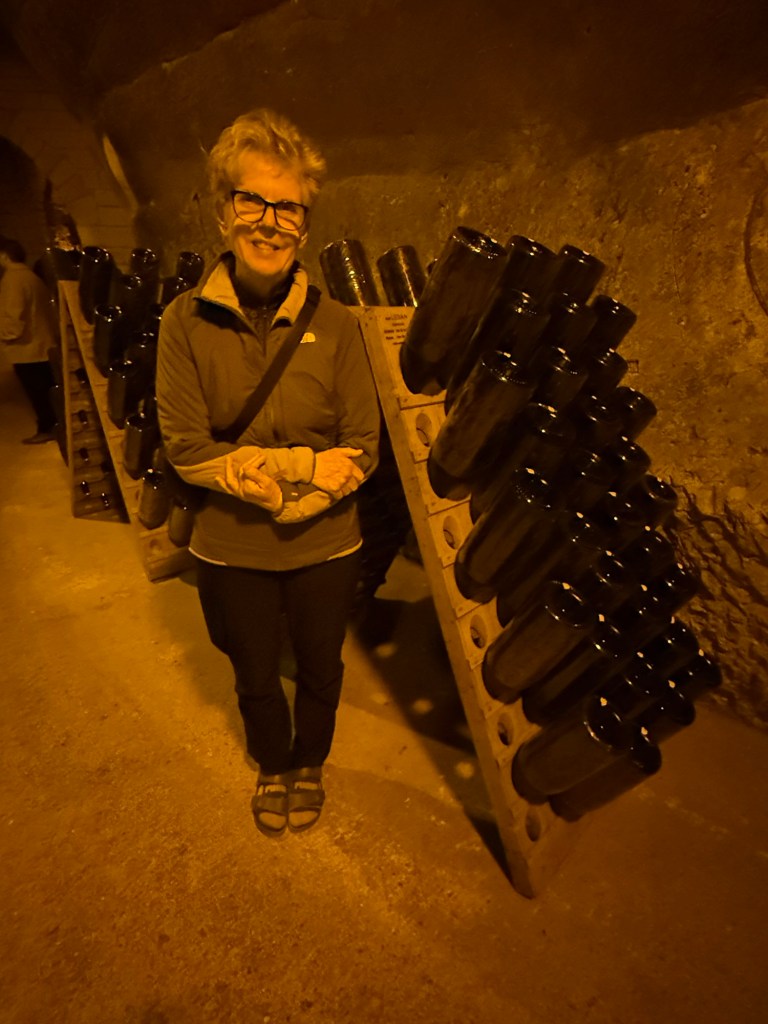
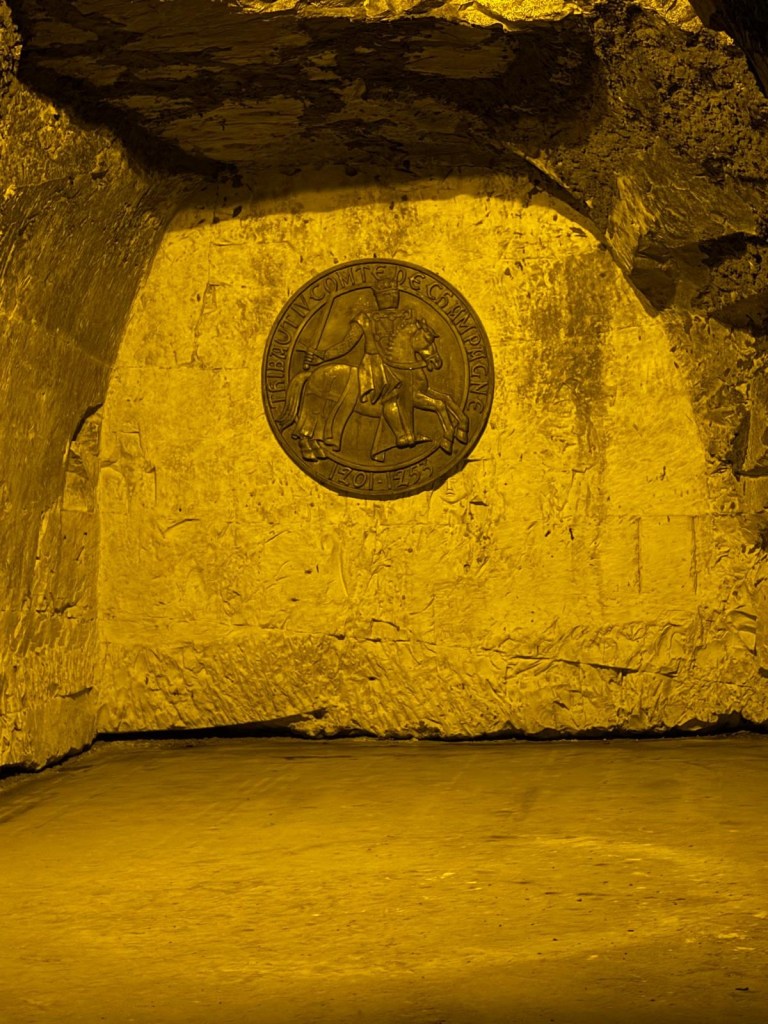
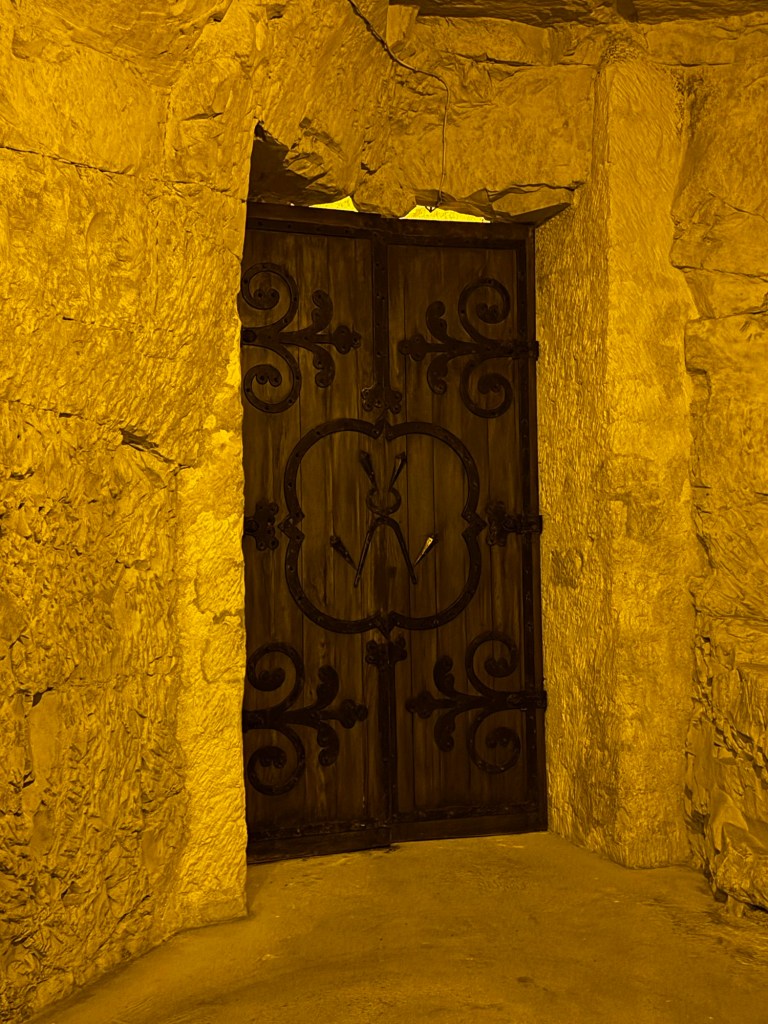
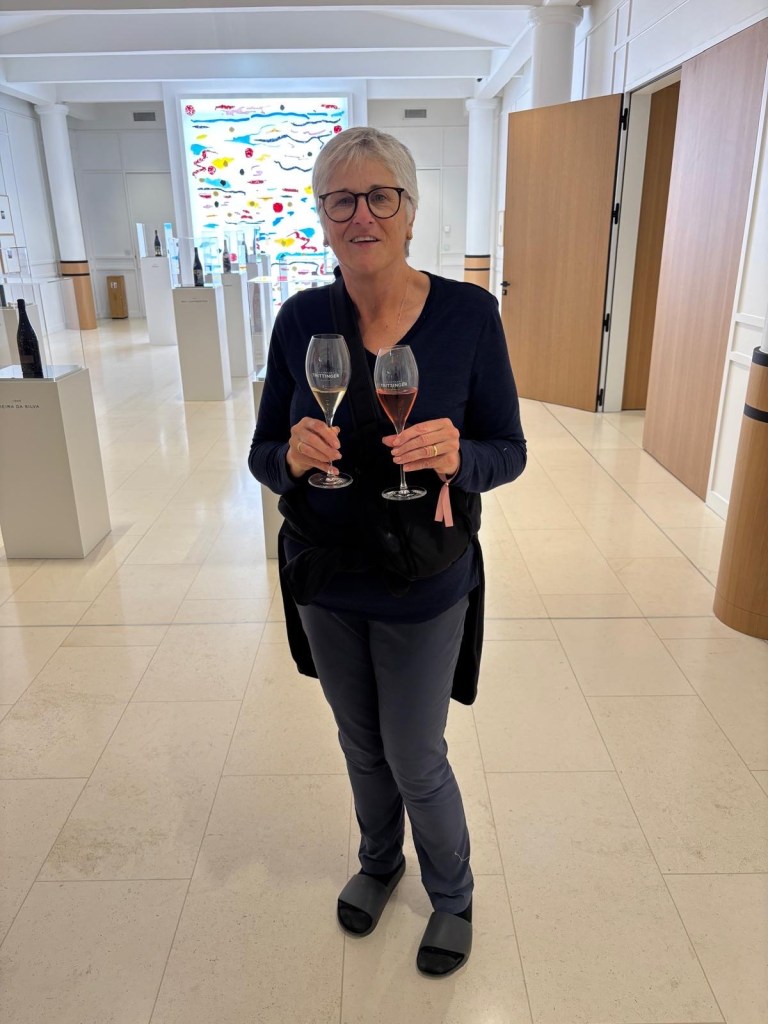
Historic artefacts recovered from the cavesStained glass of Russian Tzar with Benedictine monk and iconic bottle still used by Taittinger’s for their high end Comte champagneInto the caves/drivesWorking out whether her pocket is big enough…“Graffiti” on the wall from when the drives were used as bomb shelters and schools during WW1The logo The Roman caves (x3) created by the mining of the chalk for construction of the townWhat we tastedAlex, here’s to milestones! Cheers 🥂













 Morocco Food Tour