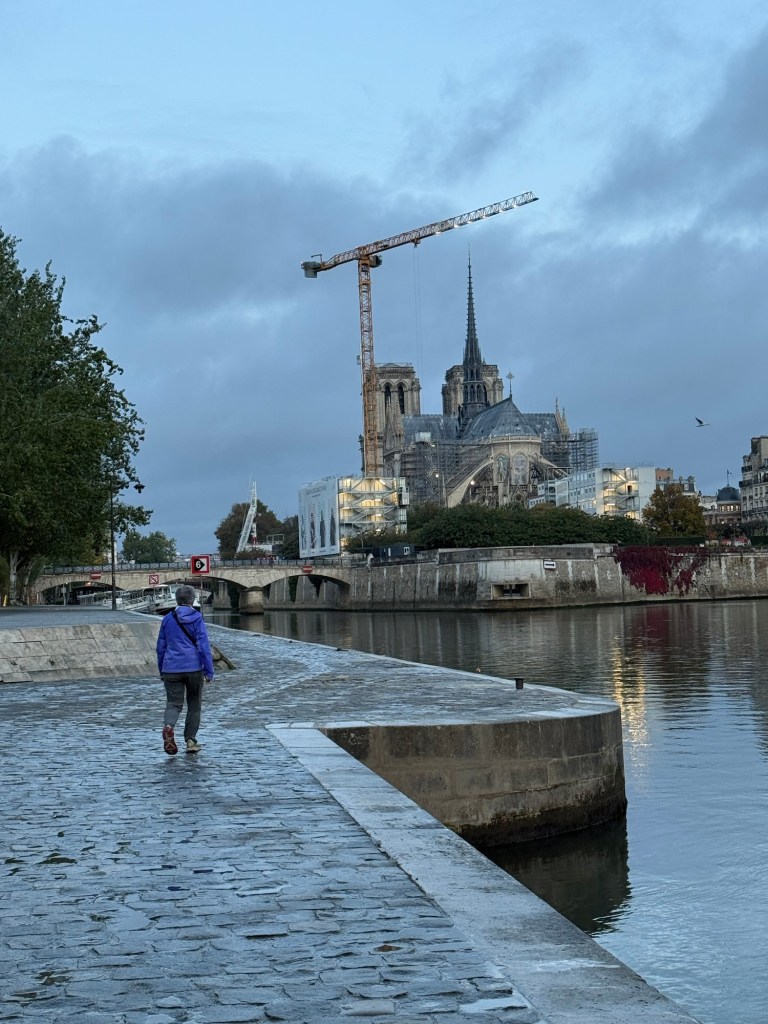
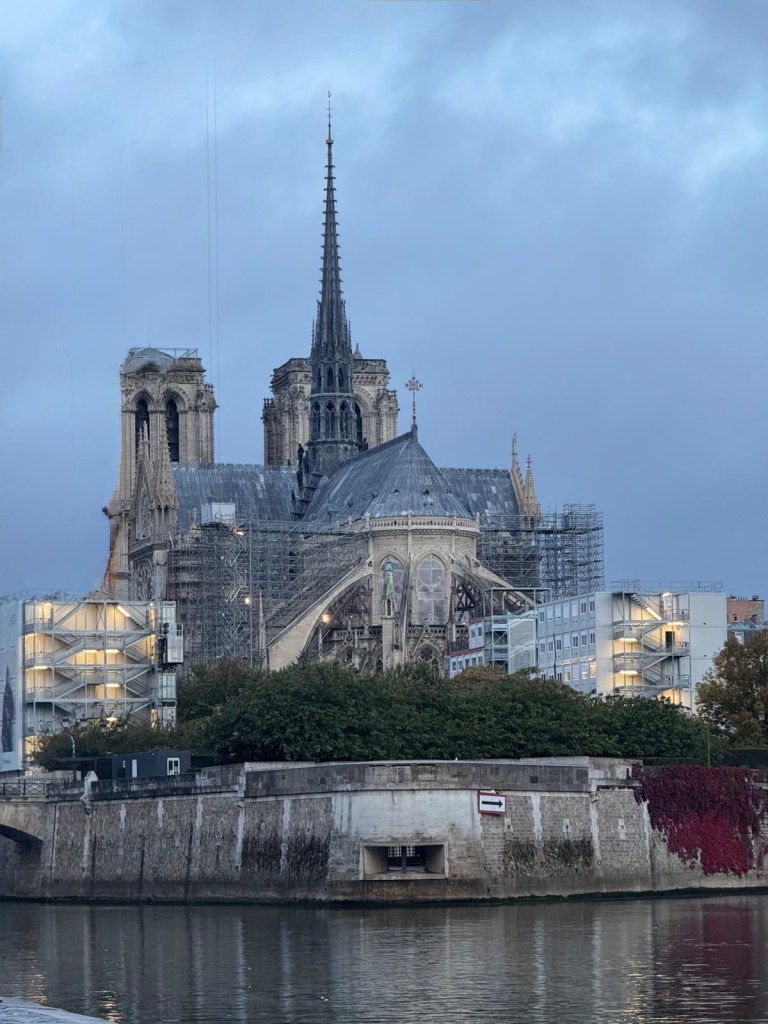
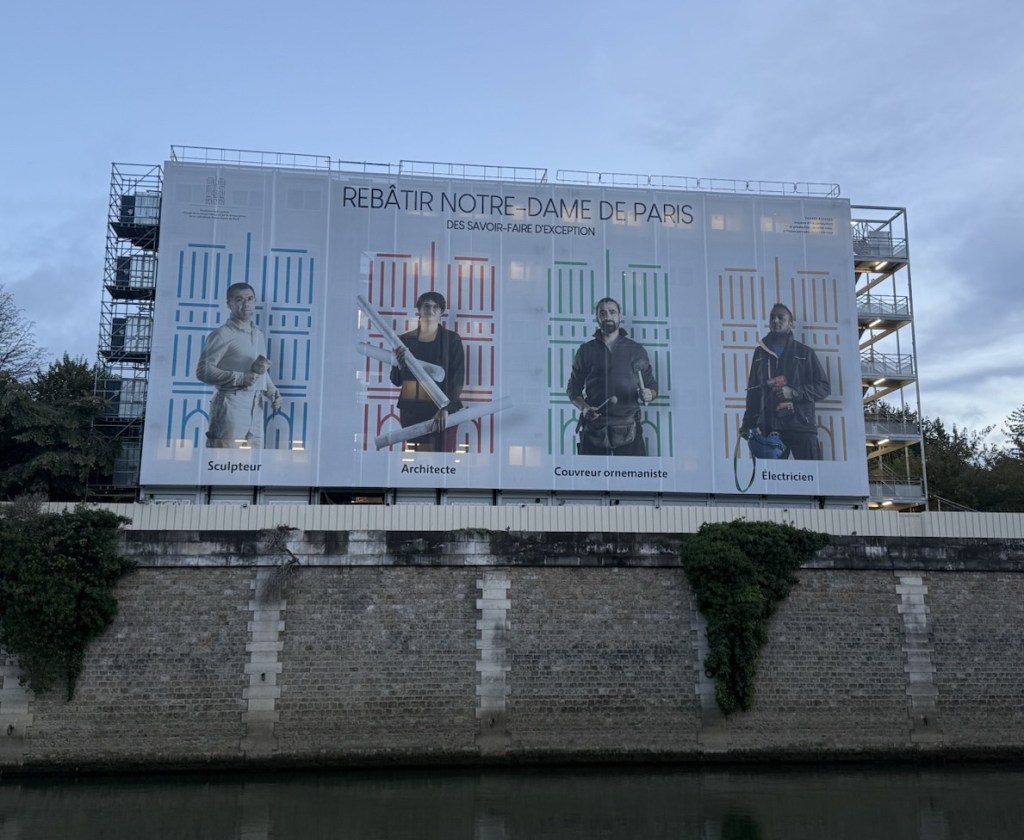
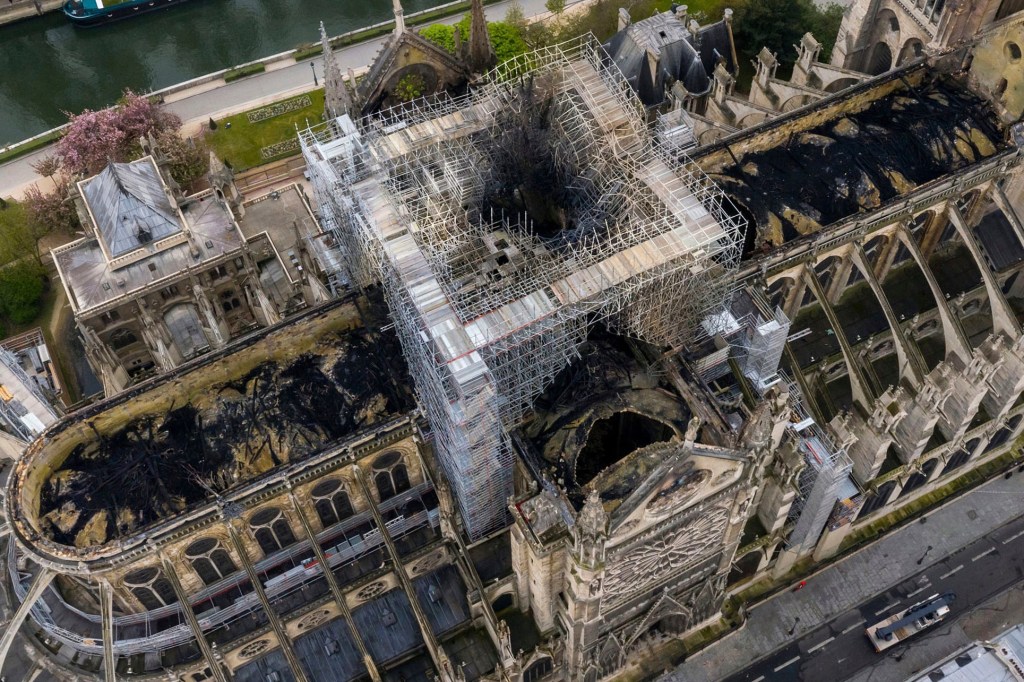
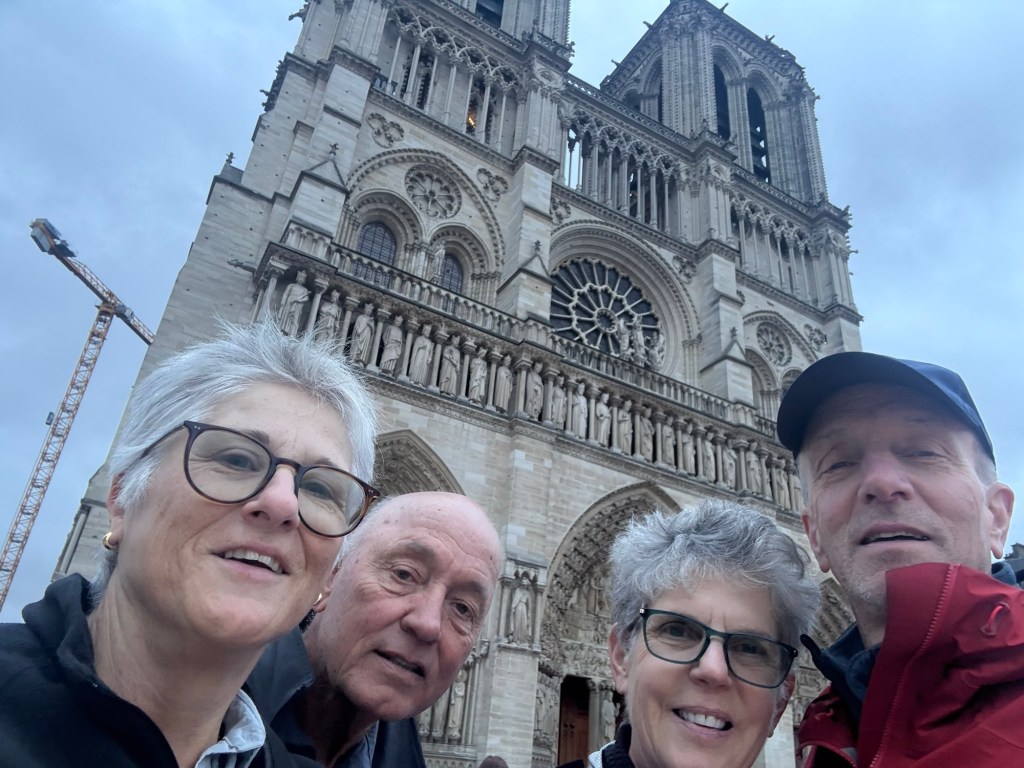
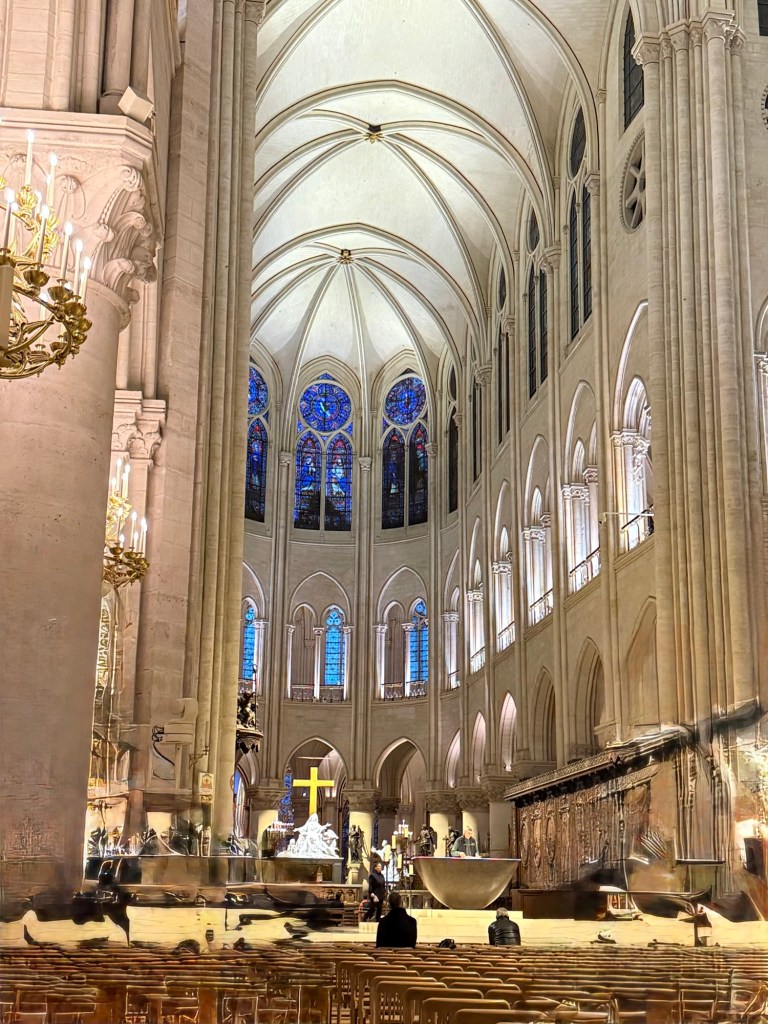
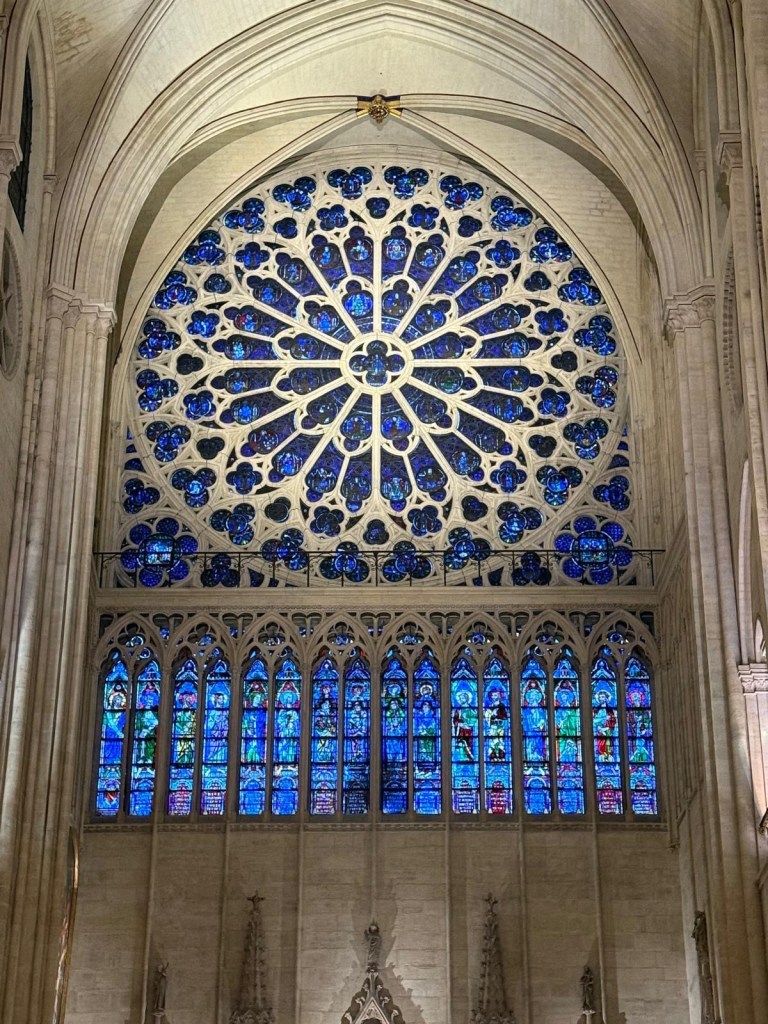
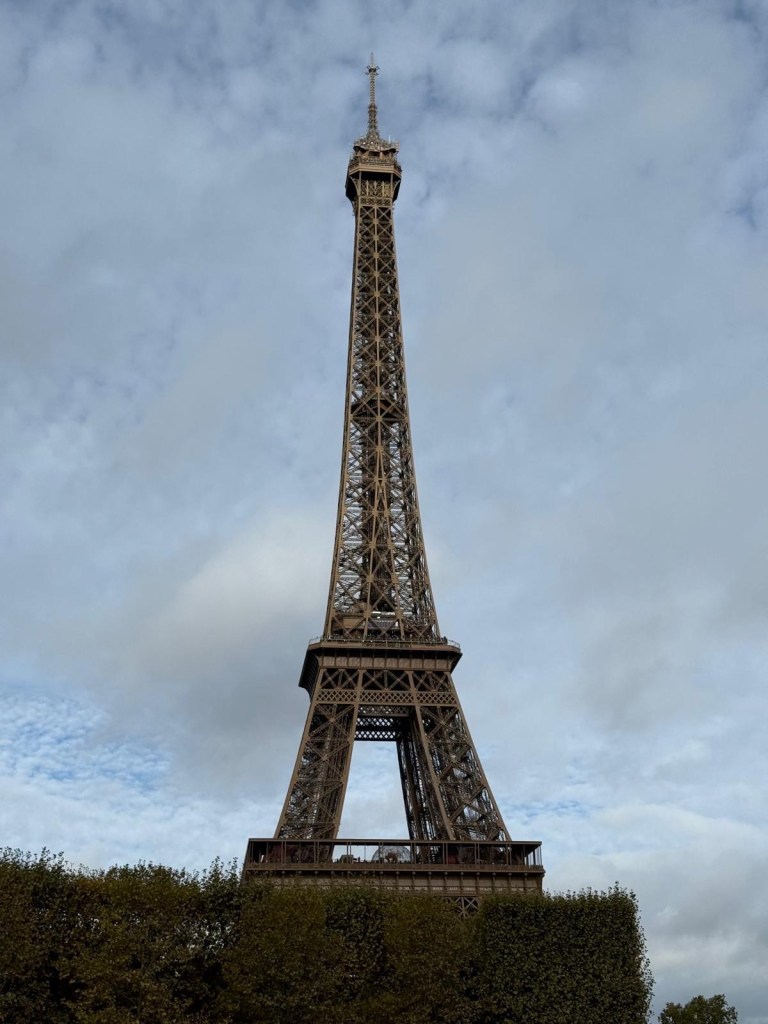
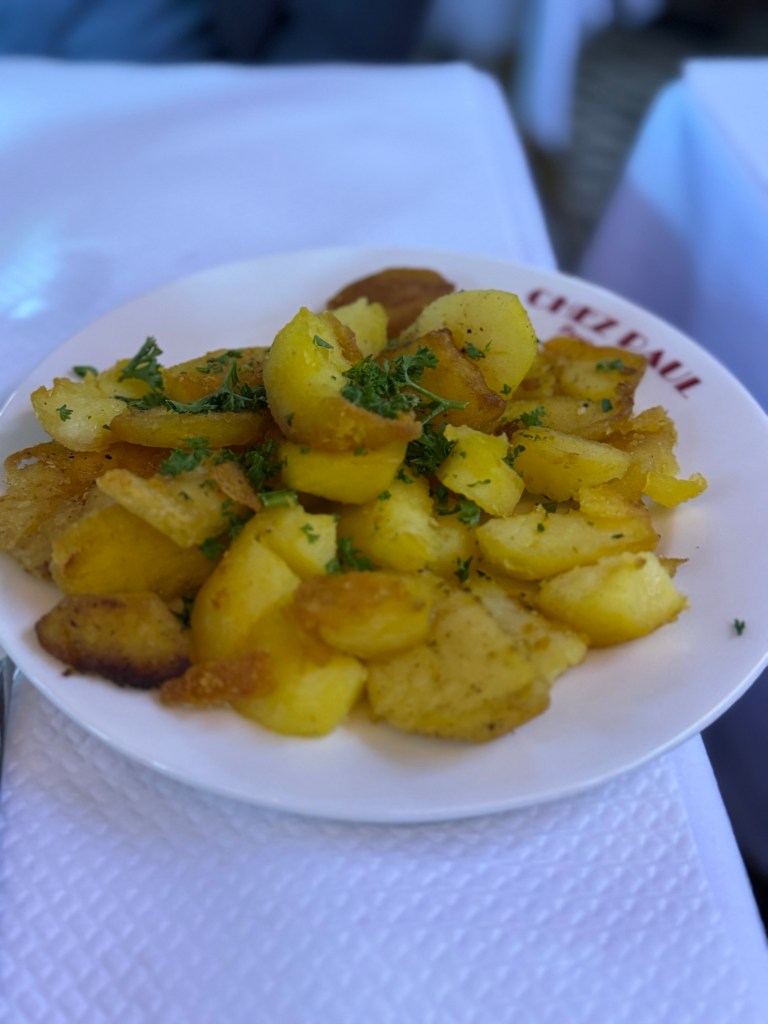
A play day in Paris today… what a privilege! We were all keen to see the restorations of Notre Dame so headed there first thing after breakfast to beat the crowds. From there we went our separate ways… Hans and Lynn to meander down to the Eiffel Tower and experience the ambience of Paris. We headed to some of the more obscure spots identified by Atlas Obscura. Then it was out for a late lunch together at Chez Paul, a traditional bistro a short walk away from our hotel, and it was delicious!




Gary’s & my day

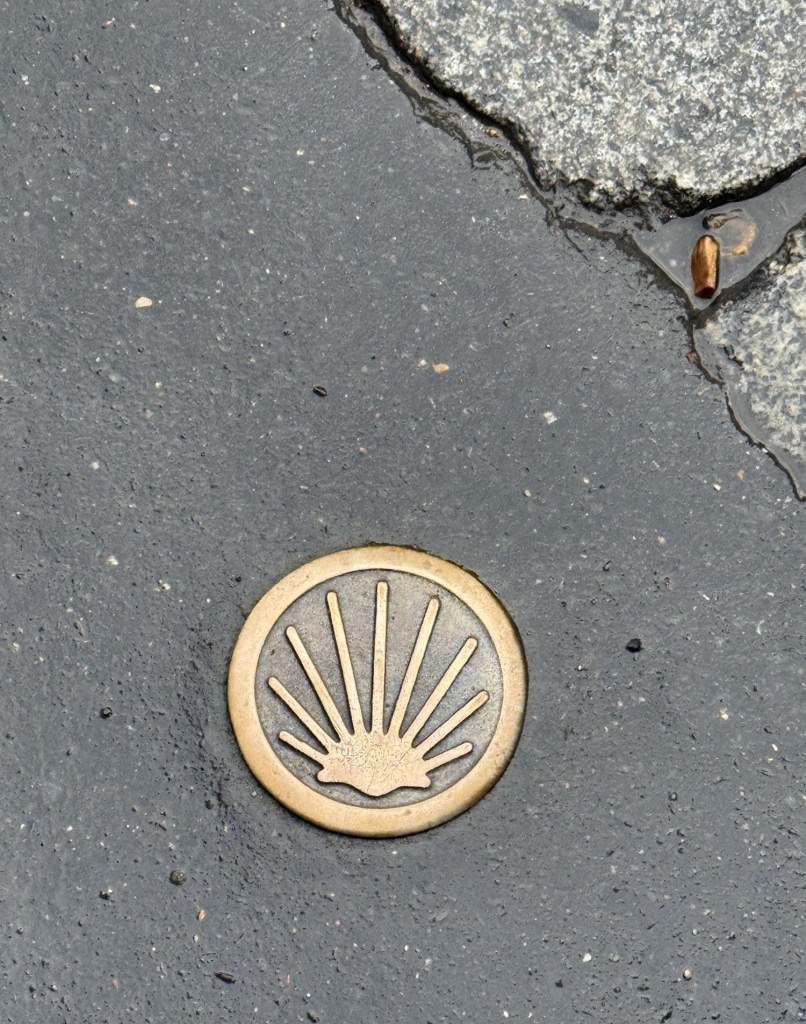
Just outside of Notre Dame Cathedral embedded in the concrete of the public square is a small geographic marker from which the distance from Paris to all other places are judged.(Atlas Obscura)
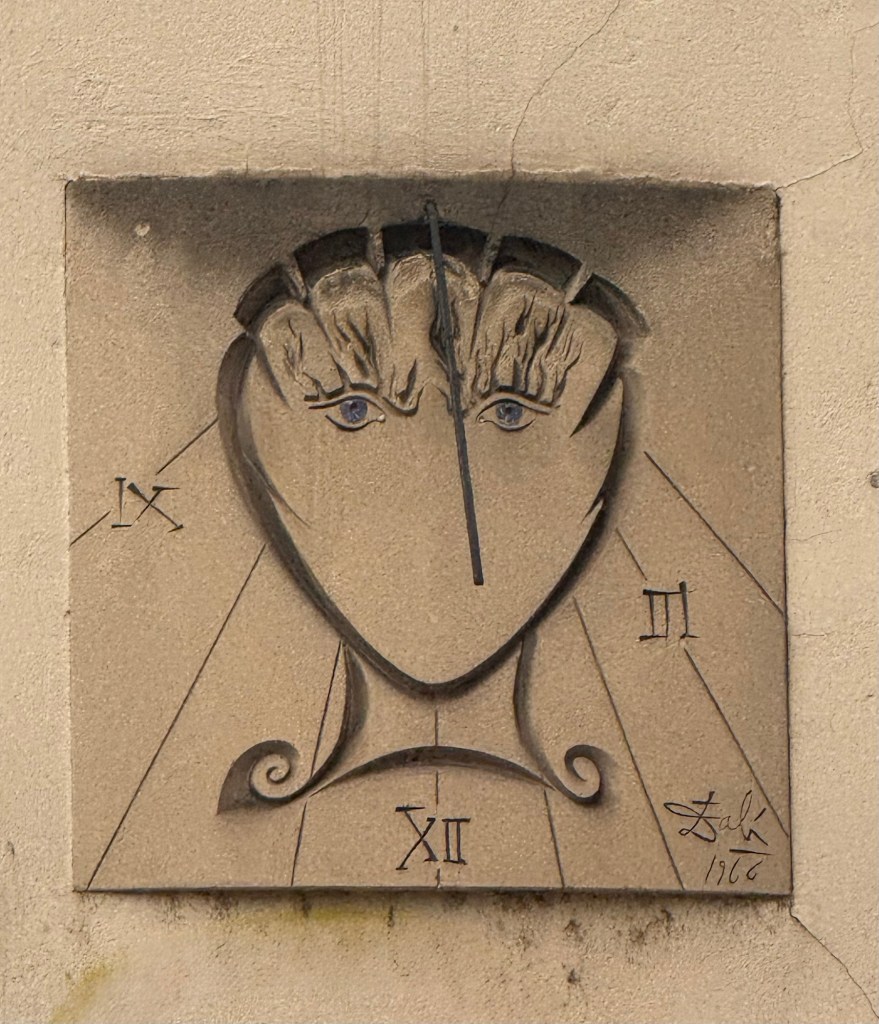
Up above Rue Saint-Jacques in Paris is a curious sundial designed by artist Salvador Dalí. Its human-like face is a scallop shell, while blue eyes with eyebrows like flames are cast in the concrete.
The sundial was installed in 1966 at a ceremony with the surrealist himself, who rode up on a lift to the sundial with his pet ocelot for some finishing touches to the accompaniment of a brass band. You can still spot his signature on the bottom right corner of the sundial.
The sundial unfortunately does not work, although what do you expect from the artist of melting clocks?(Atlas Obscura)


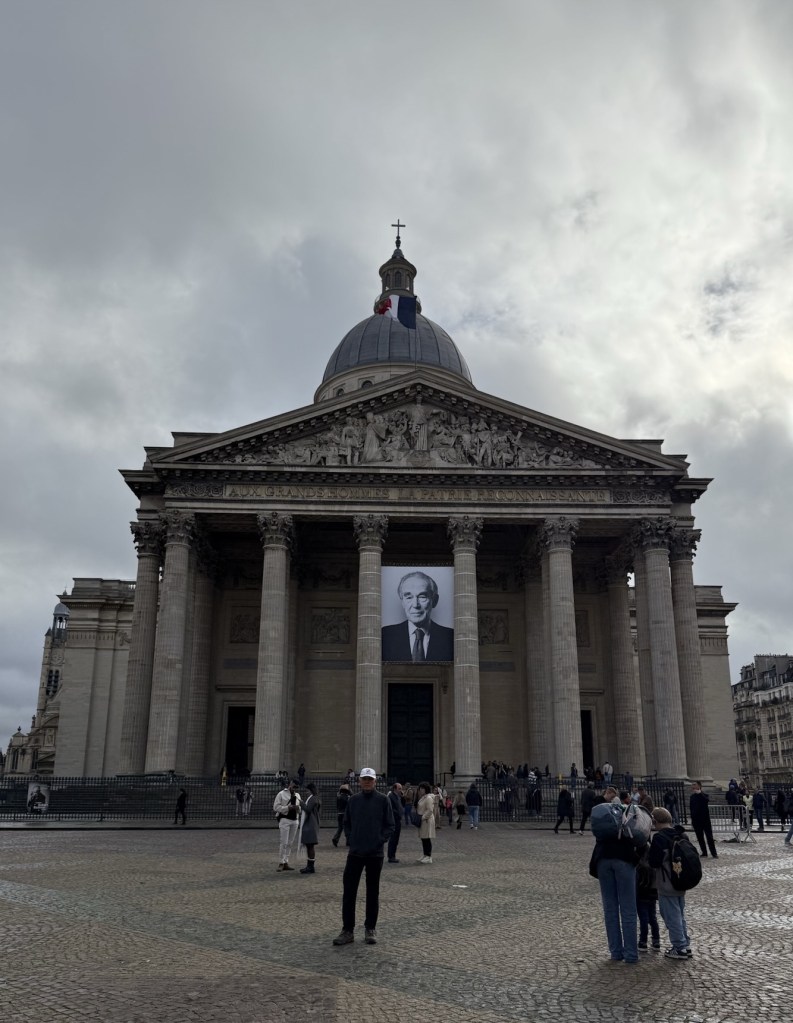
There was a fascinating exhibition about Badinters’ life in the Pantheon. Perhaps his greatest claim to fame is that he was responsible for the abolition of the death penalty in France.


In 1851, physicist Léon Foucault demonstrated the rotation of the Earth with an experiment conducted in the Paris Panthéon.
By constructing a fixed 67-meter swinging lead bob beneath the central dome, Foucault was able to prove that the earth was in fact in rotation at all times, as the plane of the pendulum never changed, yet it seemed to move with earth’s rotation.
While the original pendulum is now housed at the Musée des Arts et Métiers, a working copy is displayed at the Panthéon and has been swinging there since 1995.
In 2007, four members of the rogue art group Untergunther snuck into the Panthéon and restored the famous clock inside the building. Without being caught, the group decided to reveal itself and took credit for the work in front of the building administrator. Shortly after, the police were alerted, resulting in the arrest of the four members and a ridiculous trial in which the members of Untergunther were declared innocent. (Atlas Obscura)
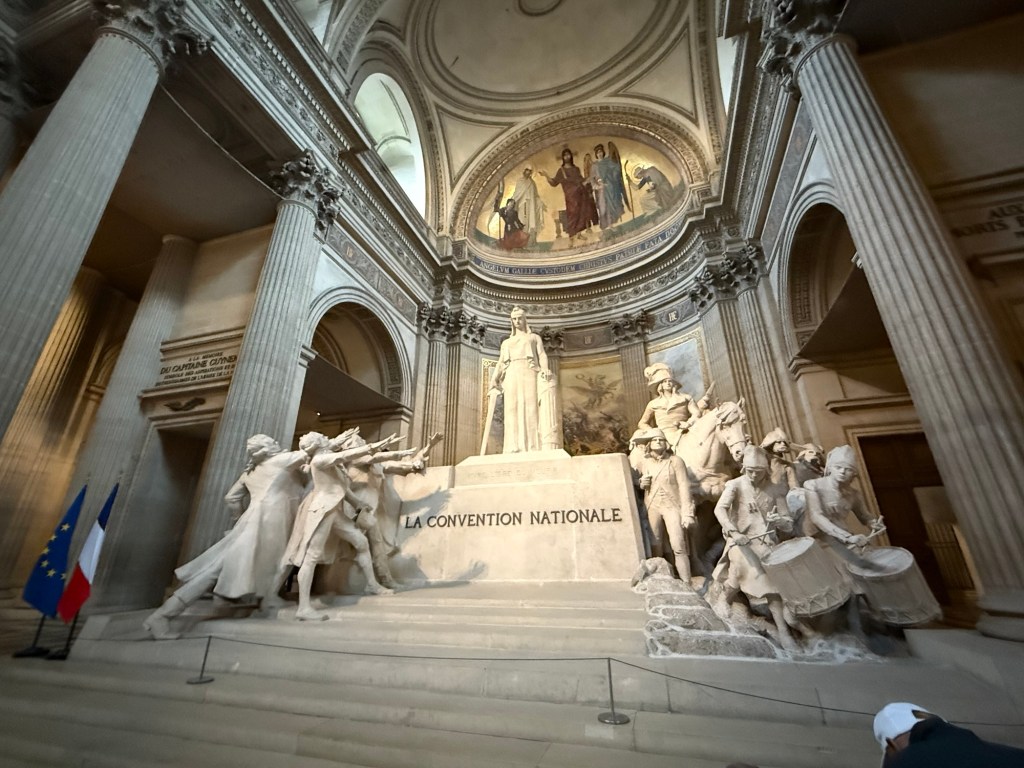
Information provided in brochure: The National Convention by Sicard circa 1924 shows Marianne surrounded by the soldiers and well-known revolutionary deputies. These values, which emerged in the Age of Enlightenment were to become fundamental to the nation.
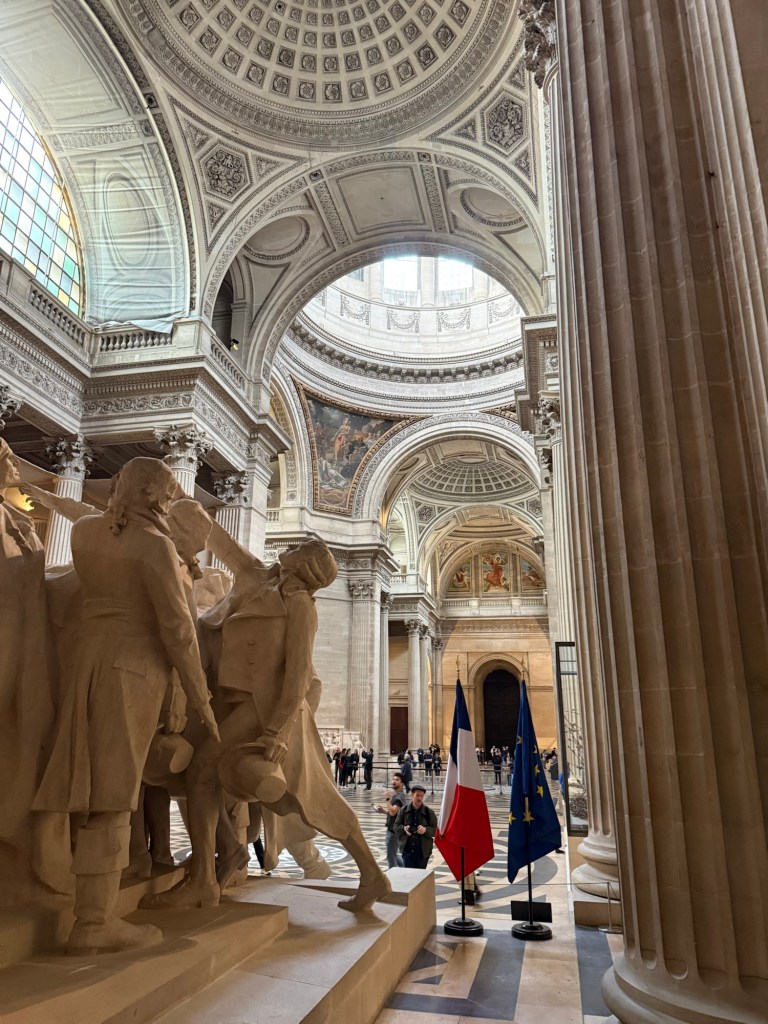
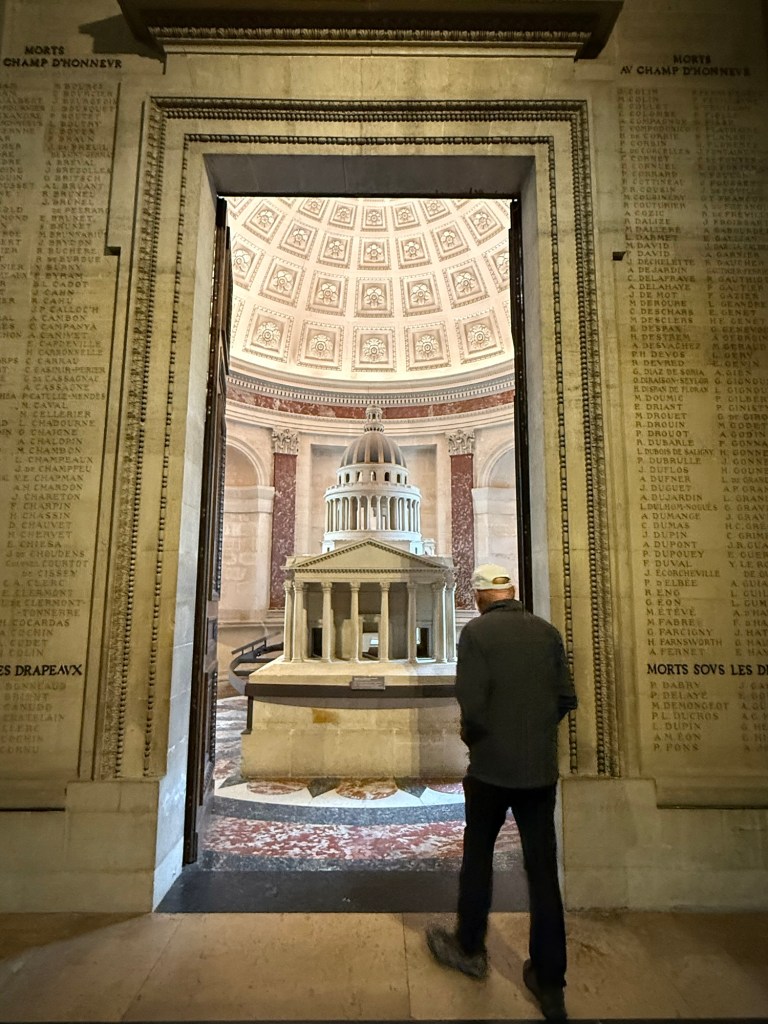
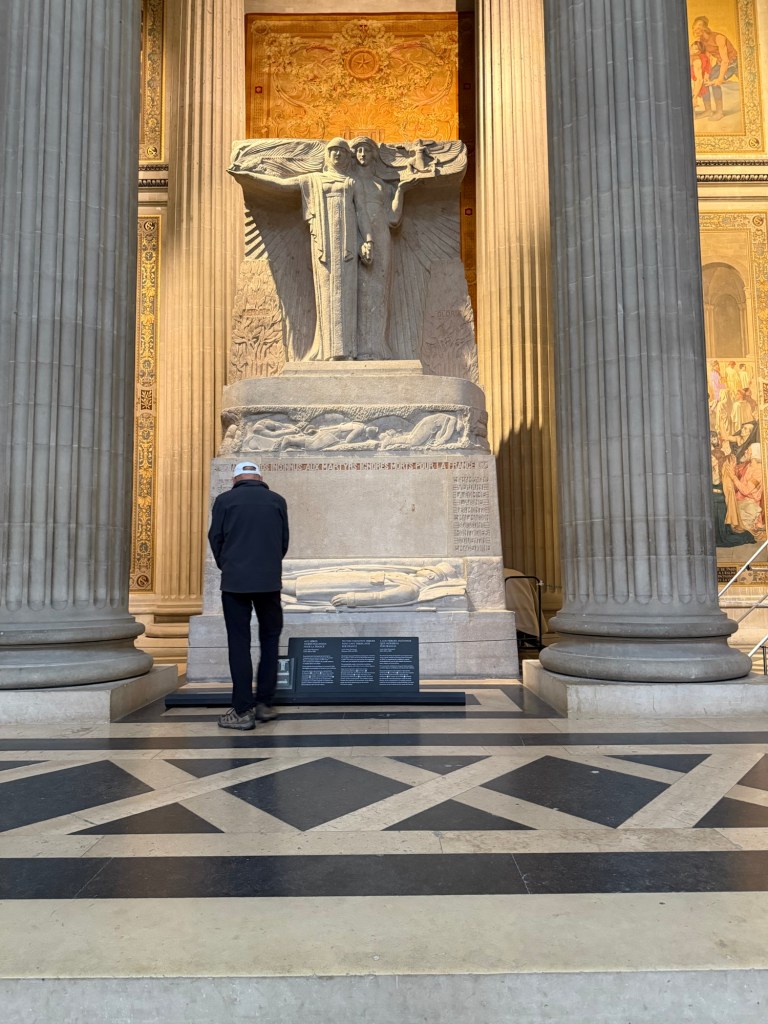
Down into the crypt…
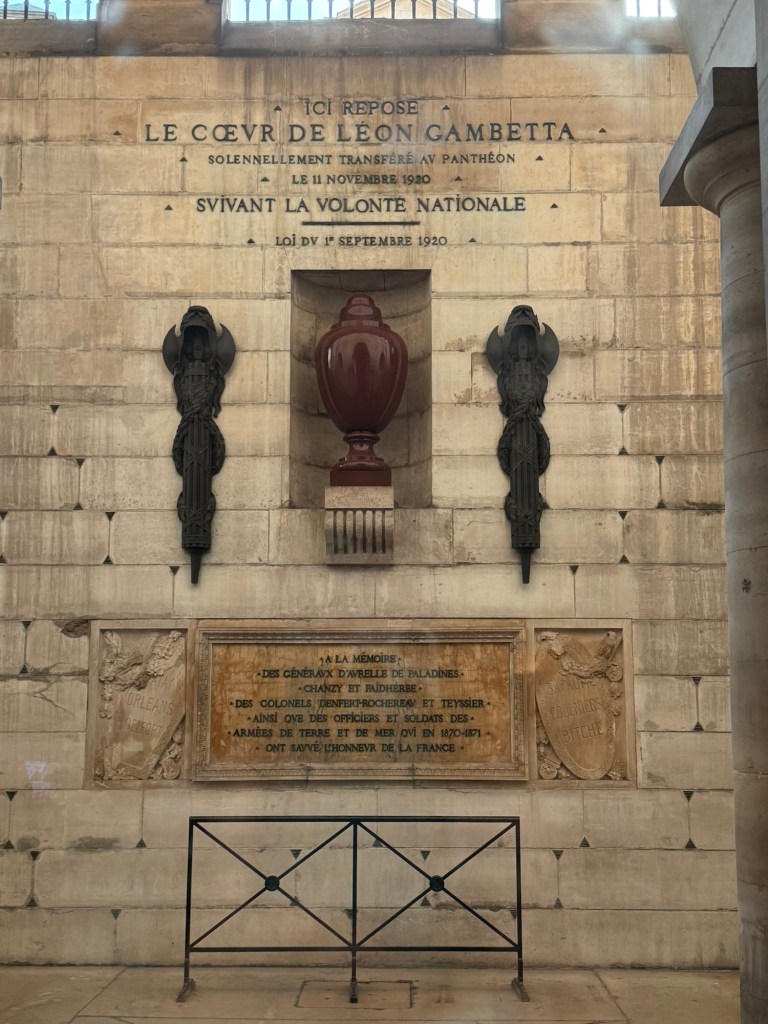
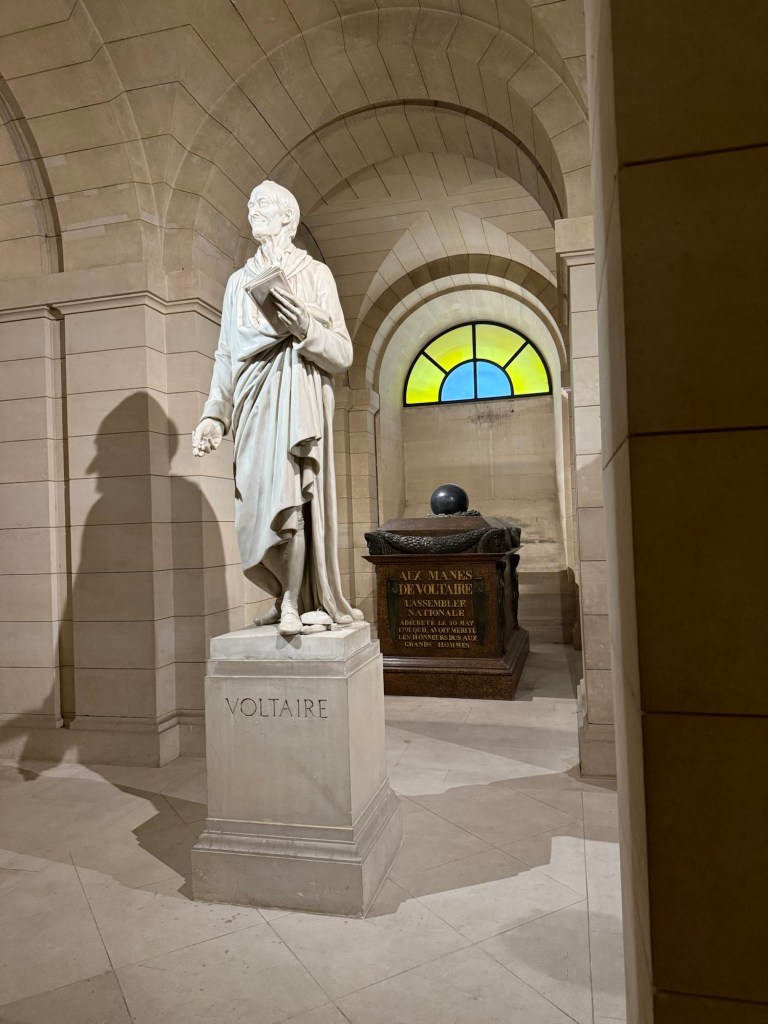
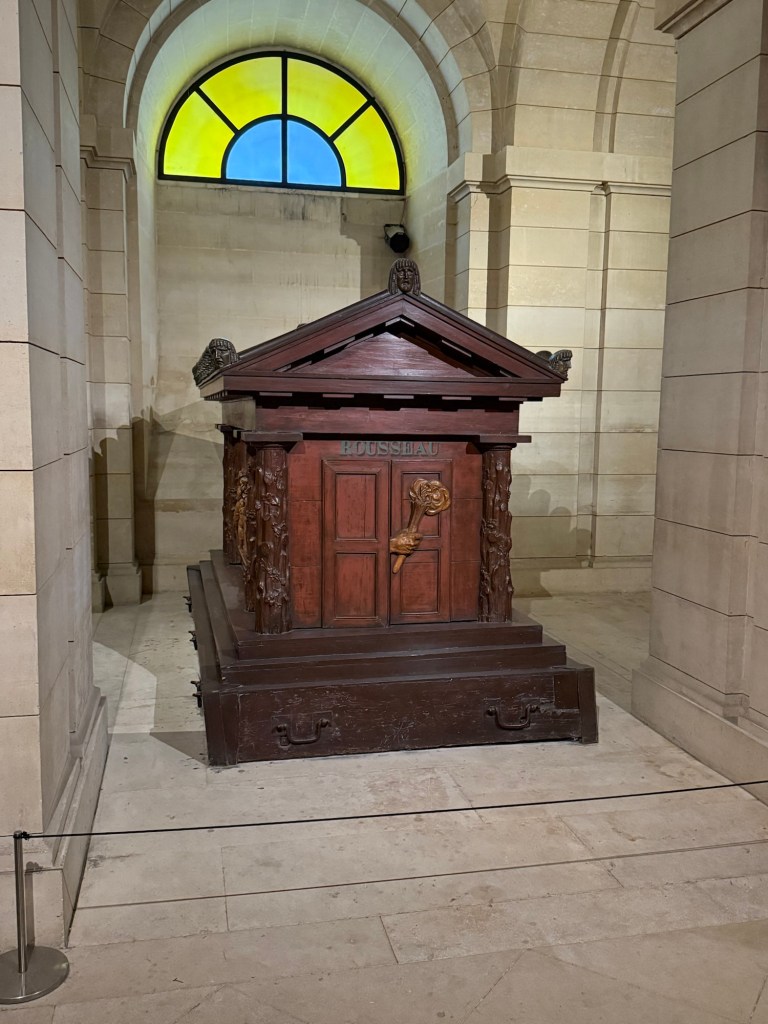


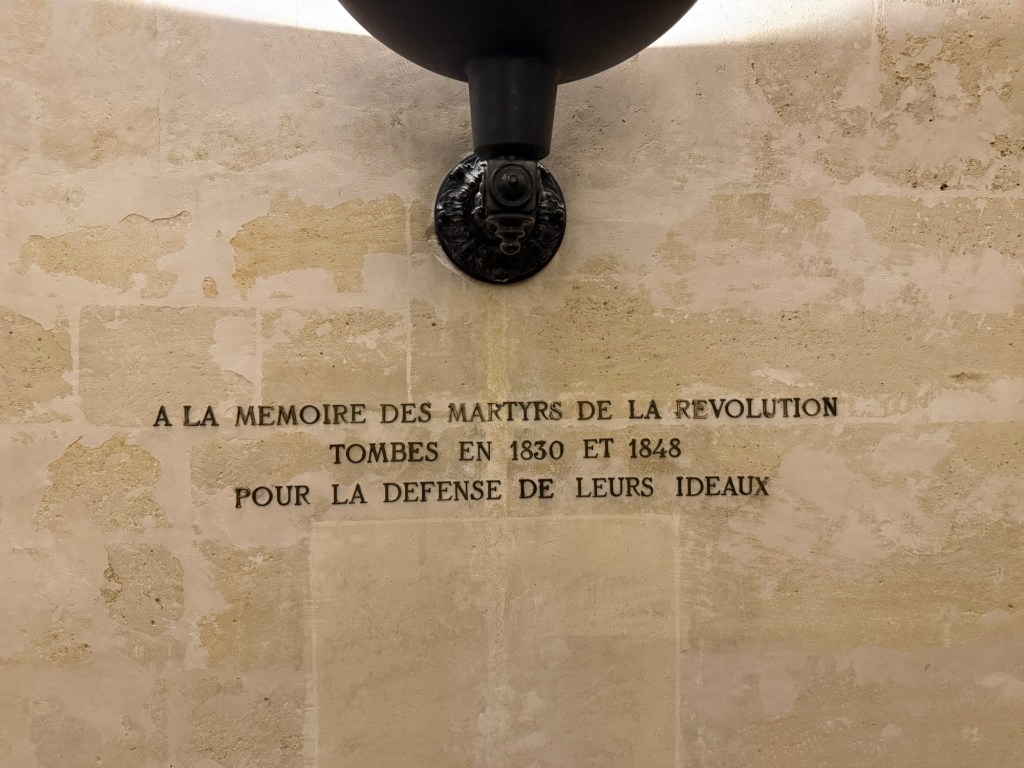
Others interred in the crypt include Victor Hugo, Emile Zola and Alexander Dumas to name but a few.



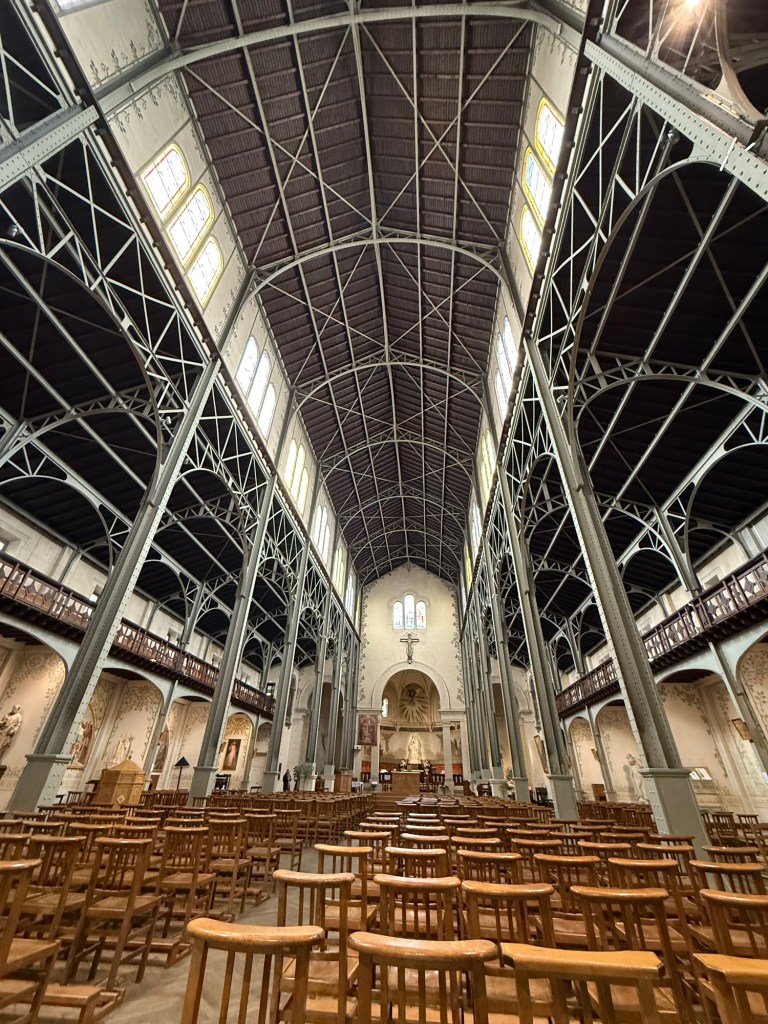
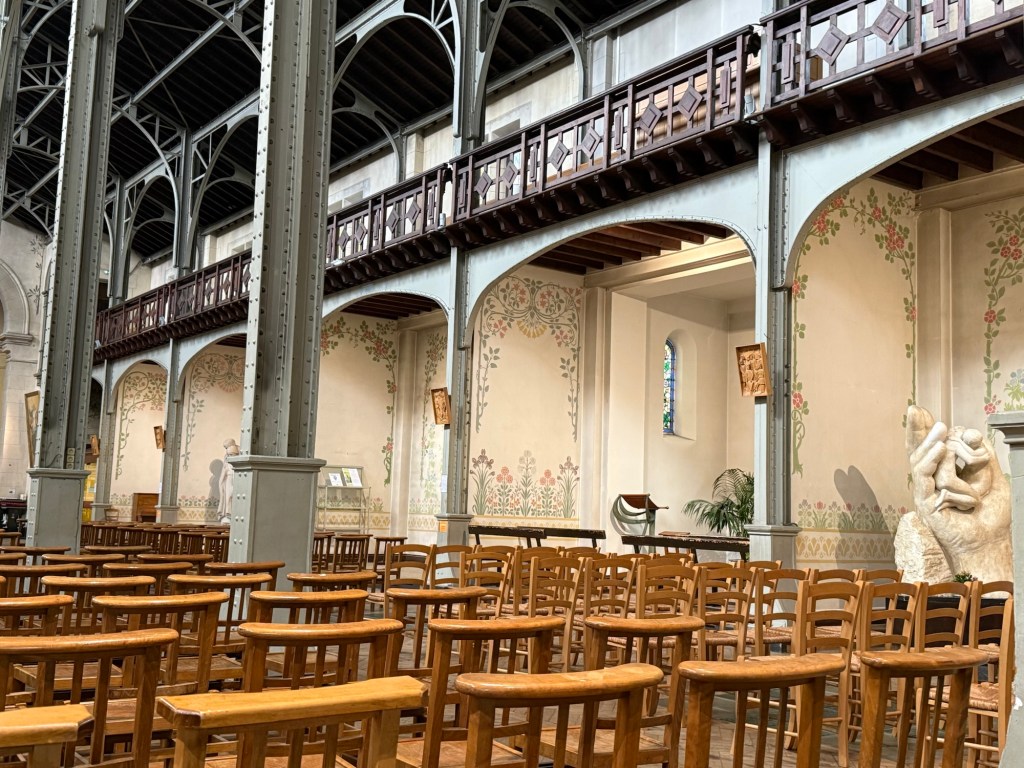
From the outside, this church looks no different than any other nestled within France’s cities and villages. But step inside, and you’ll soon see its sandstone exterior hides a rather unique interior.
The Notre Dame du Travail Church was built just after the Exposition Universelle of 1900 in Paris, France. Many of the laborers hired to bring the grand exposition to life lived within the city’s 14th arrondissement. As more and more workers arrived to build the affair’s various exhibits and attractions, the neighborhood soon outgrew its existing church.
As a result, a new building was constructed to fit both the size and style of the neighborhood’s working-class residents. The church was designed to make those more accustomed to factories than palaces feel at home. Even its name, which translates to “Our Lady of Labor,” pays homage to its parish.
The result is a church unlike any other in Paris. Exposed metal beams stretch upward, giving the space a distinctly industrial feel. But the typical church features–pews, an altar, and religious art—make it clear this is indeed a place of worship. Among the artwork is an image of Saint Eligius, the patron saint of goldsmiths and metalworkers. (Atlas Obscura)


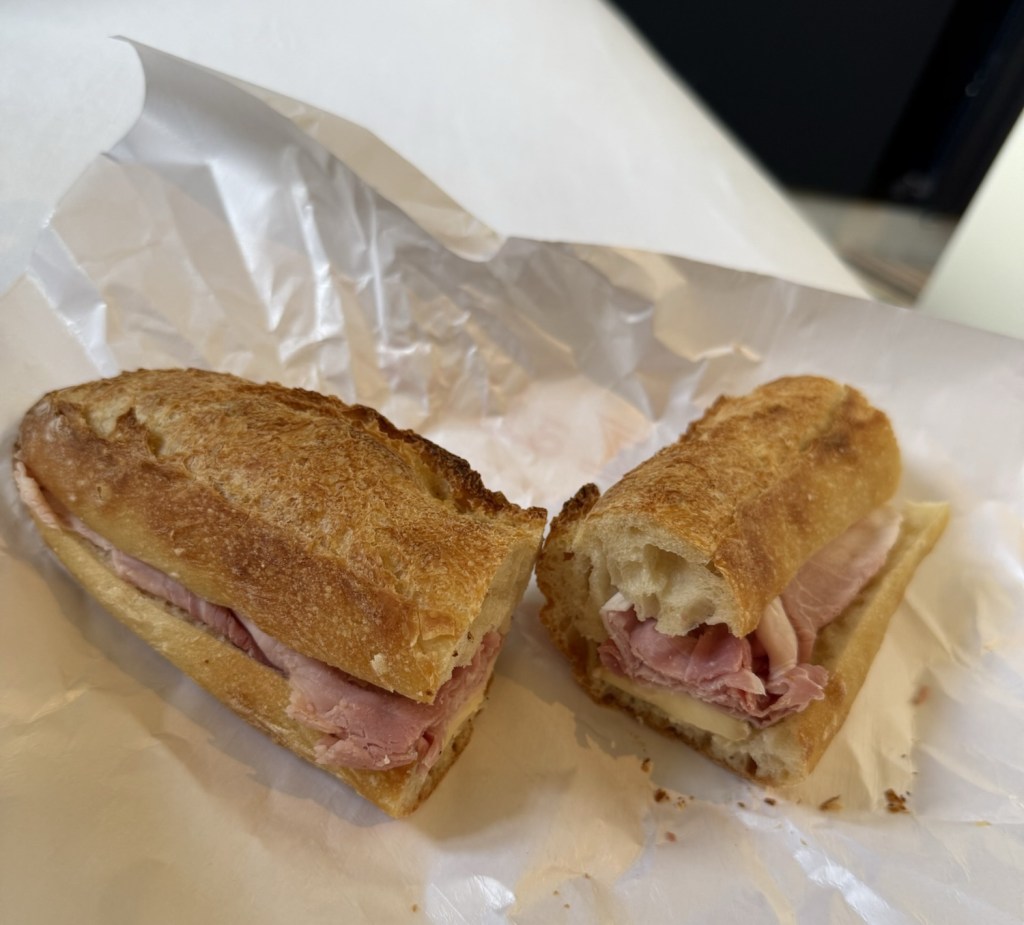
In 2015, Delphine Zalpetti, a self-taught chef, took over a former horse butcher shop (Chevaline) and transformed it into a buzzy niche for take-away dishes (Chez Aline).
At Chez Aline, the baking of the baguettes is outsourced to a local baker who bakes them a few minutes longer than usual to obtain a particularly crispy crust. The butter is the salted type, from Normandy, and the ham is made in Paris, without nitrates or preservatives, and is sliced thin so as to melt on the tongue. The result is a sandwich that’s as much about texture—the crunch and spring of the bread, the creamy mouthfeel of the butter, the pull and melt of the ham—as it is about flavor. (Atlas Obscura)
It may not have been life changing but it was very good. We added some Compte cheese to ours.
Lynn and Hans’ day

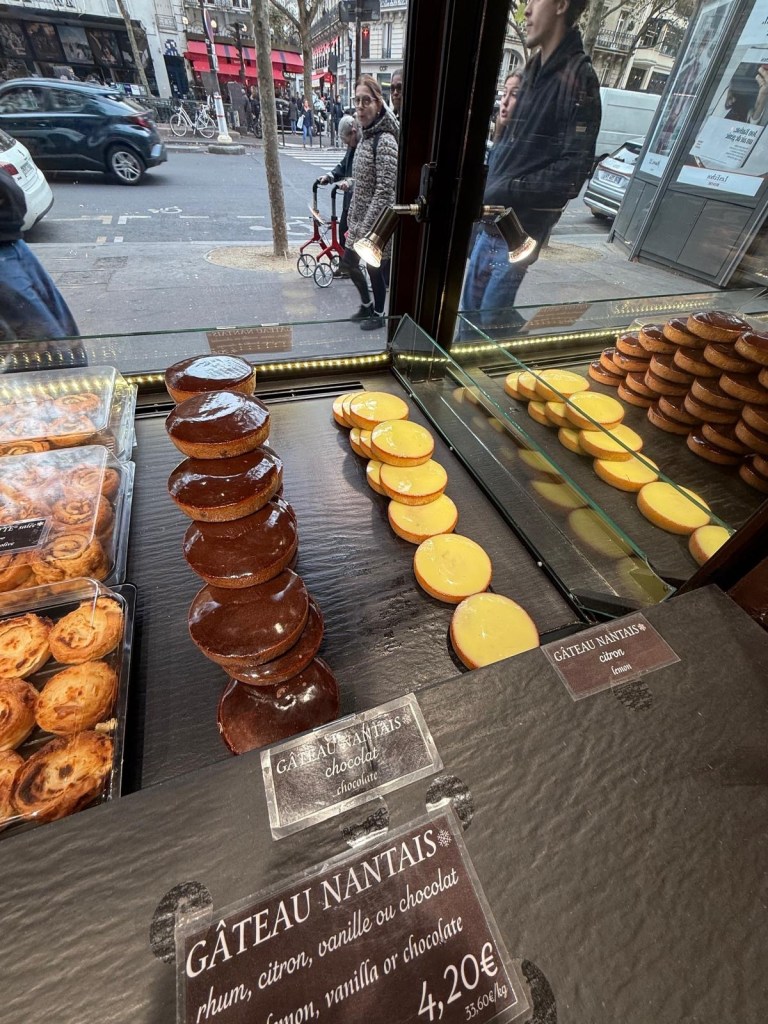


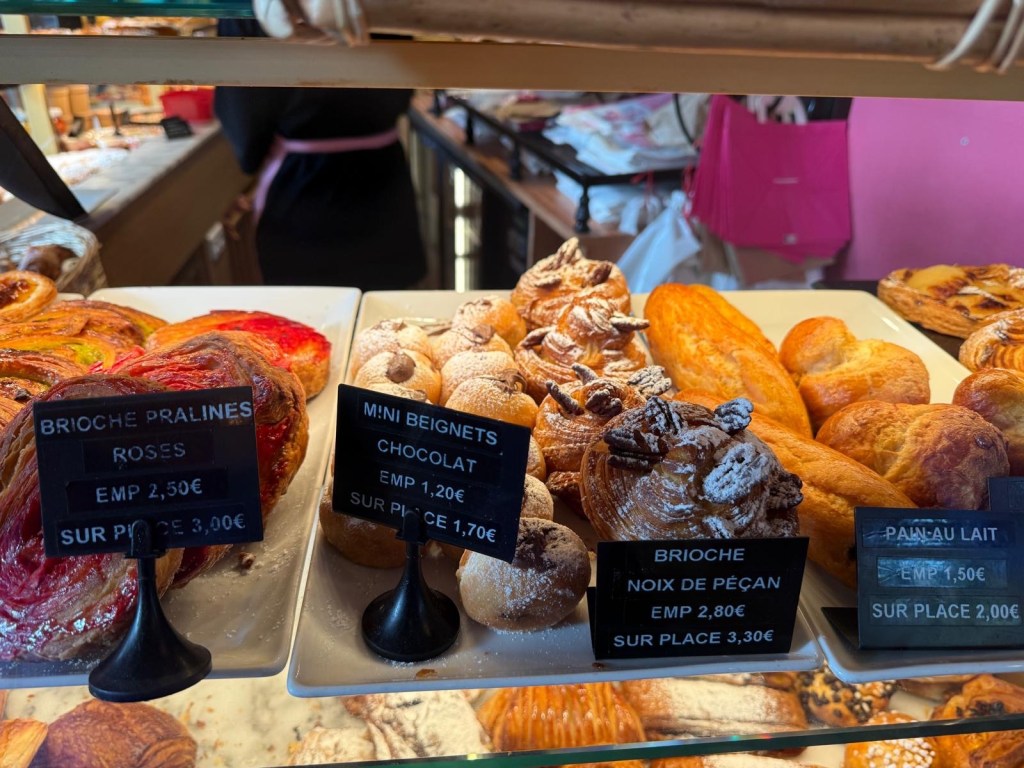

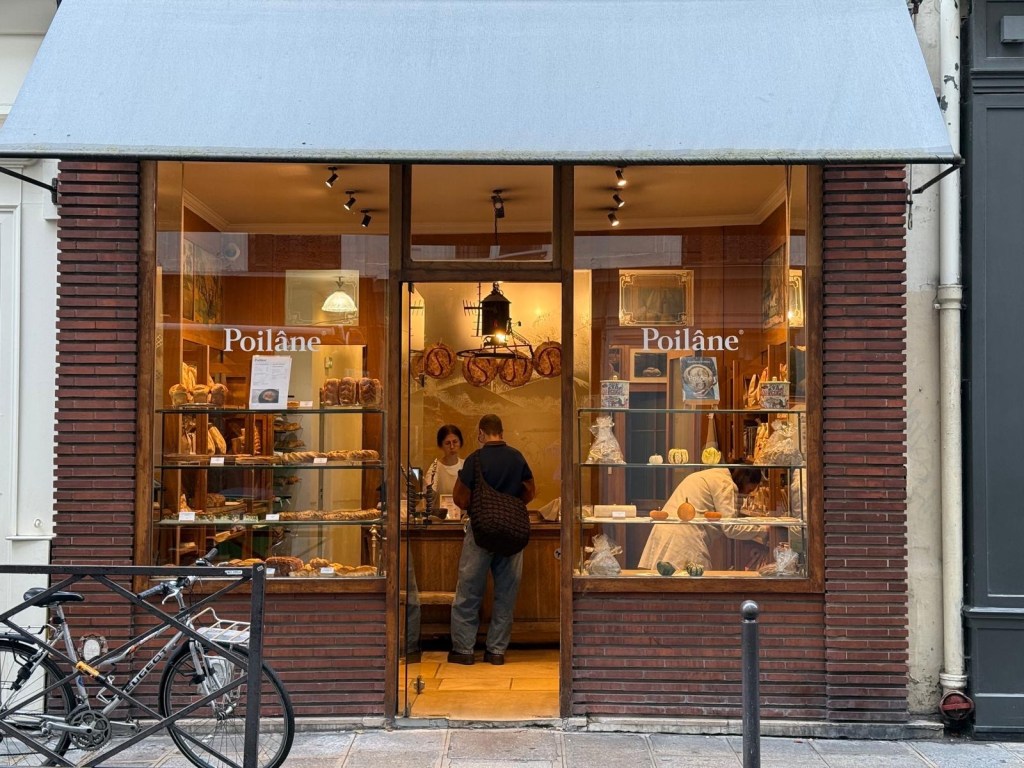

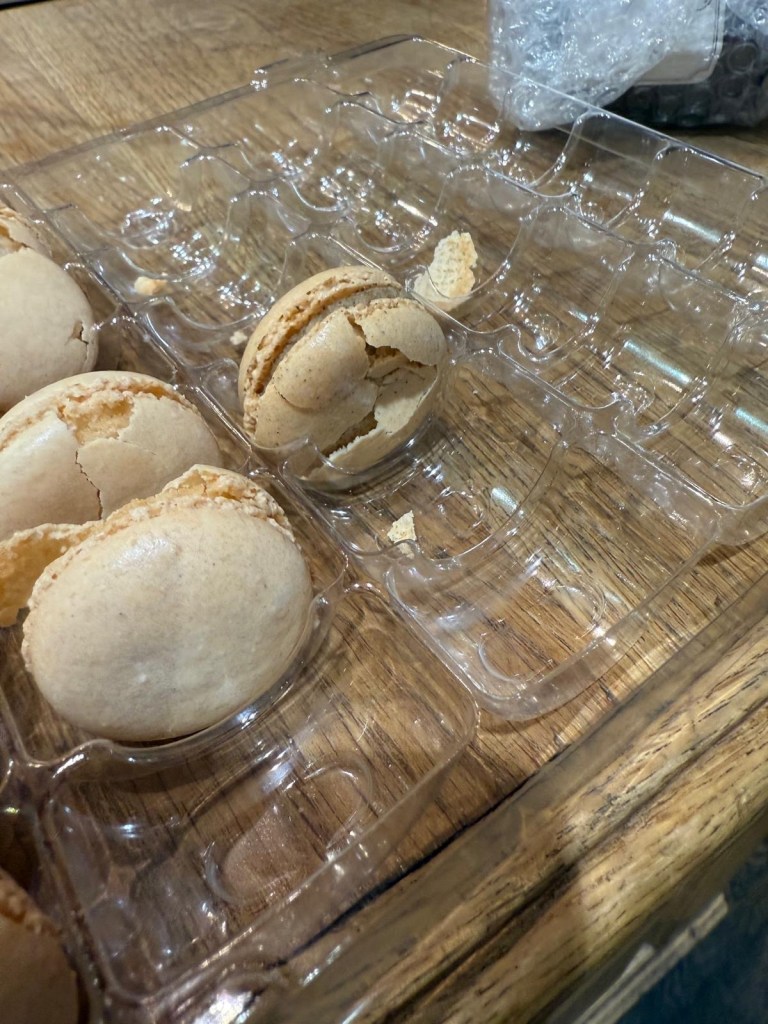
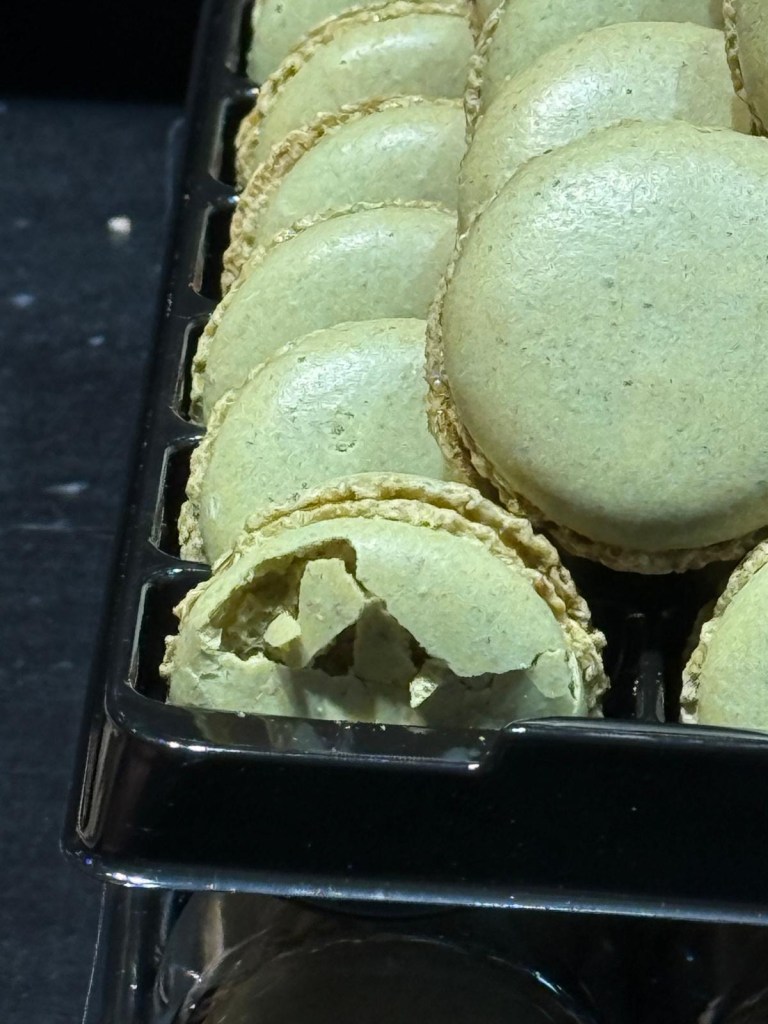
Late lunch (4pm)

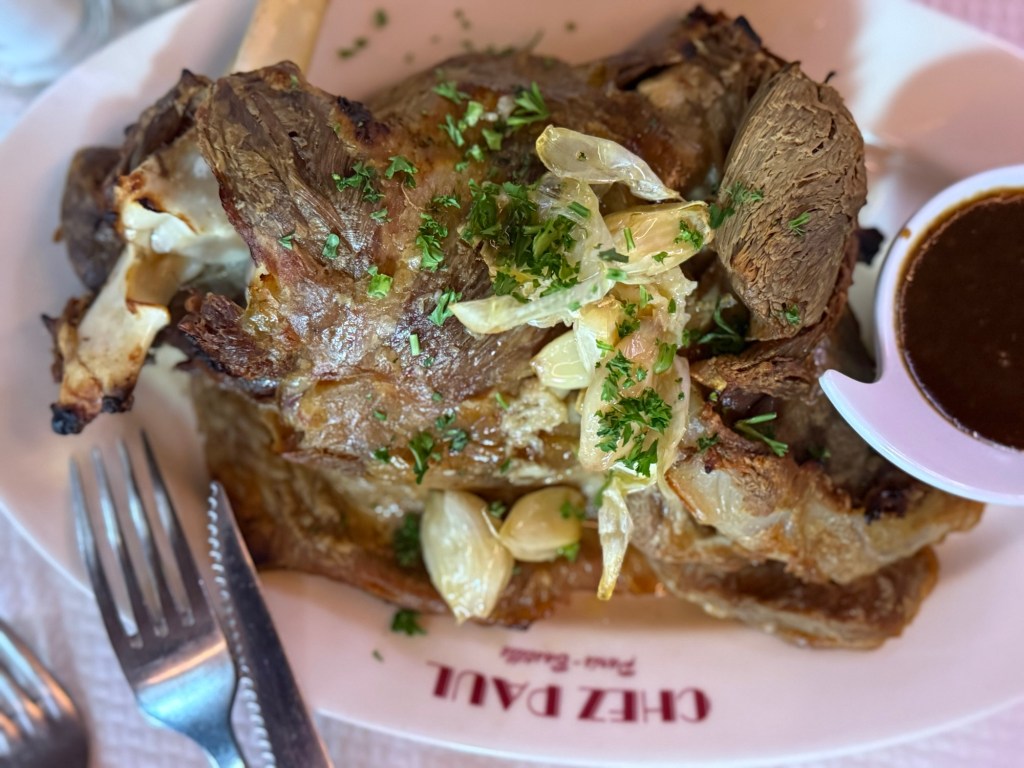
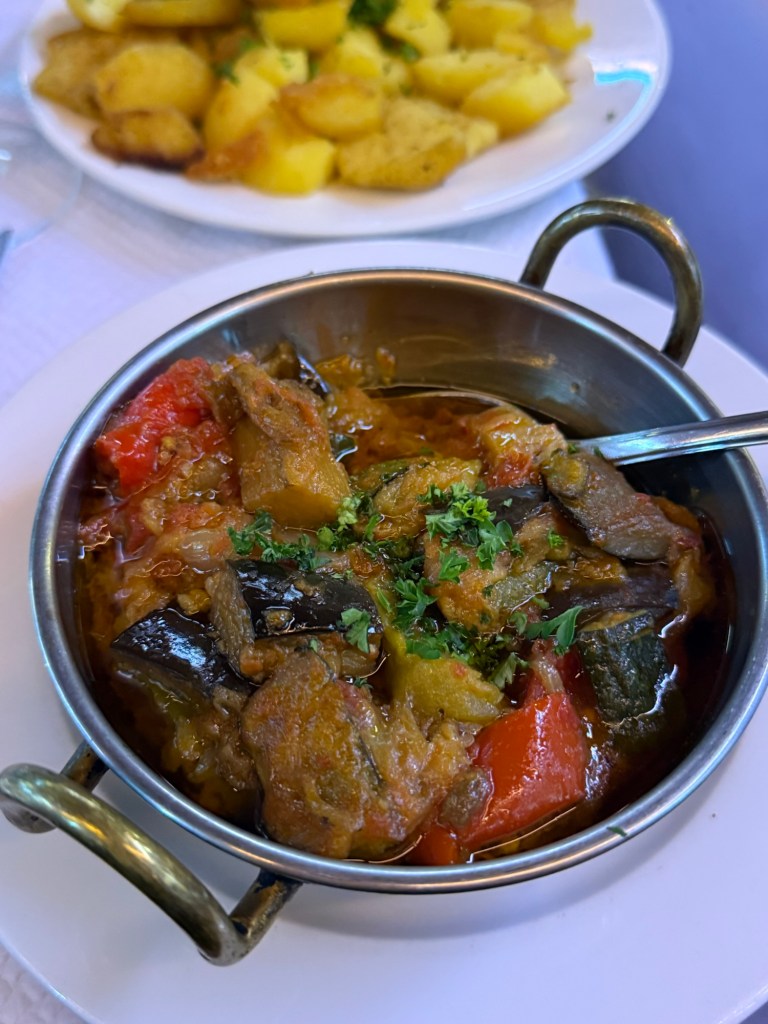

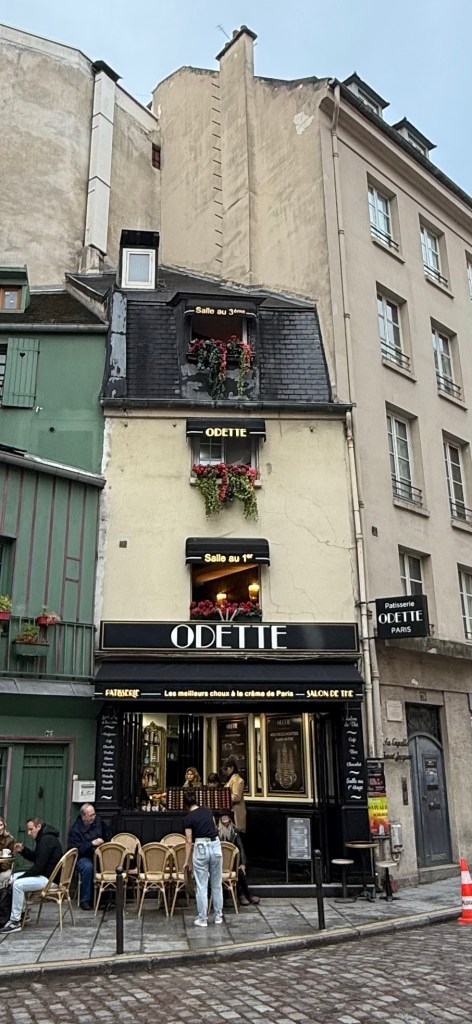
Later this evening, Gary and I headed out next door for a little more indulgence 😵💫


 Morocco Food Tour