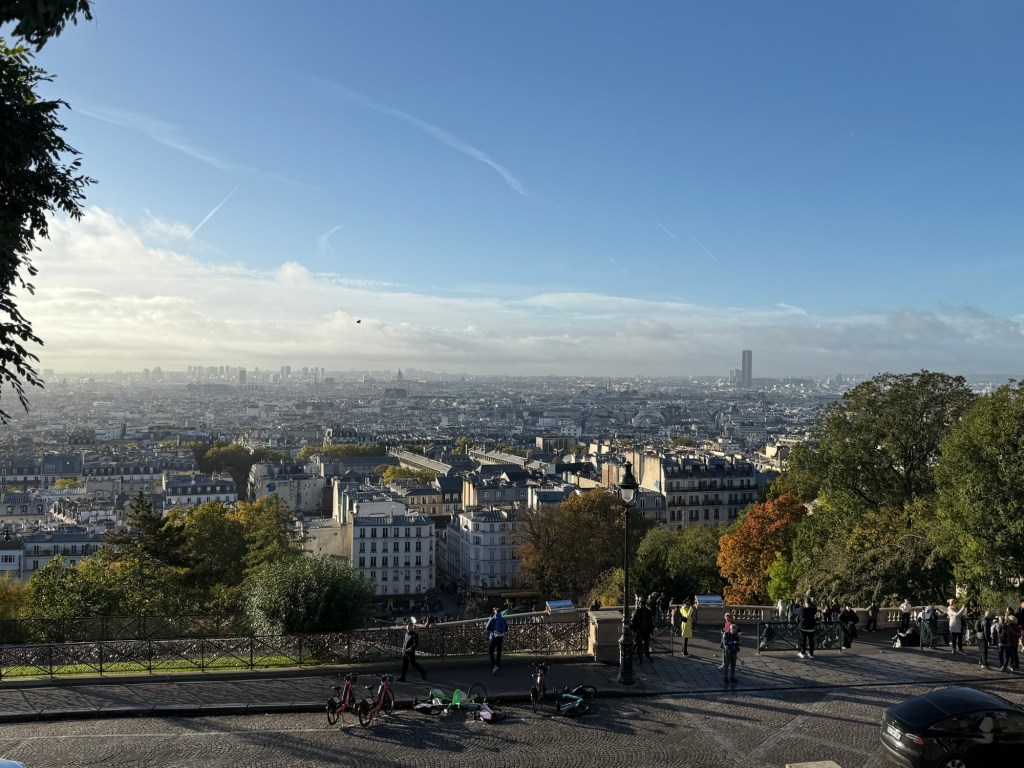
Our last day in Paris (for this trip anyway). This morning Gary and I headed up to Montmartre (mount of martyrs) to visit the Basillica of Sacre Coeur (Sacred Heart), the cemetery and the last windmill while Lynn and Hans explored more of the areas around our hotel. We joined up with them for a lovely lunch at Le Rigadon, a place recommended by friends of theirs. A trip to the laundromat for Lynn and me before we head off to Morocco tomorrow, then an organ recital at the Notre Dame Cathedral tonight.

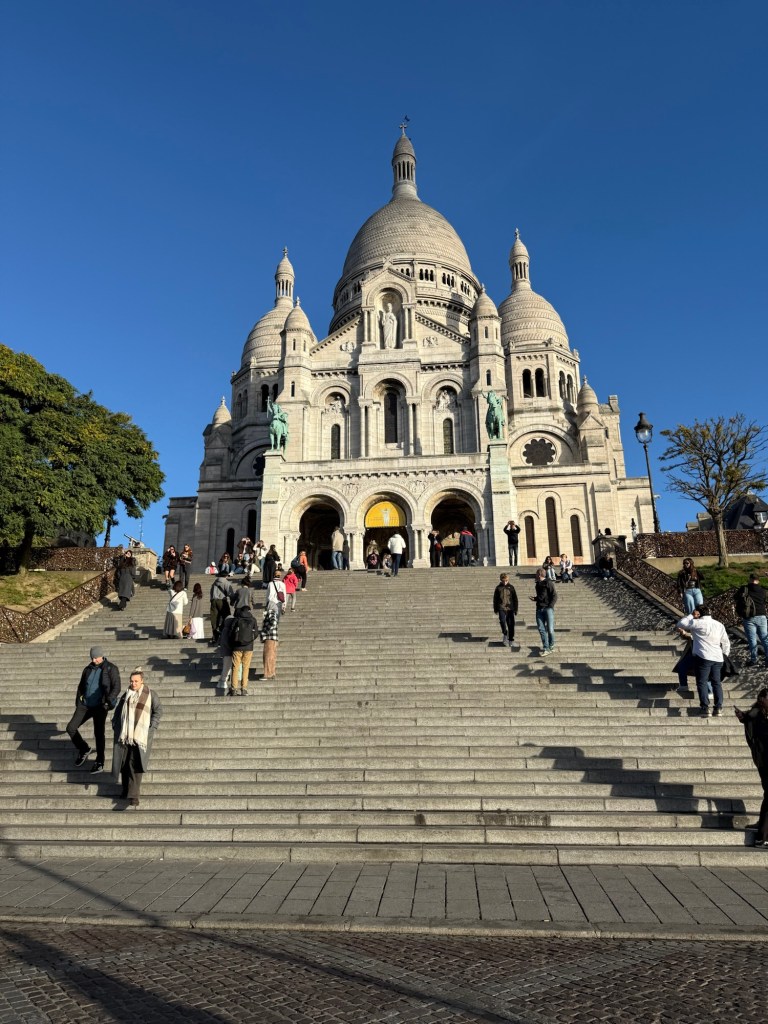
Sacre Couer fun facts from the brochure :
Some dates:
July 24, 1873: Vote of the project by the National Assembly to build a church dedicated to the Sacred Heart
June 16, 1875: First stone laid
October 16, 1919: Consecration of the basilica (initially planned for 1914)
A few figures: (Duration of the work: 40 years)
Dome height: 83.33 meters
Height of the bell tower: 84 meters
Under the building, to reach a stable bottom: 83 pillars 33 meters deep
Annual number of visitors and pilgrims: 11 million
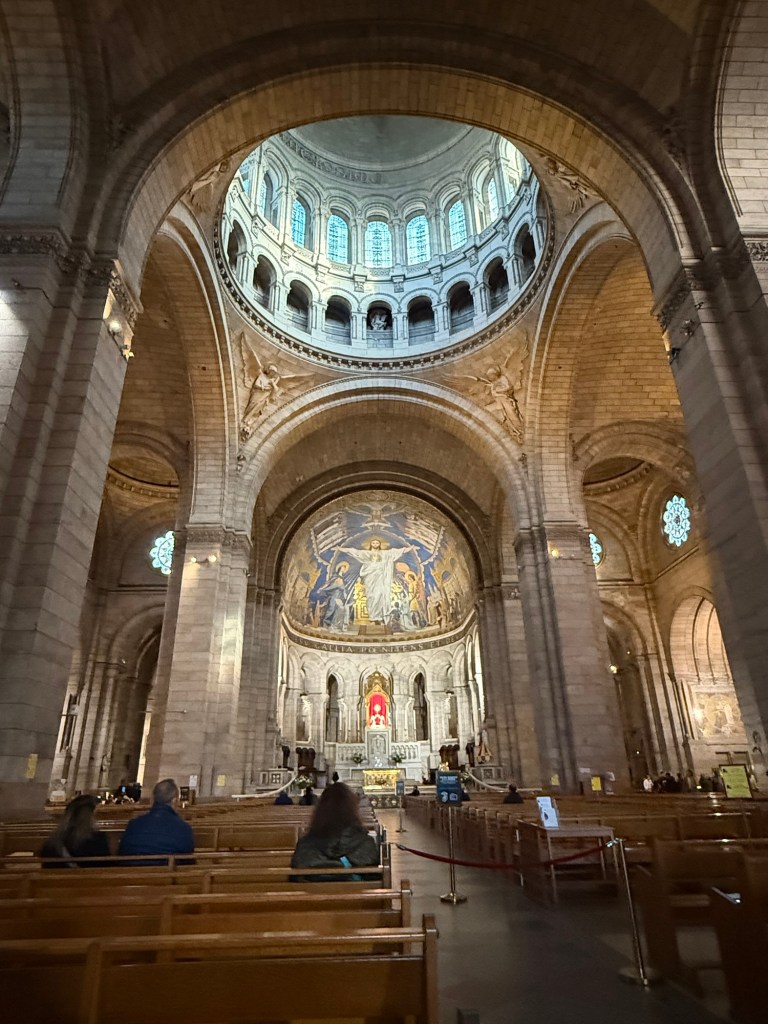

The statue of the Sacred Heart in solid silver by Eugène Benet. The Sacred Heart, the Heart of Christ, true God and true Man, witnesses God’s eternal love for men. In the Scriptures, the heart expresses the center of the person, his deep life, where his intelligence, his will and his sensitivity are united. (Brochure)
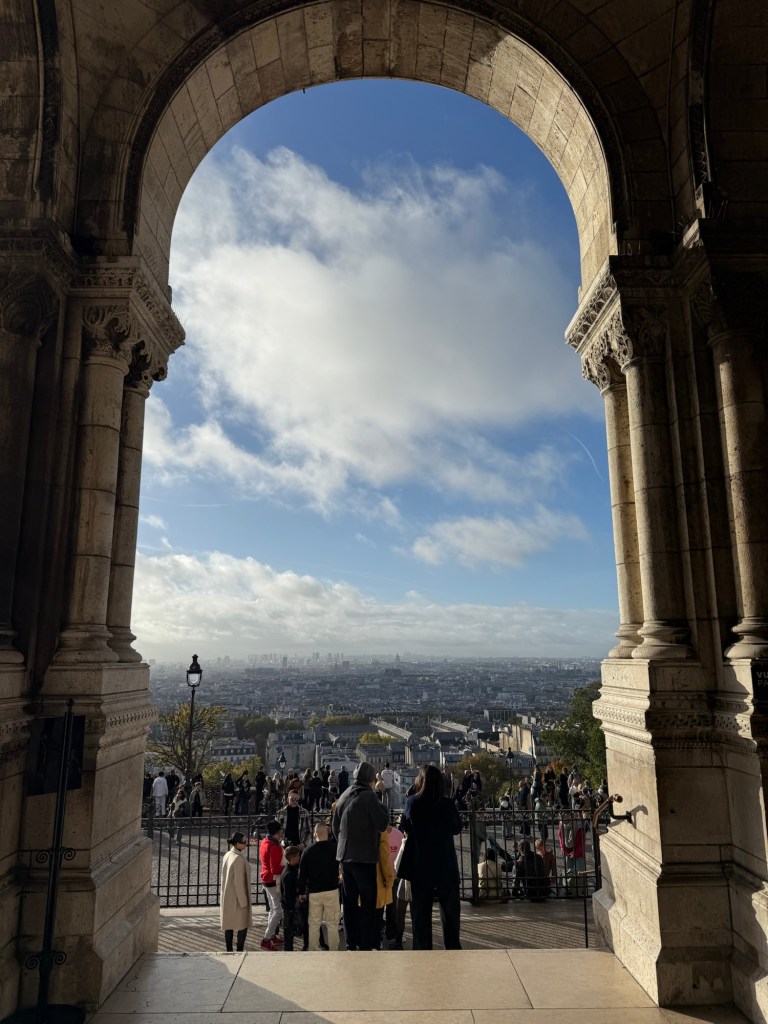
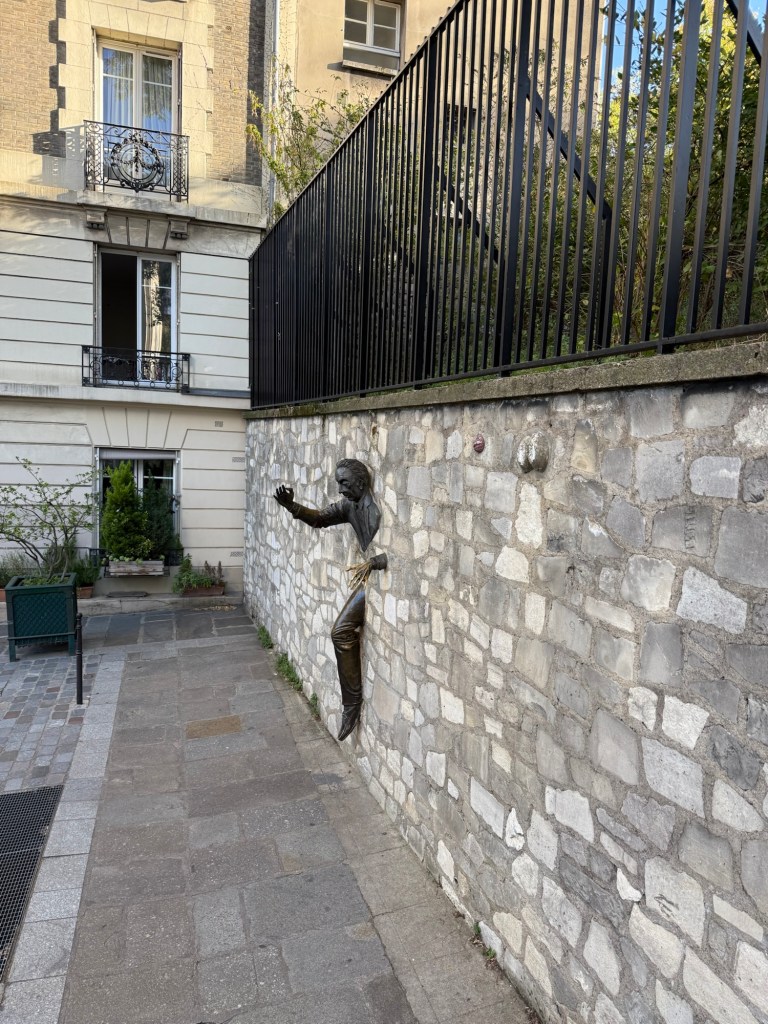
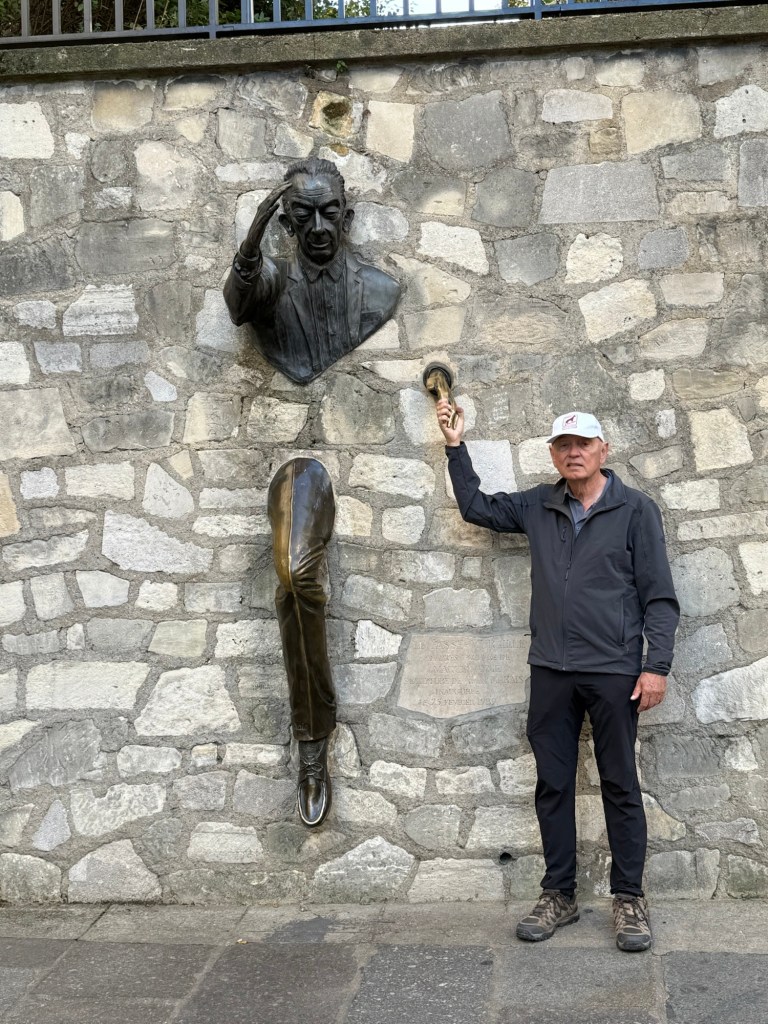
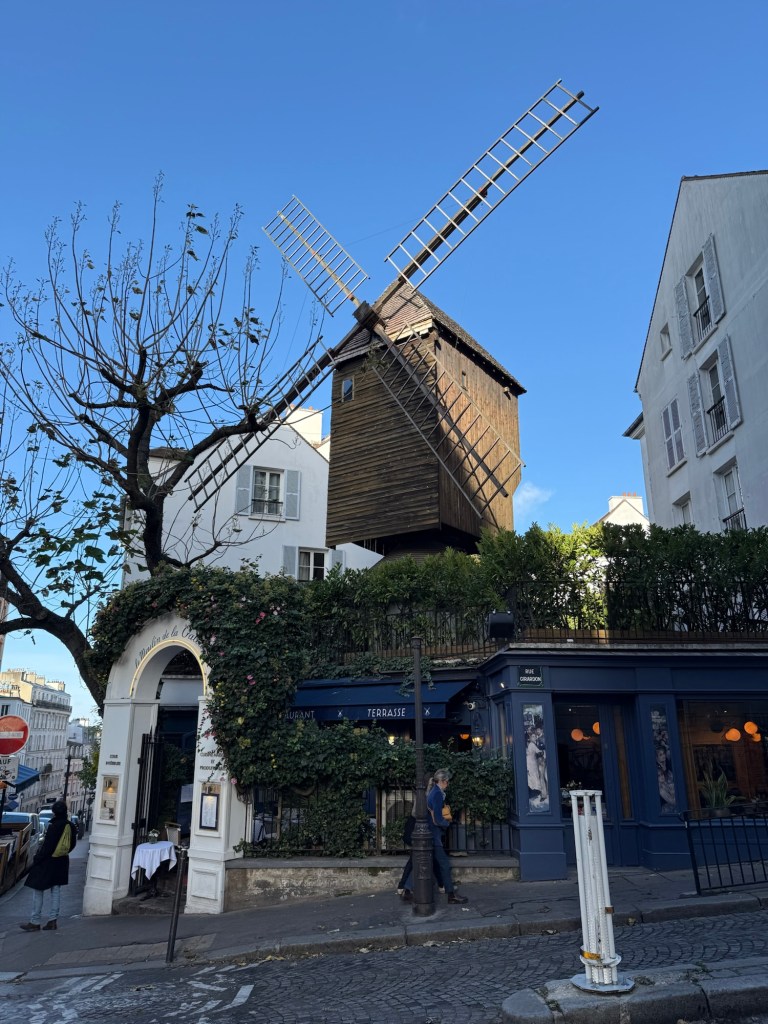
Montmartre’s sole surviving windmill became an iconic landmark for 19th-century painters, artists, and bohemians. (Atlas Obscura)
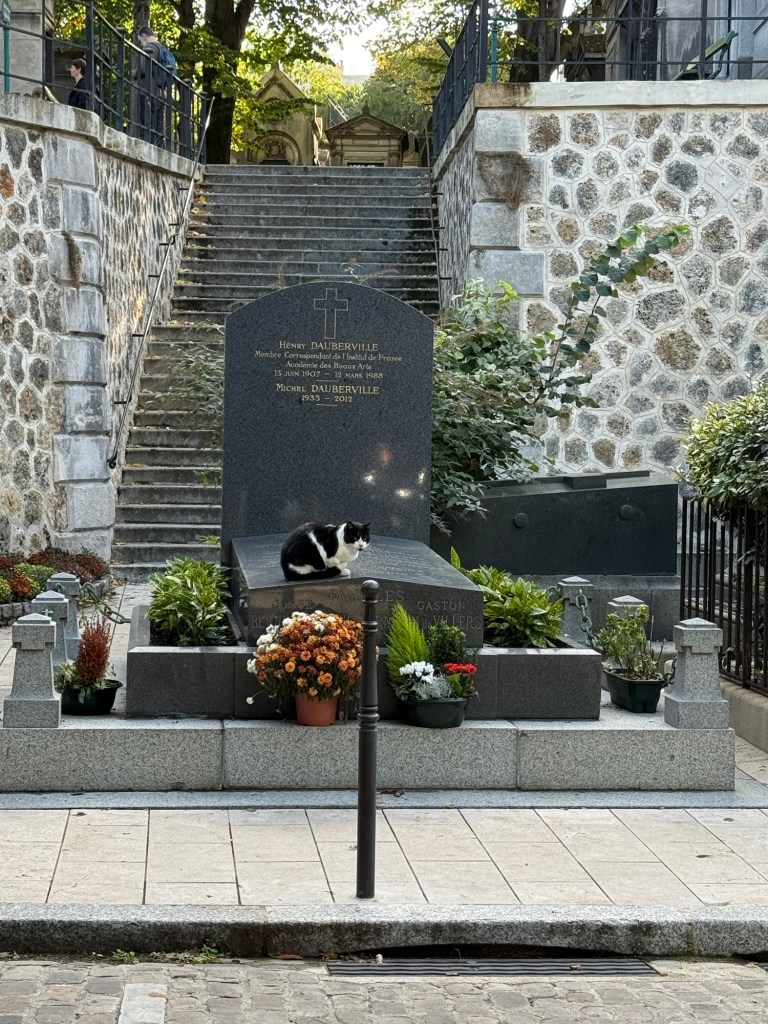
Montmartre Cemetery is a peaceful and serene haven from the bustling city that overshadows it, but it is also home to it’s own little community: a large group of cats. No one is quite sure where they came from, but dozens and dozens of cats live amongst the mausoleums, quietly sunning themselves on the marble tombstones and keeping watch over their long forgotten inhabitants. (Atlas Obscura)

Built below street level, a large part of the cemetery lies underneath the busy Rue Caulaincourt, giving it a secluded air. Once grand mausoleums covered in cobwebs lie nestled below the wrought iron blue bridge. Montmartre cemetery opened for business in 1825, on the site of an abandoned quarry that had been used as a makeshift mass grave in the Revolution. And for many of the renowned artists who worked and lived on Montmartre, it became their final home. Degas, Heinrich Heine, Berlioz, Alexander Dumas (now in the Pantheon), Francois Truffaut, Emile Zola (now in the Pantheon) and Adolphe Sax, inventor of the saxophone are all buried in the cemetery. (Atlas Obscura)
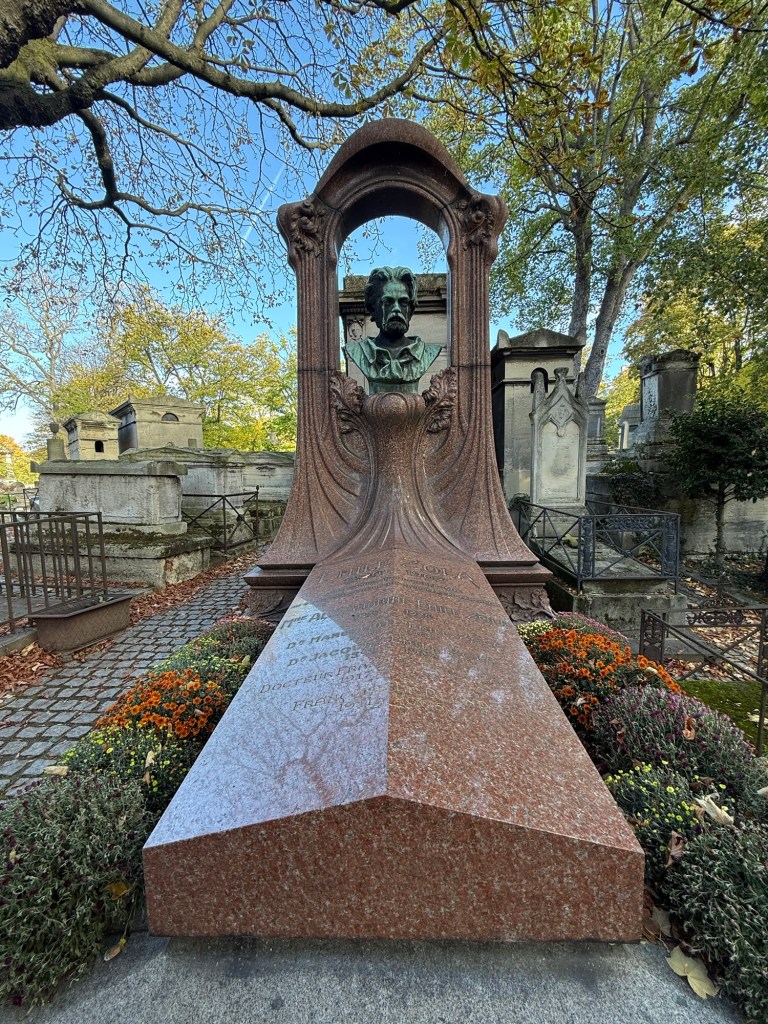
Zola was initially buried in the Cimetière de Montmartre in Paris, but on 4 June 1908, just five years and nine months after his death, his remains were relocated to the Panthéon, where he shares a crypt with Victor Hugo and Alexandre Dumas. (Thanks Google)
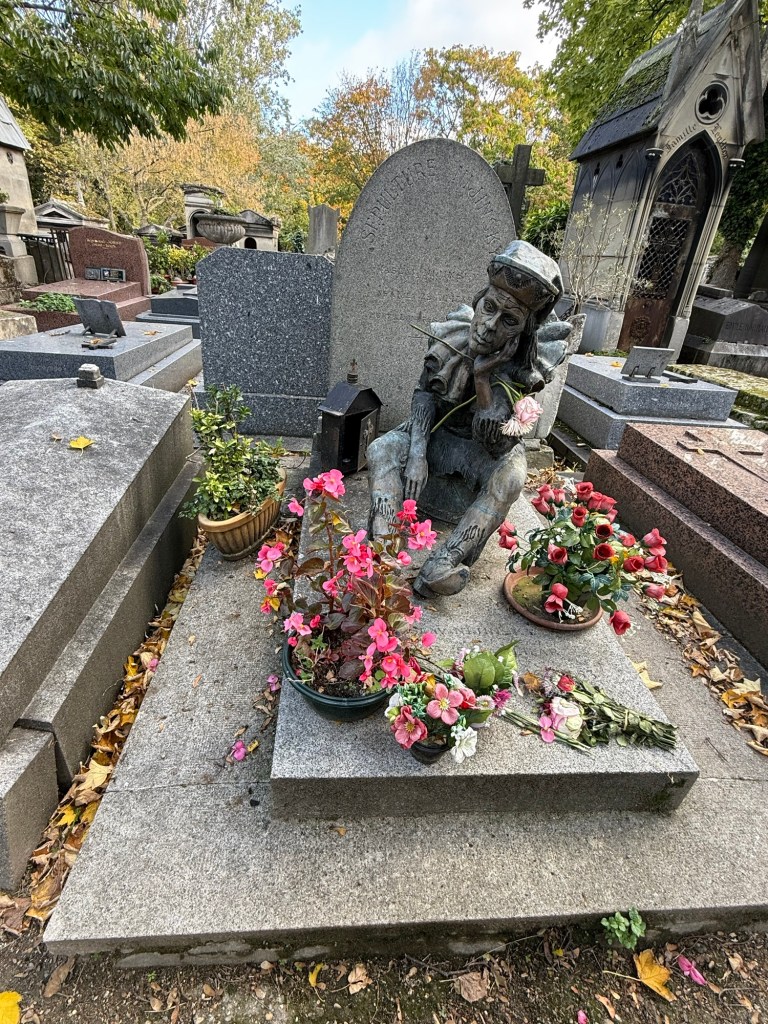
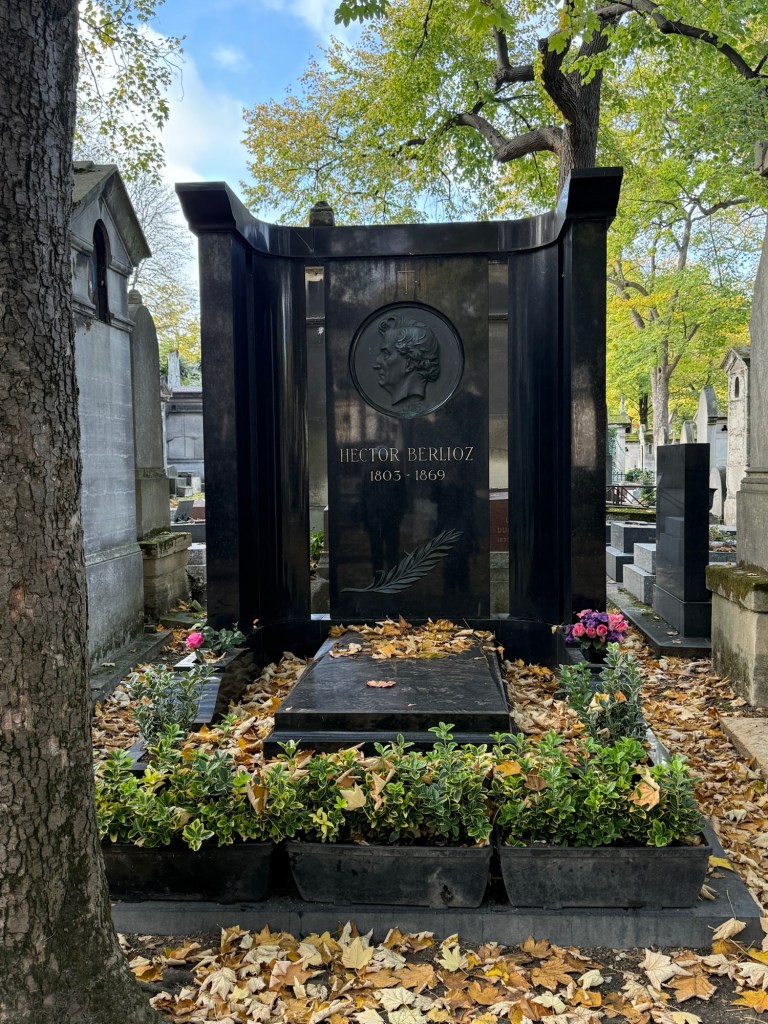
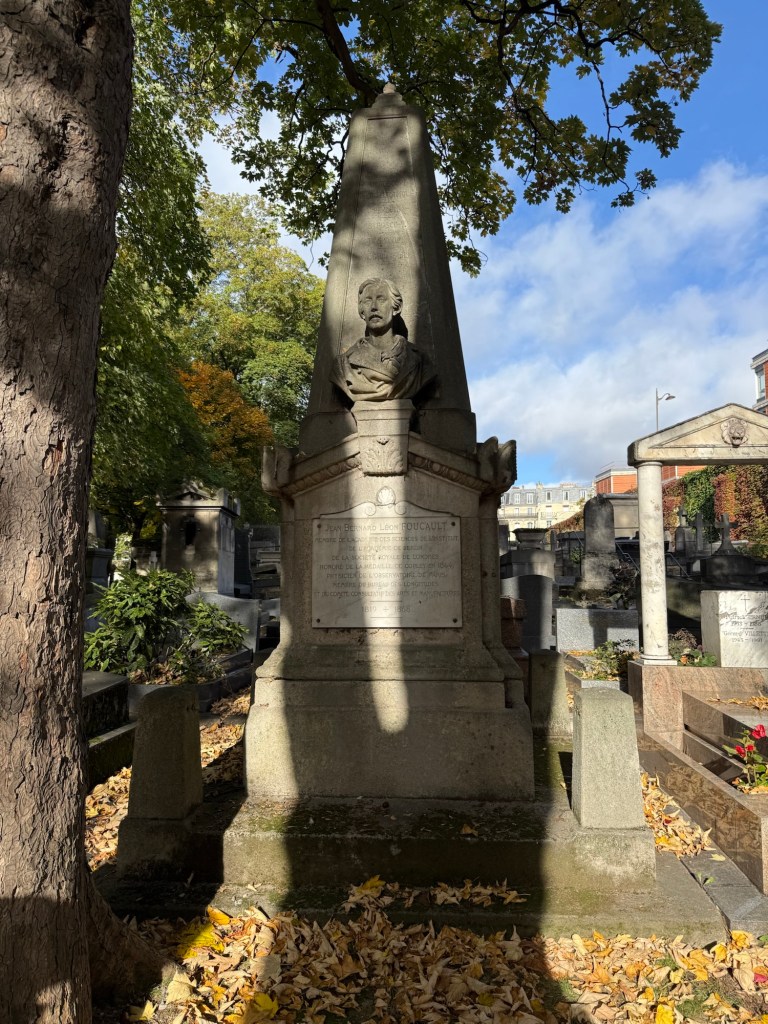
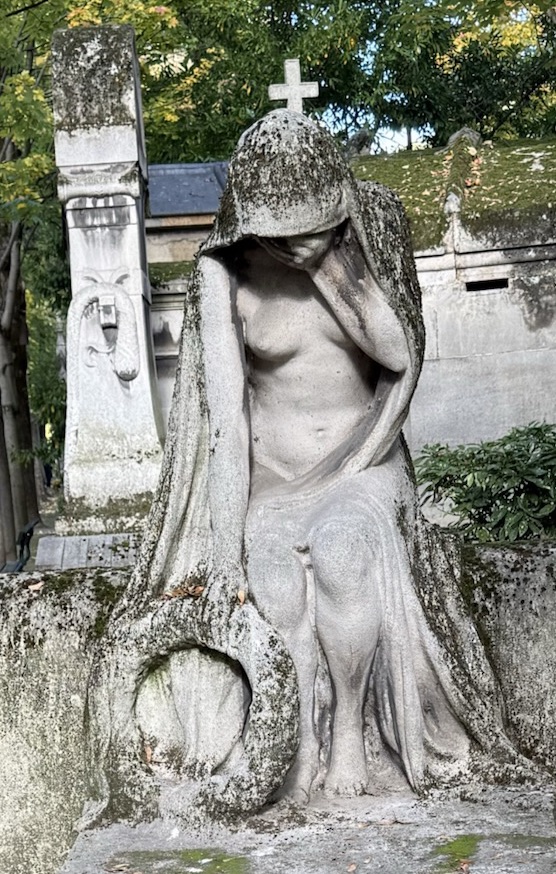
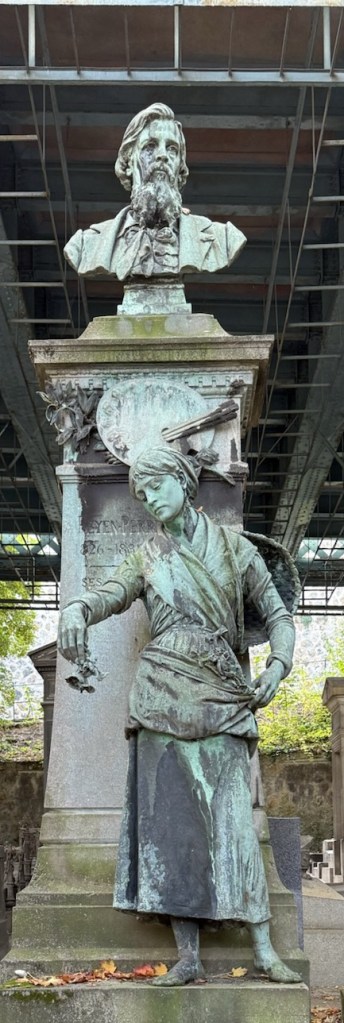
Some of the more elaborate statuary…

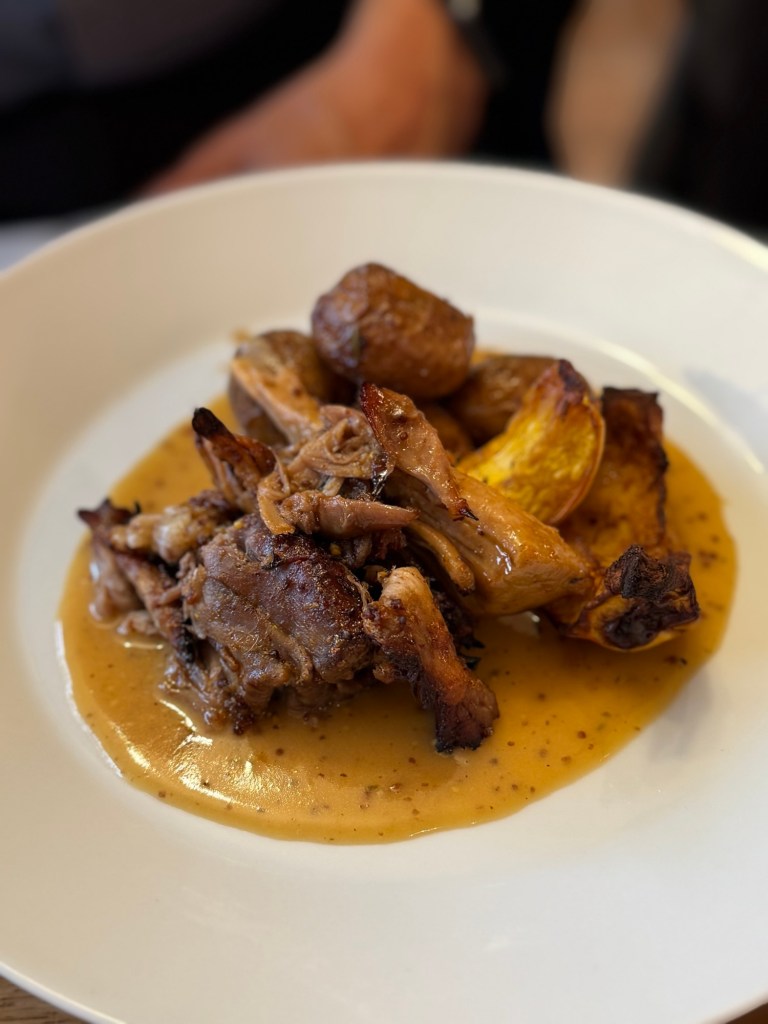
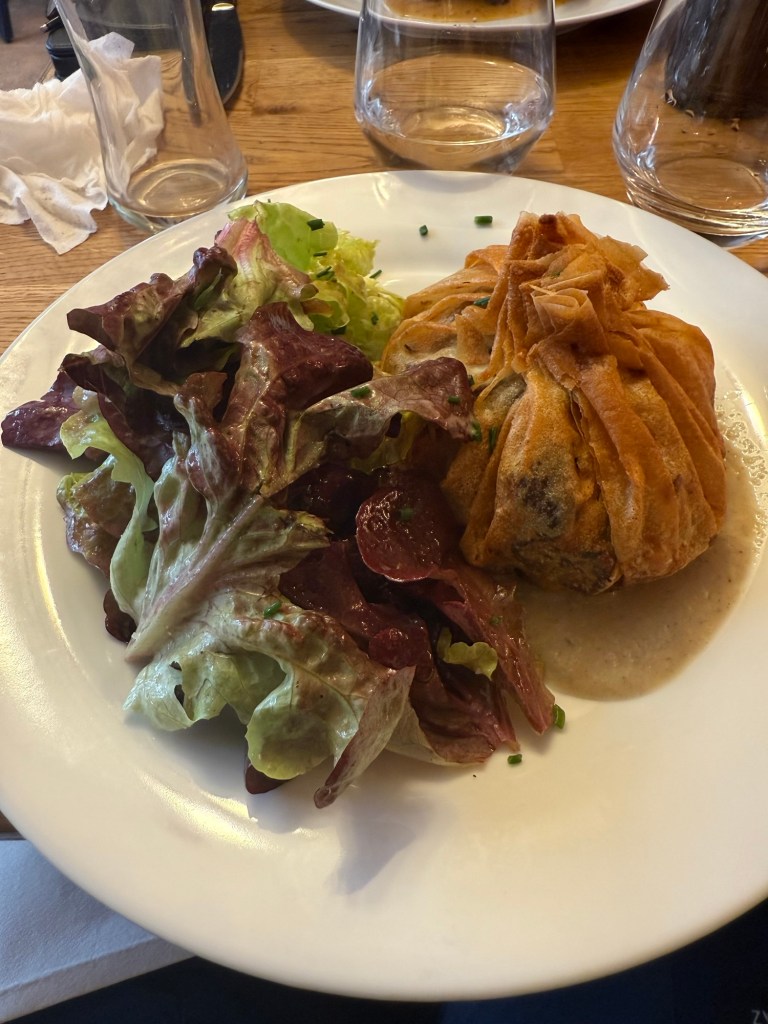
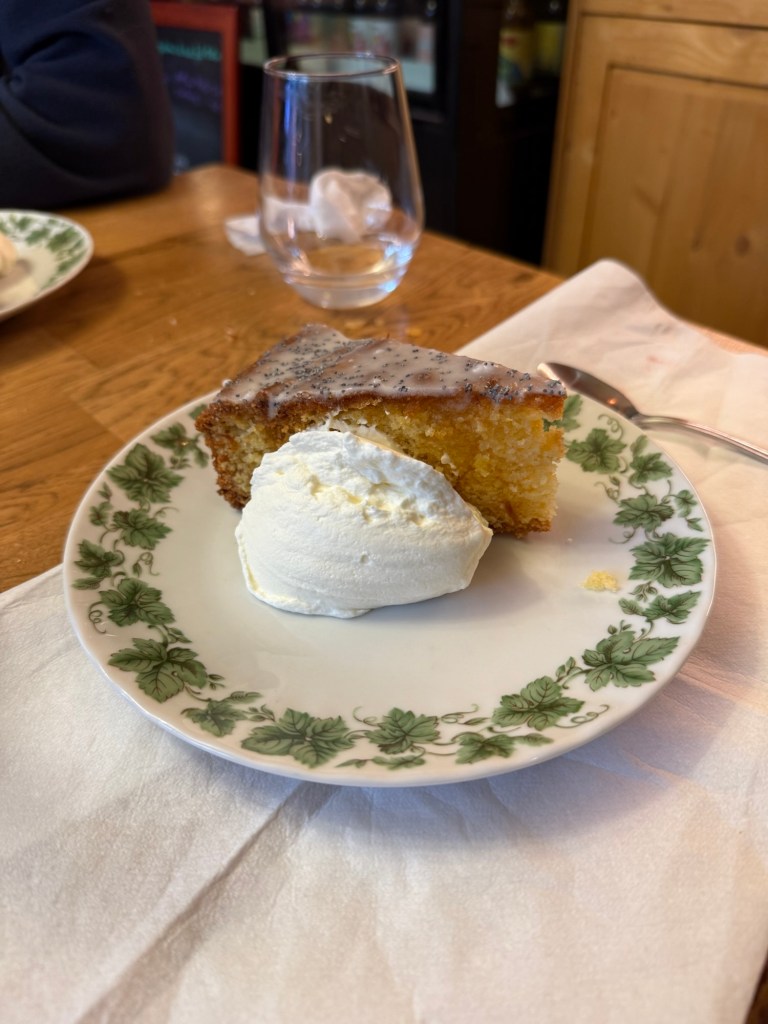
Then to lunch at Le Rigadon



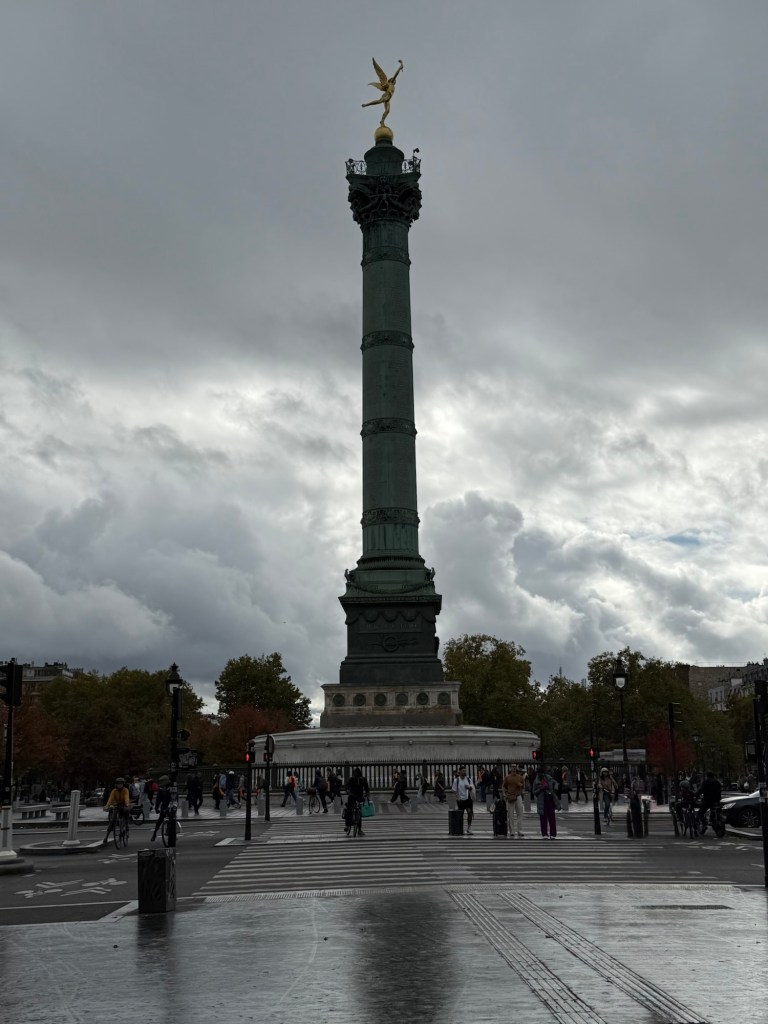
The July Column is a monumental column in Paris commemorating the Revolution of 1830. It stands in the center of the Place de la Bastille and was built between 1835 and 1840.
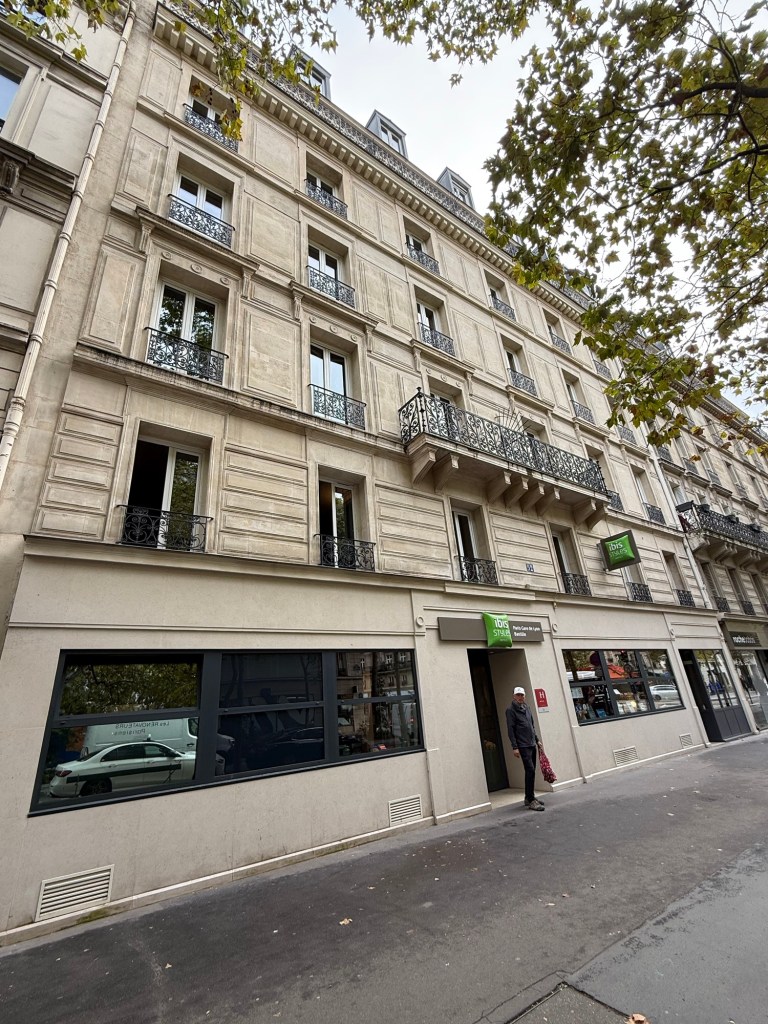
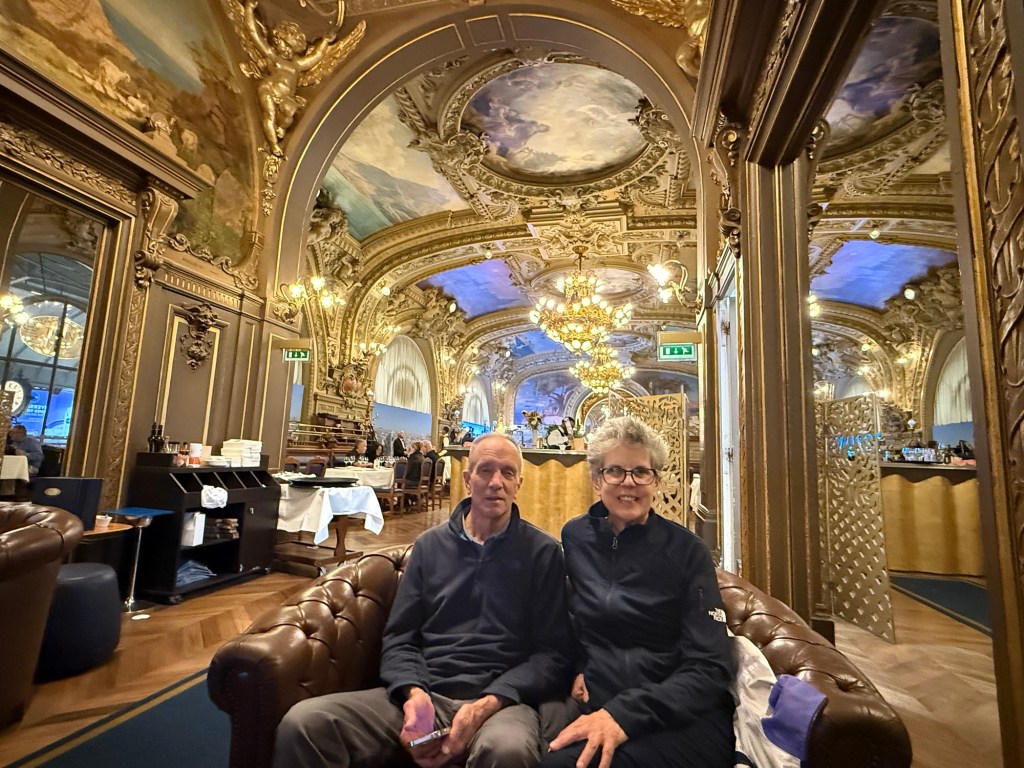
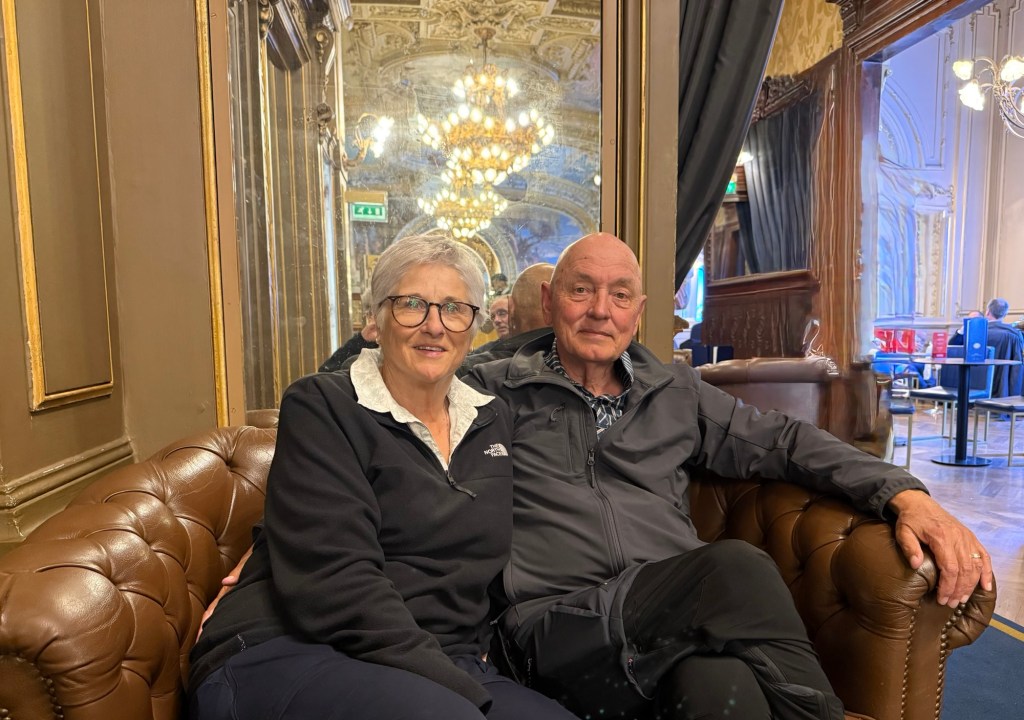
Le Train bleu is a 1900s neo-Baroque and Belle Époque style gourmet restaurant located in the Gare de Lyon train station. Saved from demolition in 1966, it has been partially listed as an historic monument since 1972.
I had a Train Bleu special cocktail: Secret Garden – Gin, cucumber, basil, lime juice, blueberry syrup, Prosecco
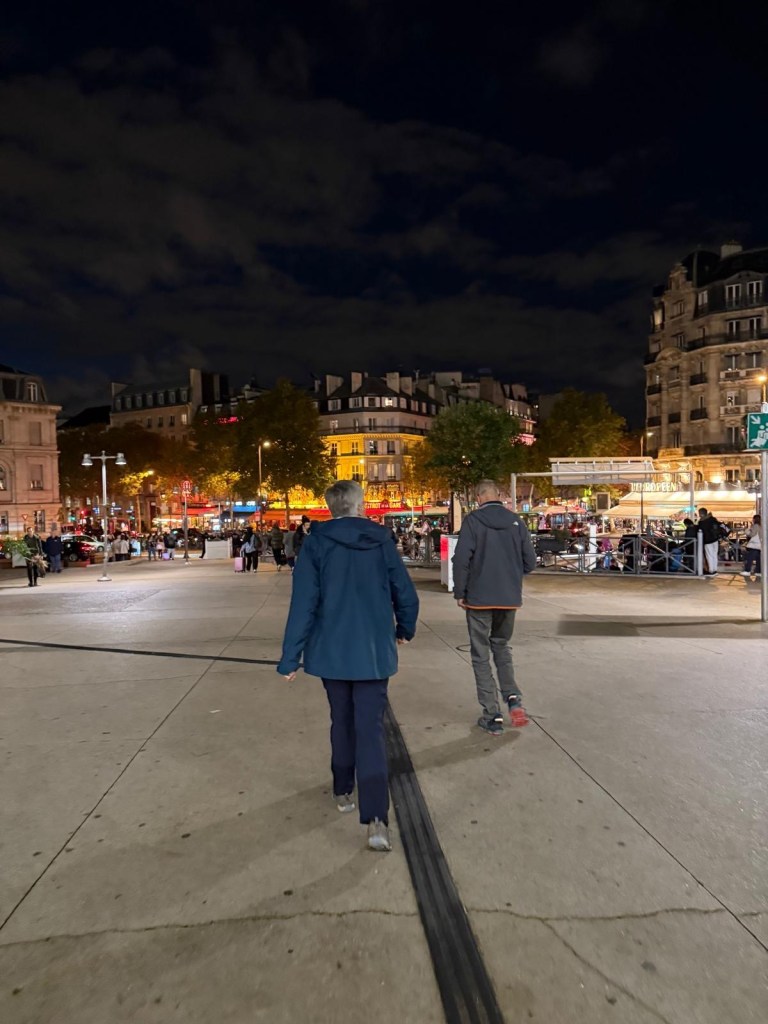


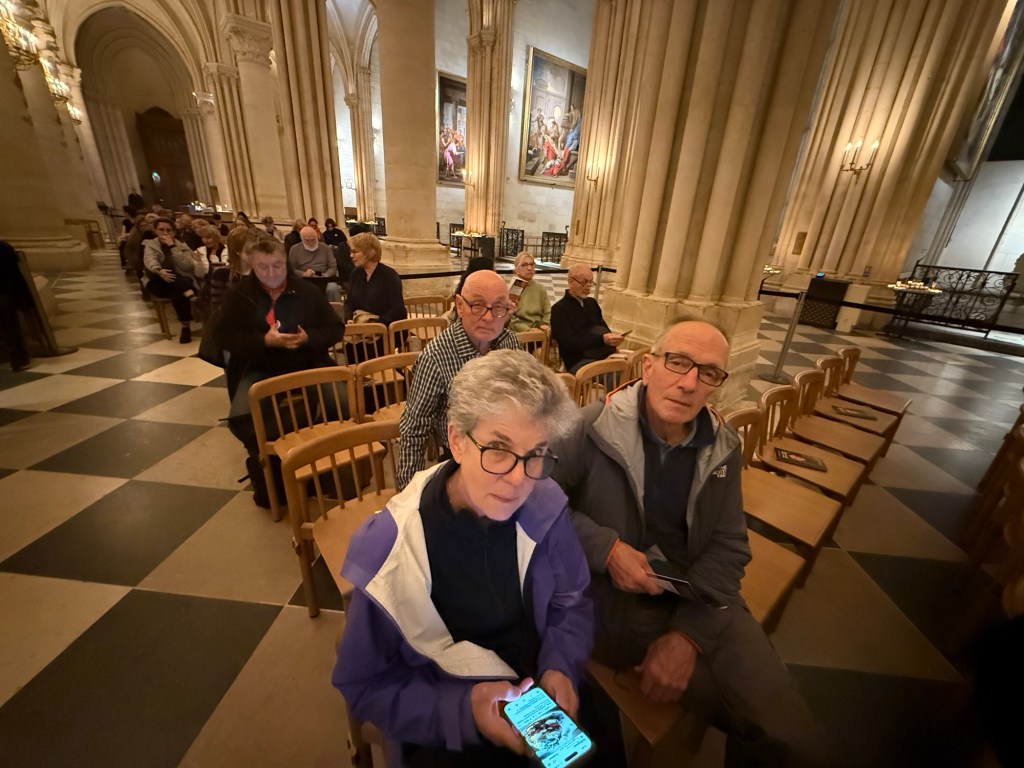
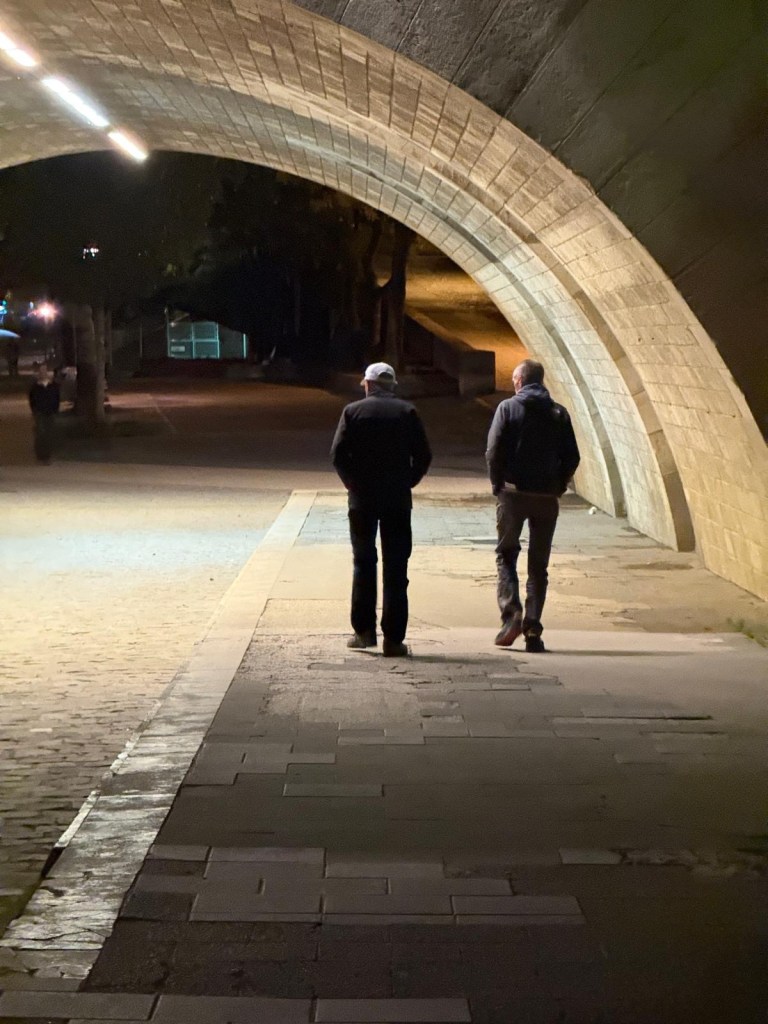
An interesting way to finish this leg of the trip. While the music wasn’t our cup of tea, it was an amazing experience to be sitting in such a beautiful and historic building that just six years ago no one knew whether it could be saved or not. Fortunately the organ survived the fire virtually unscathed.

 Morocco Food Tour