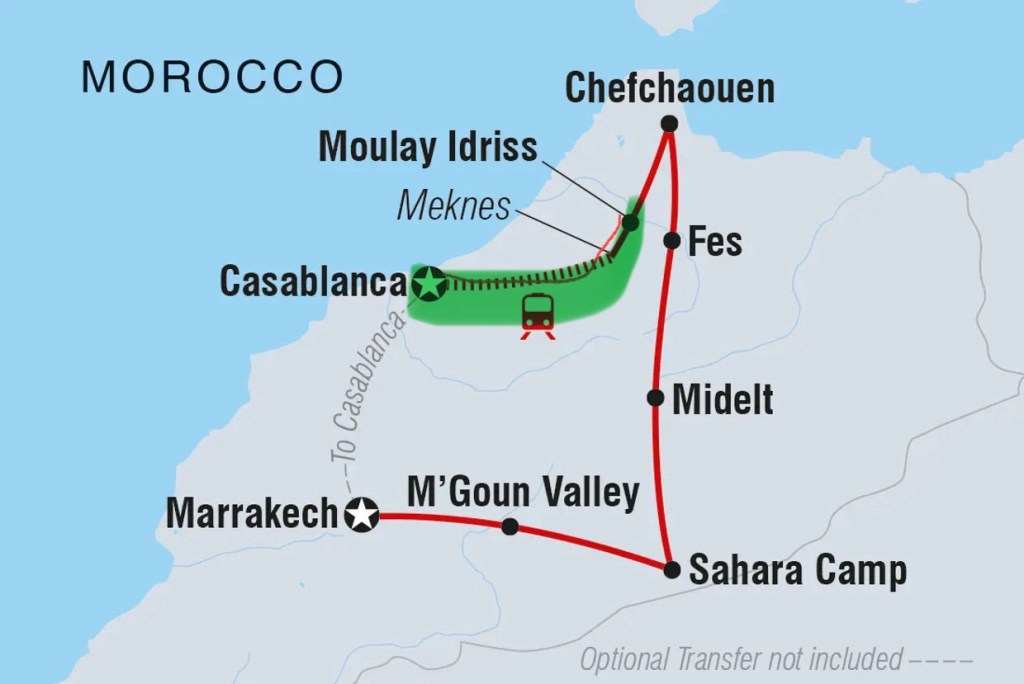
Today we started our adventure properly, how exciting! The photos in the blog have been contributed by all six of us… it’s amazing how differently we all see the same things.
We were picked up after breakfast to go to the train to Meknes.
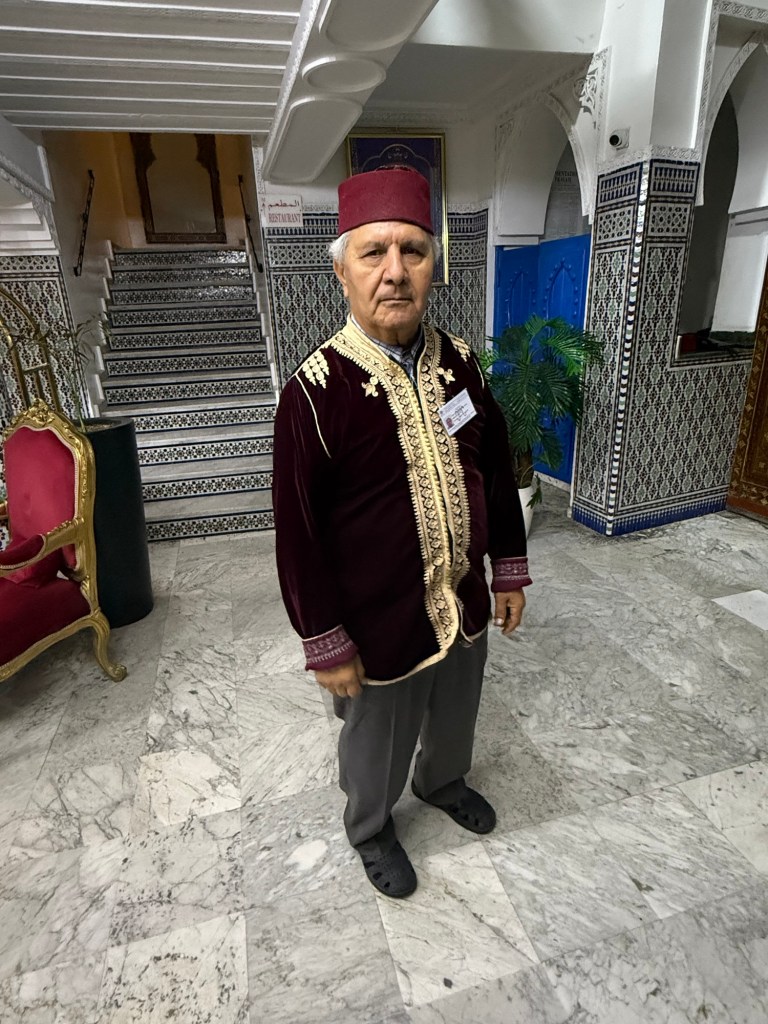
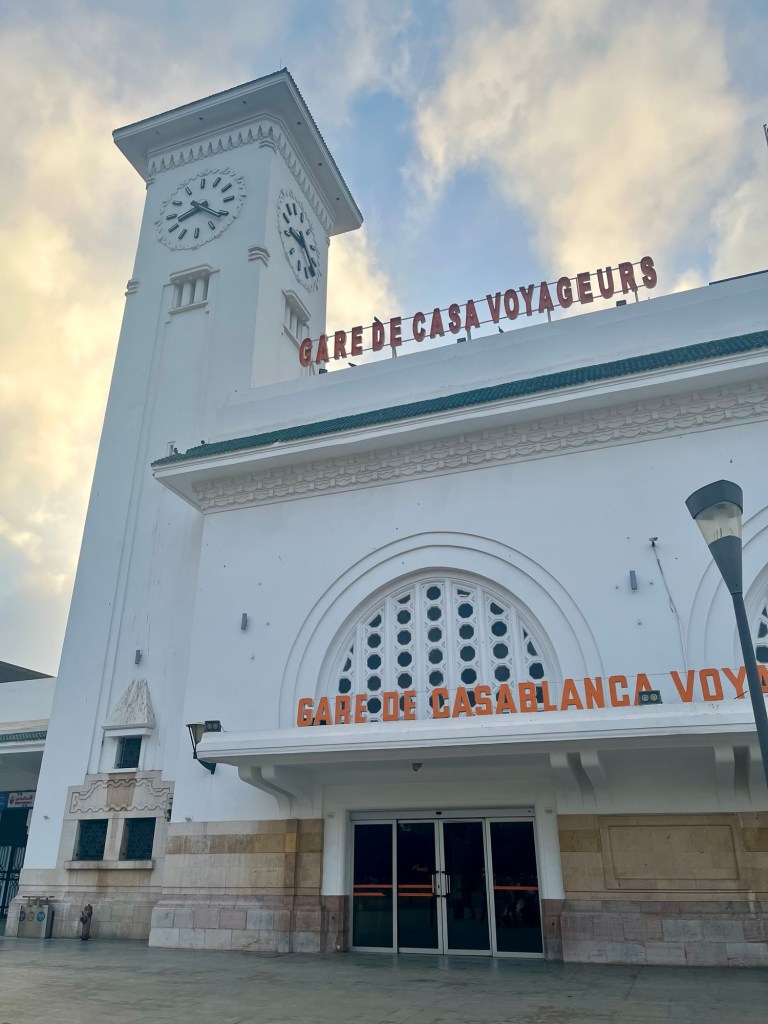
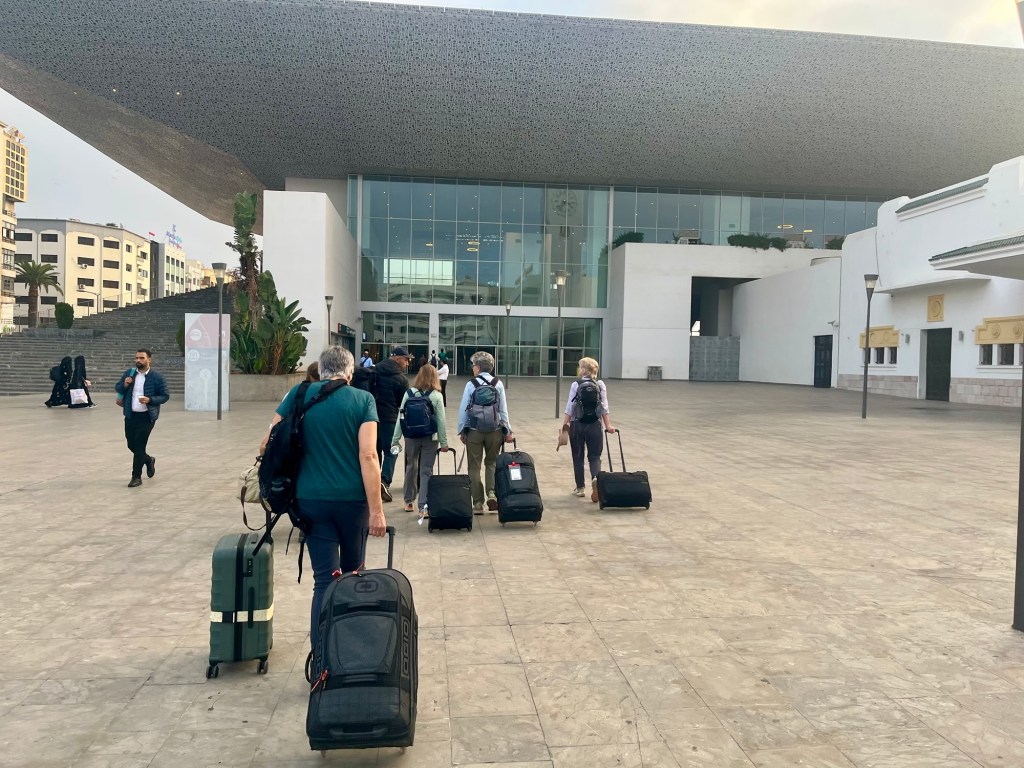
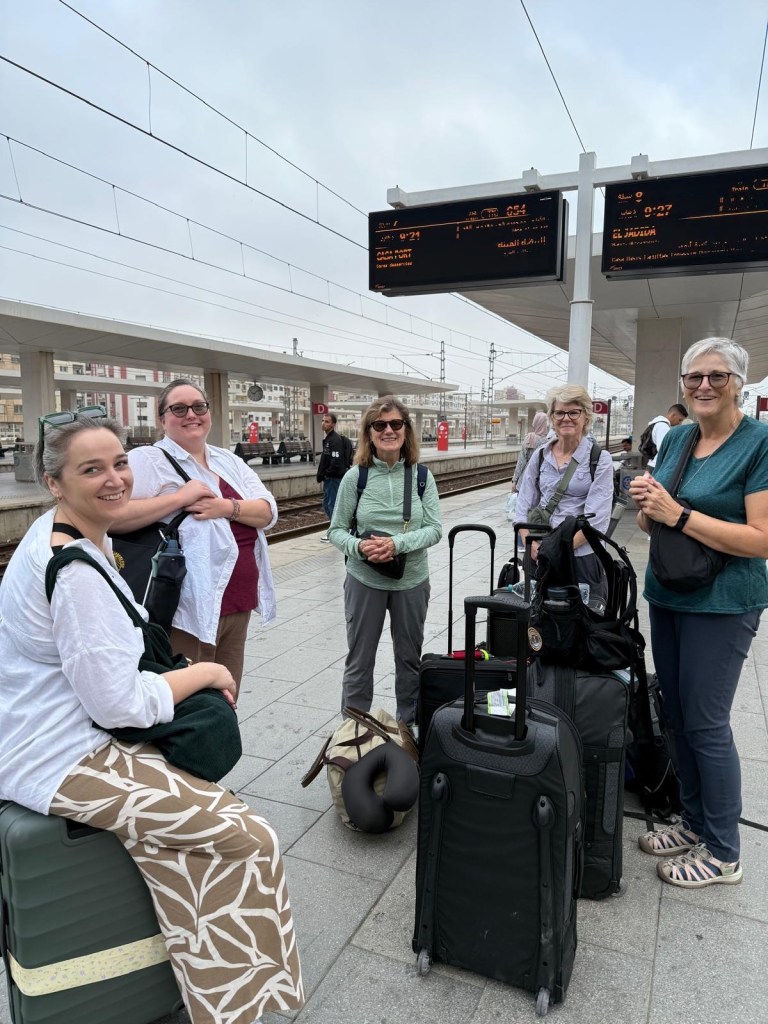
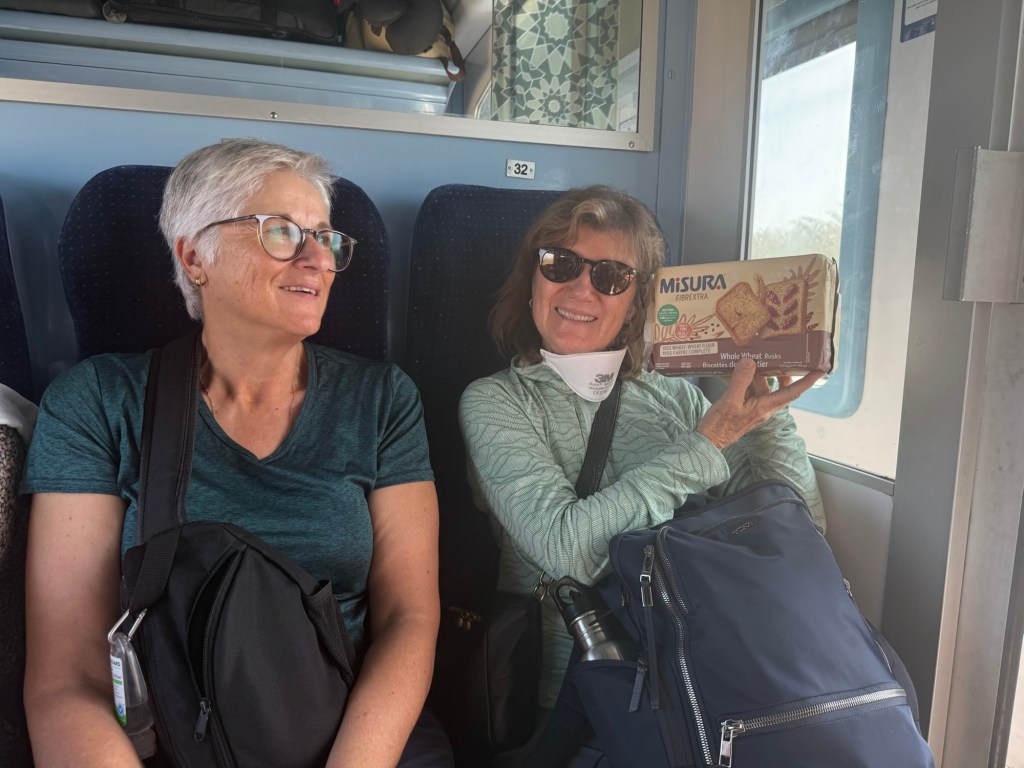
The train trip took (3.5 hrs) and went via Rabat, Morocco’s capital. It was very full (it’s school holidays here) and the seats a bit squishy but all in all not too bad, at least in our compartment.
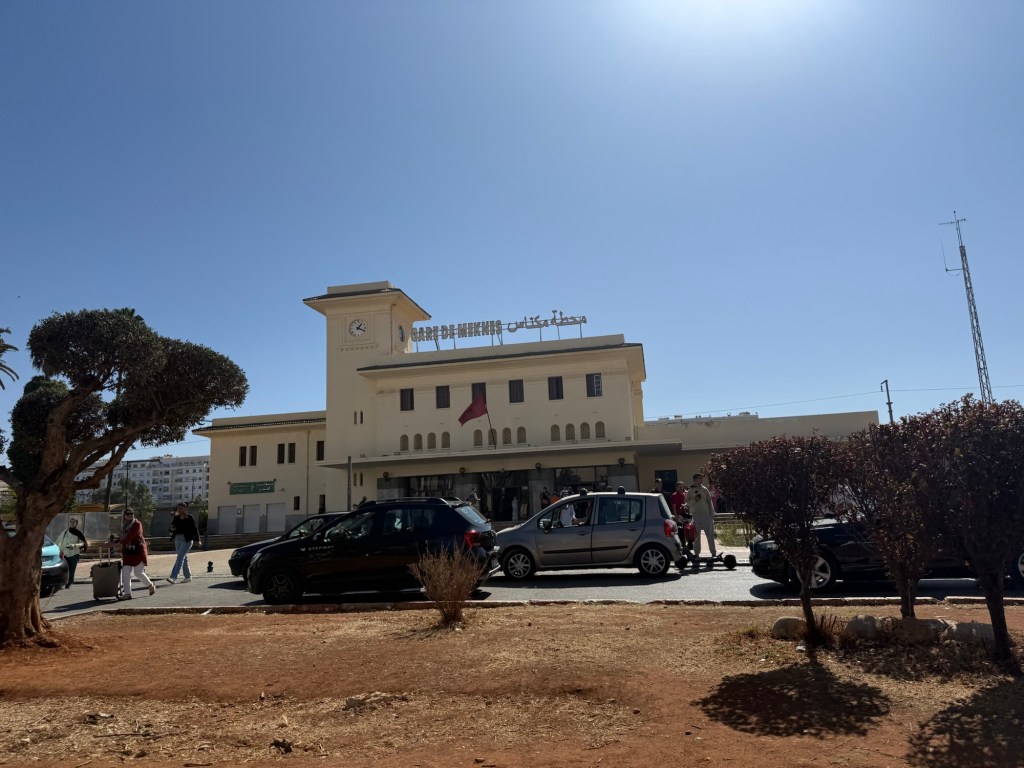
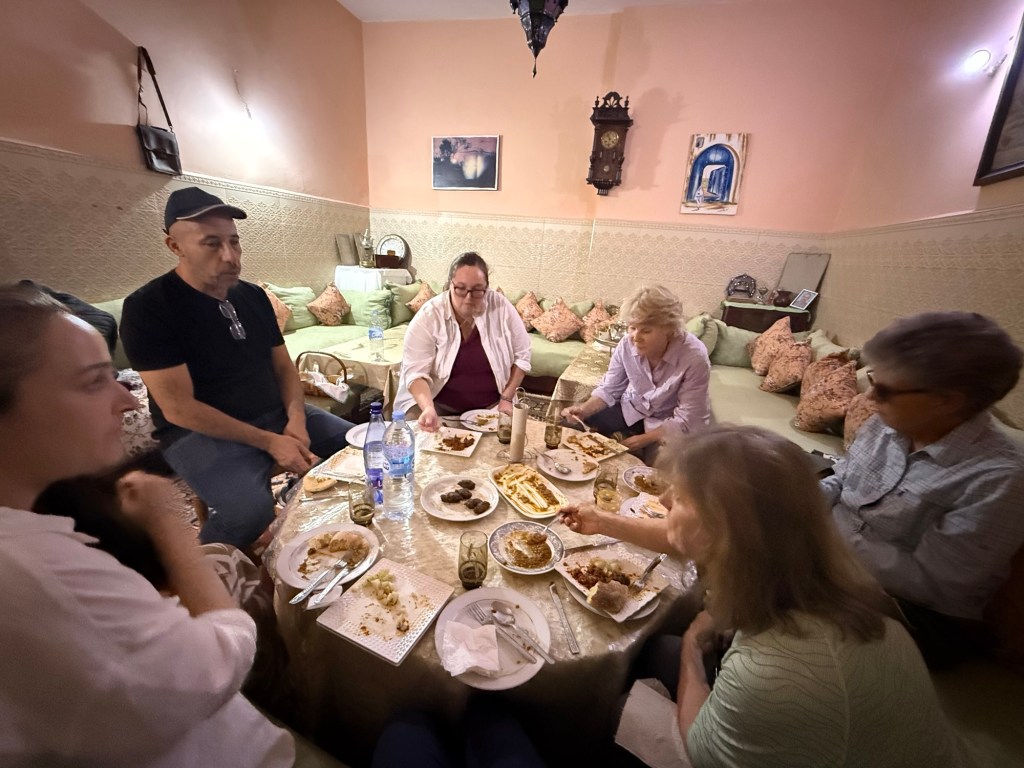
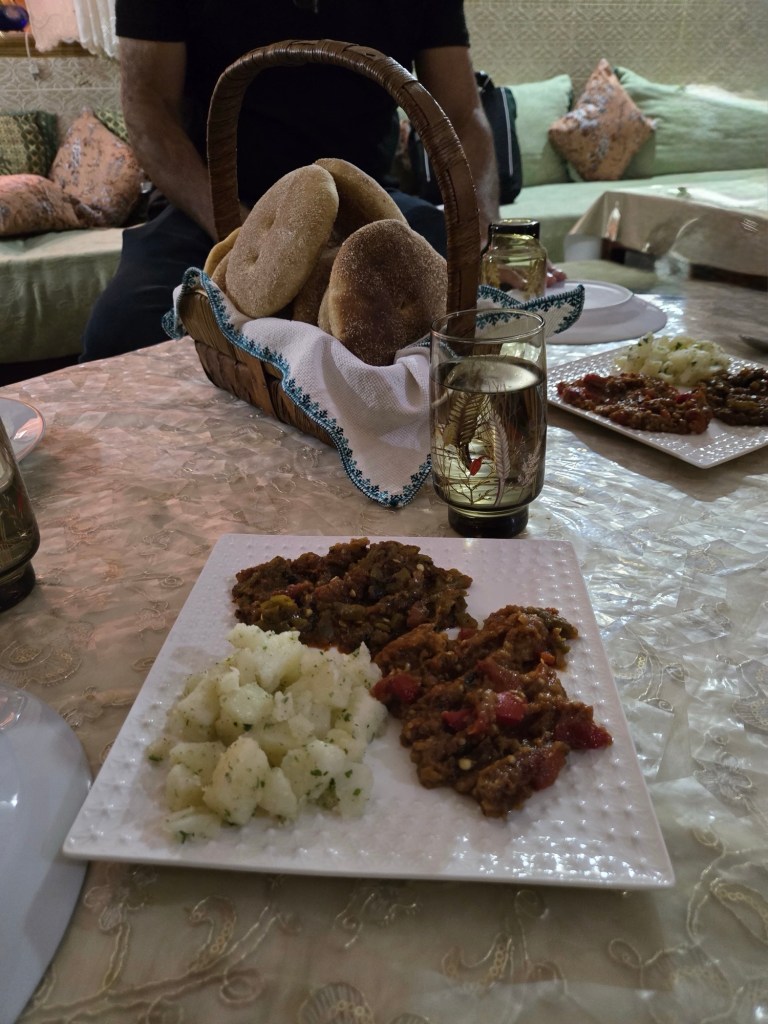
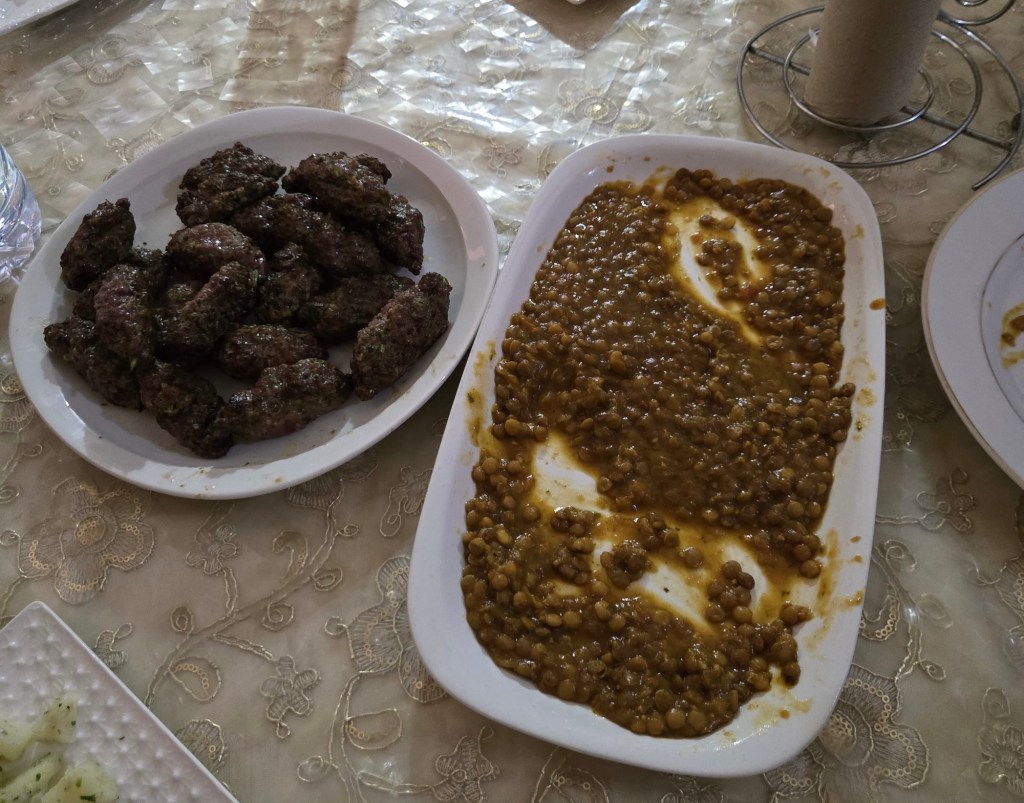
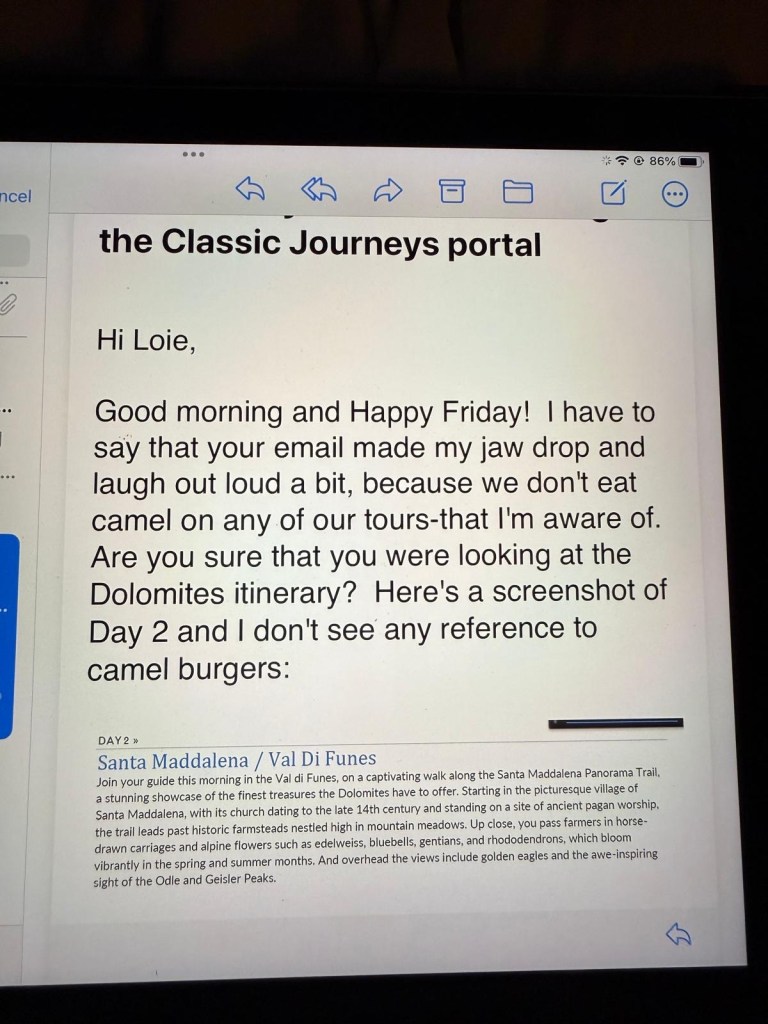
Meknes is known for its imperial past, with Sultan Moulay Ismail making the city his capital in the 17th century. Here Youssef led us through the old medina to a private house where our host Hassan provided us with a delicious lunch of salad/ dips with bread including zaalouk (eggplant and tomatoes), potato with cilantro/coriander and taktouka (green peppers and tomato), a fabulous lentil and sauce dish. We (some of us) also had camel burgers that were very tasty… subtly spiced, the flavour was stronger than beef and less gamey than venison. Beth (Butt) described it as like “sweet beef”.
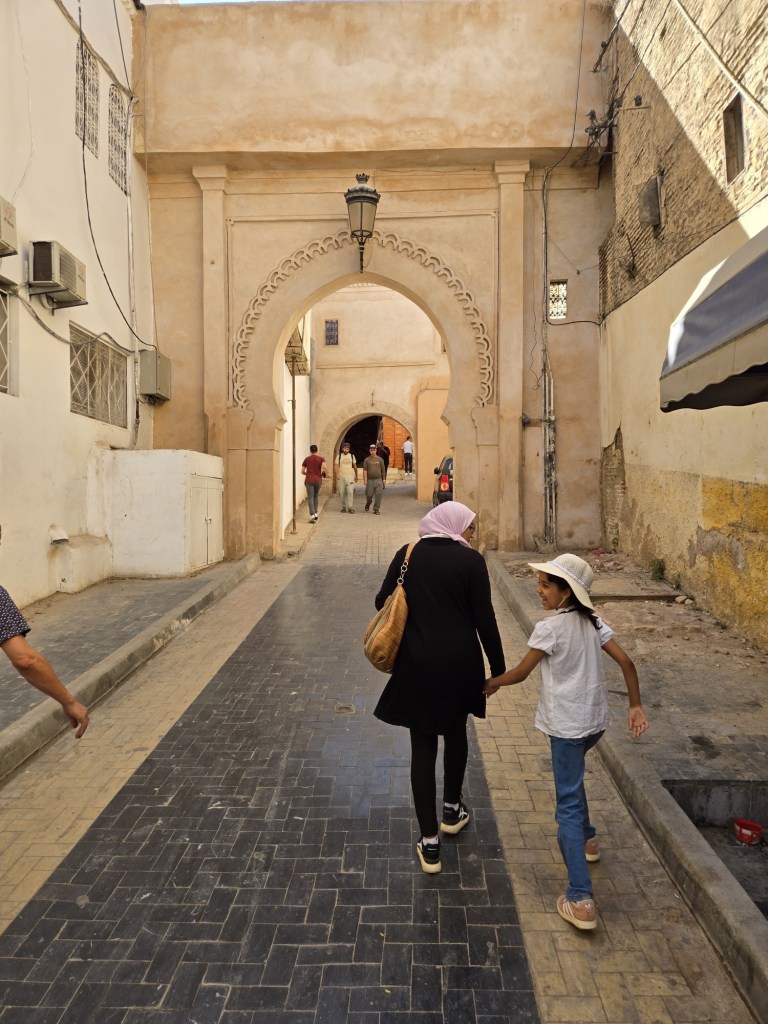
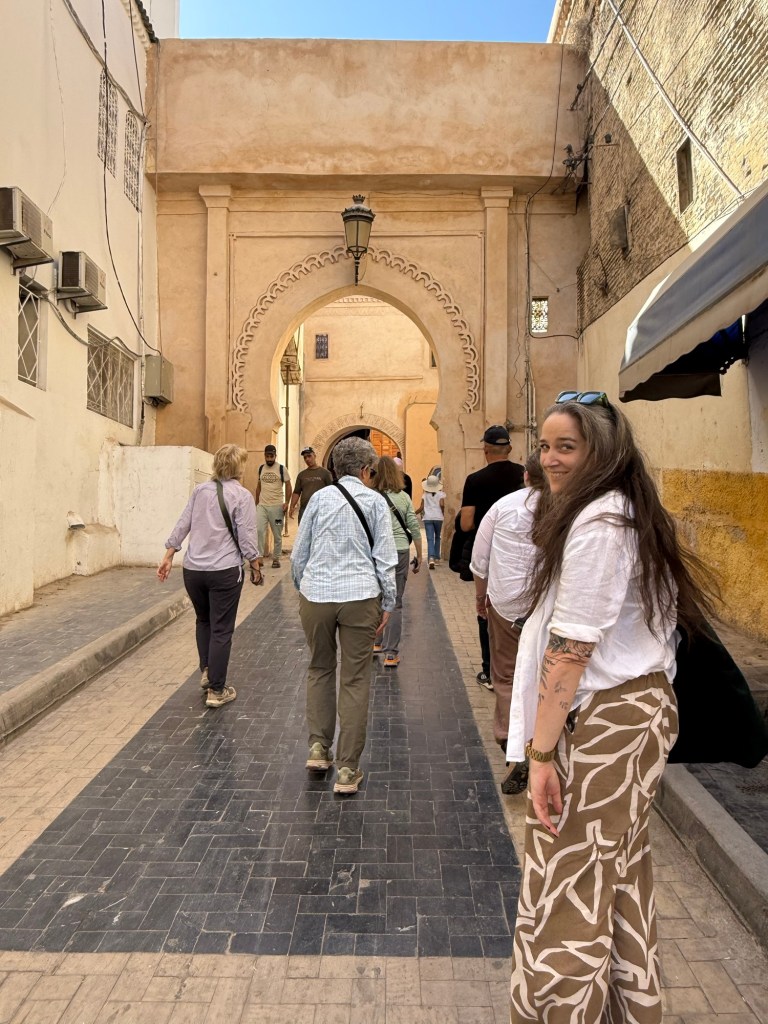
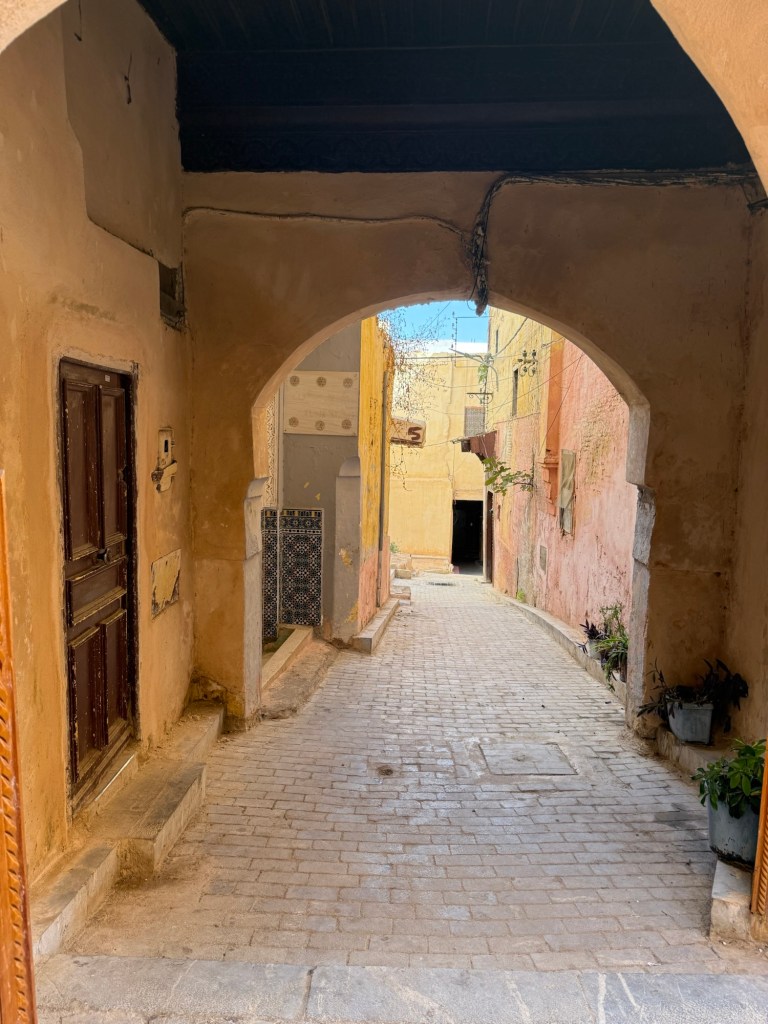

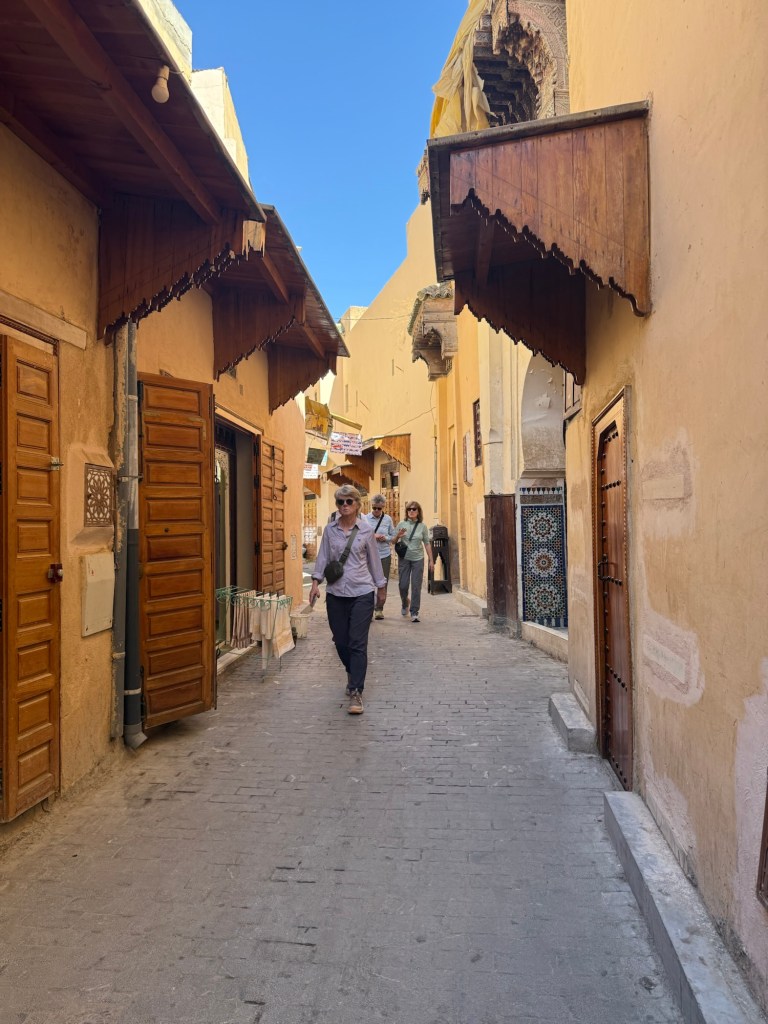
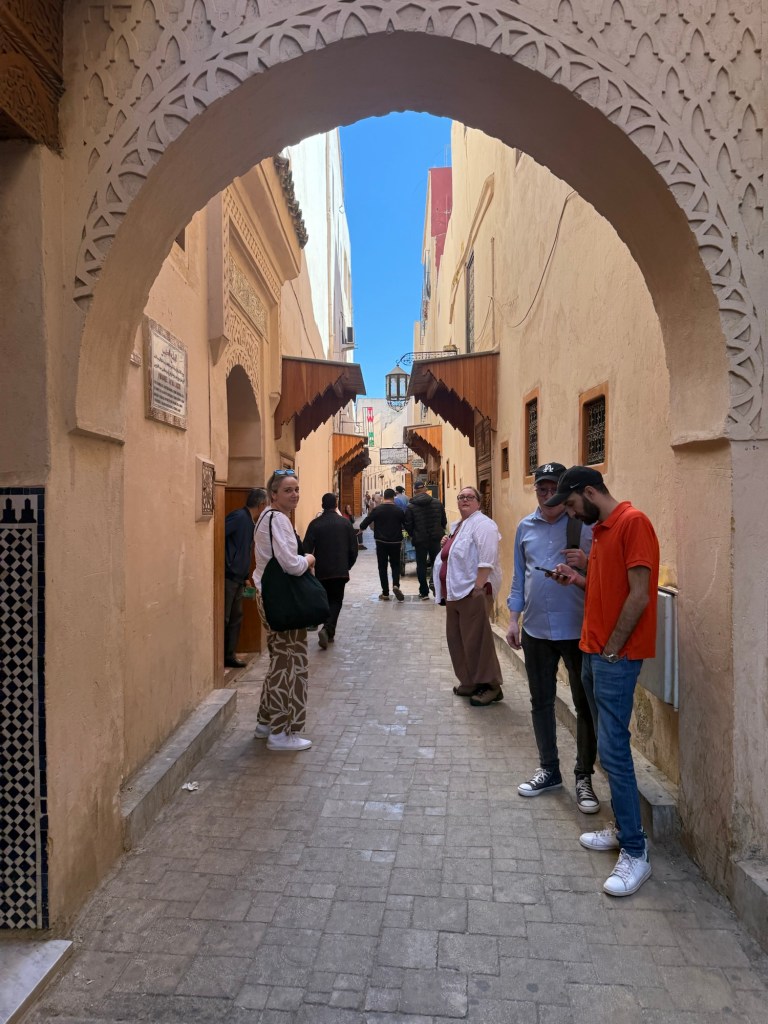
After a walk through the medina we hopped back in our cabs for a 30 minute drive to Moulay Idress.
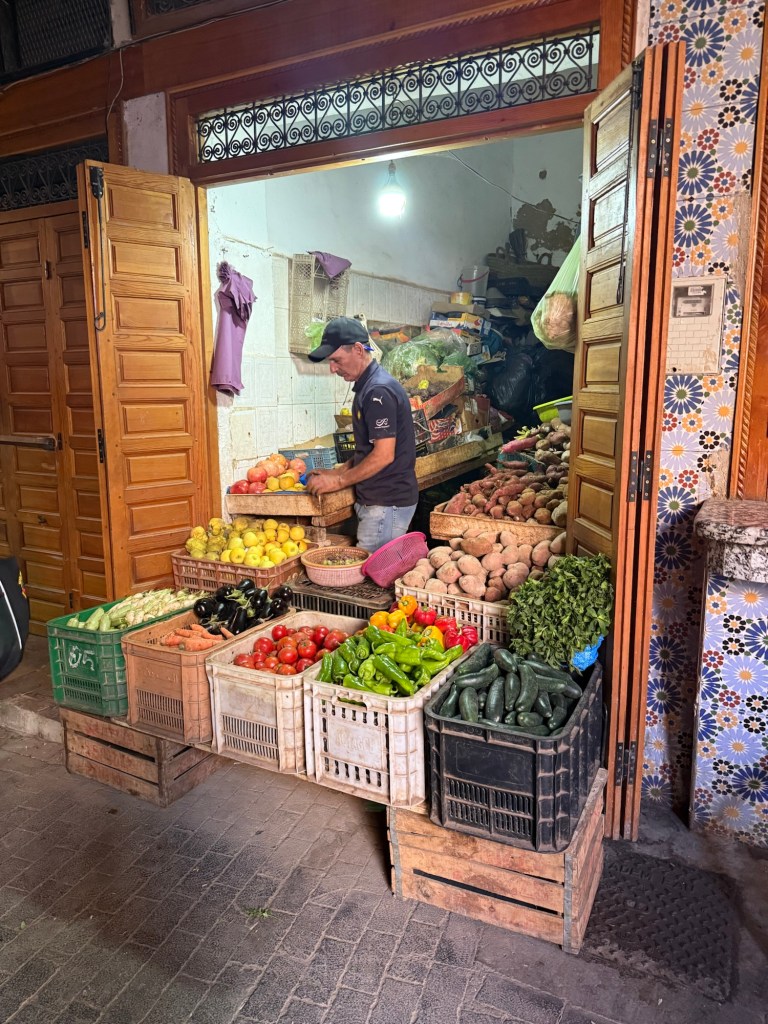

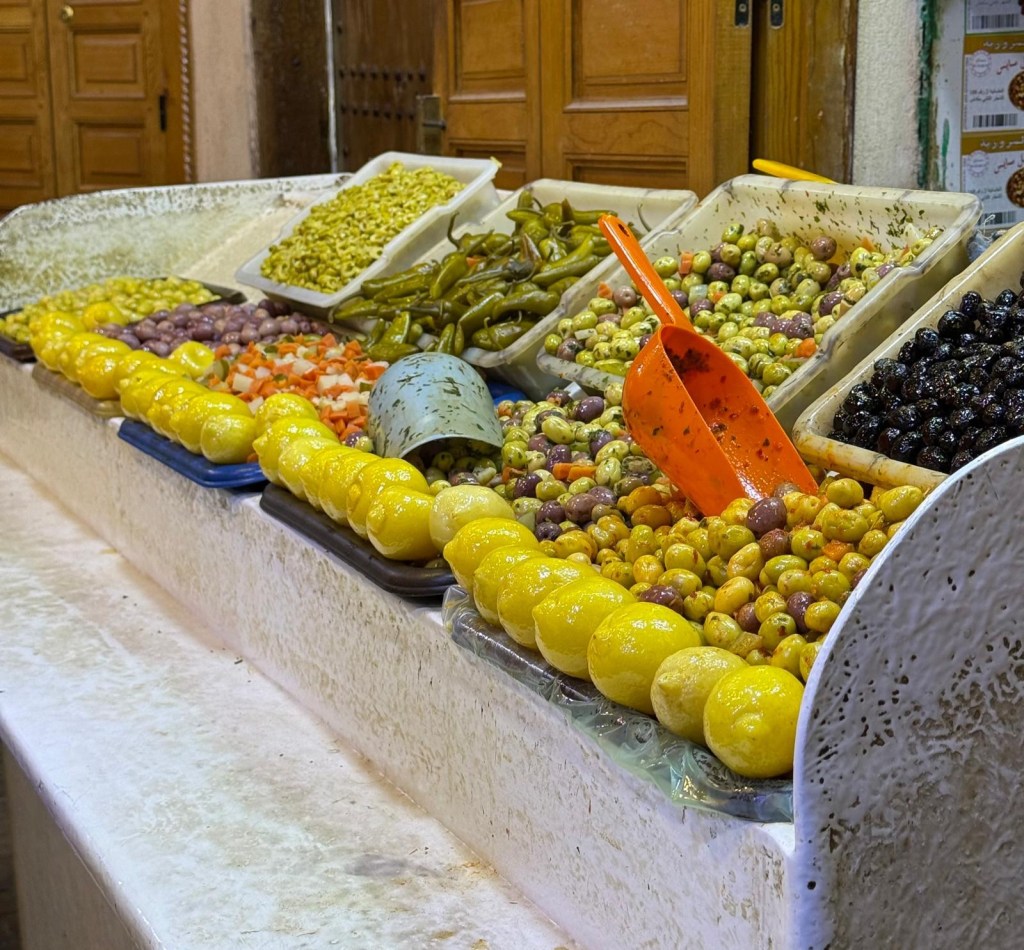
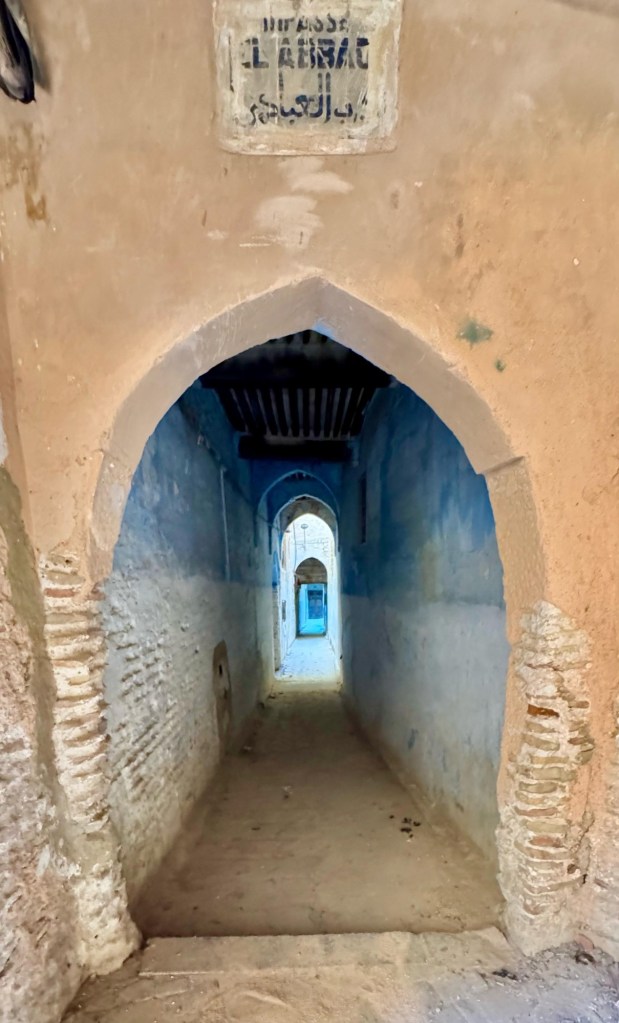
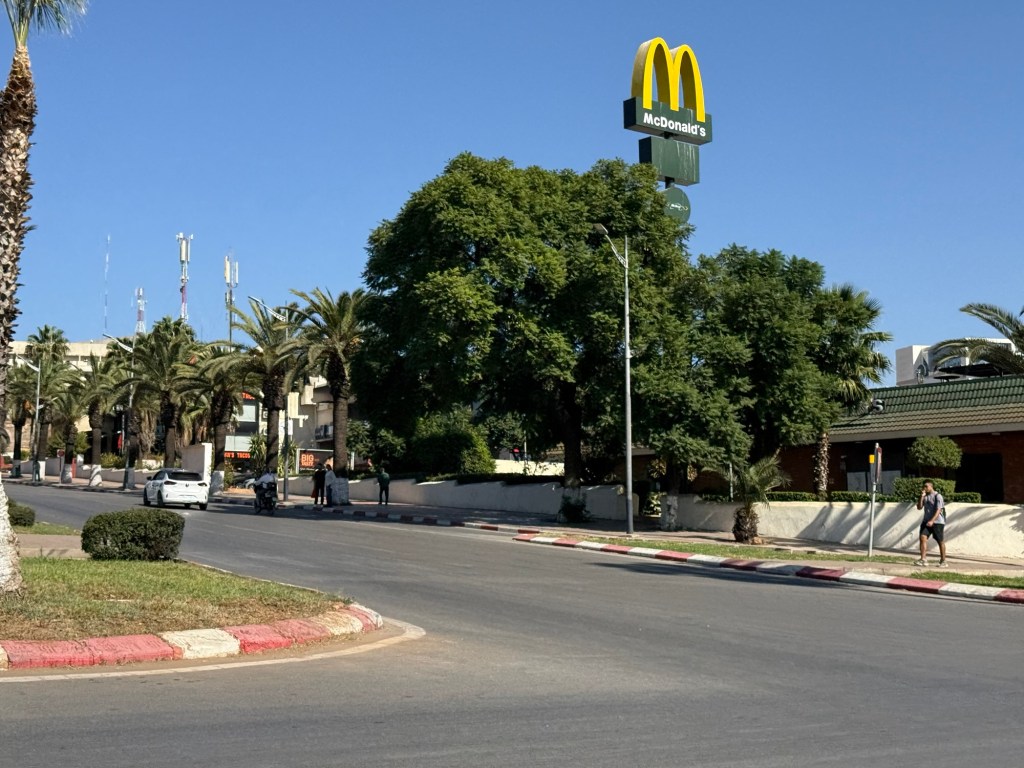
The scenery was very different to Casablanca and what we’d seen from the train… it was dryer, higher and expansive.
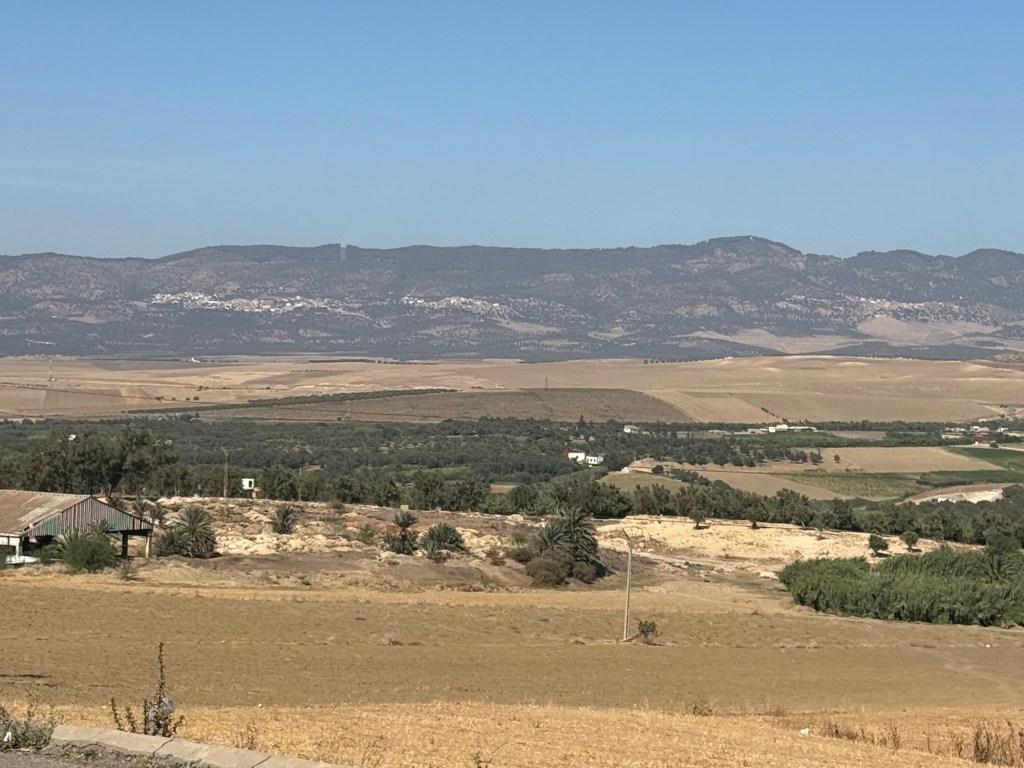
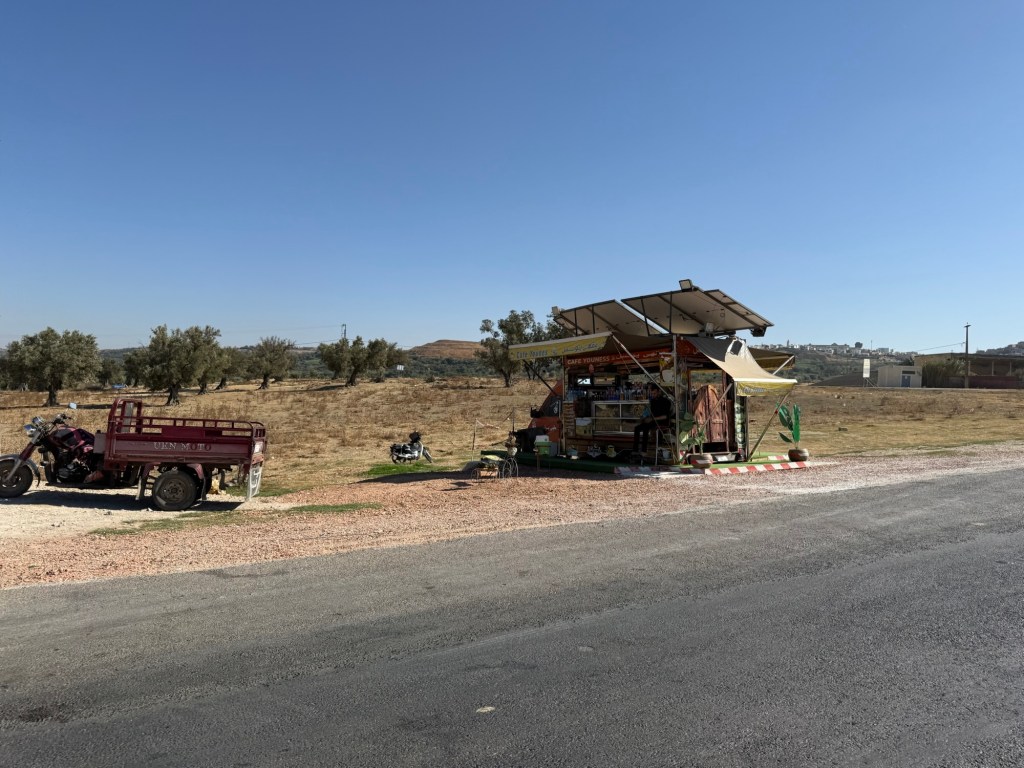
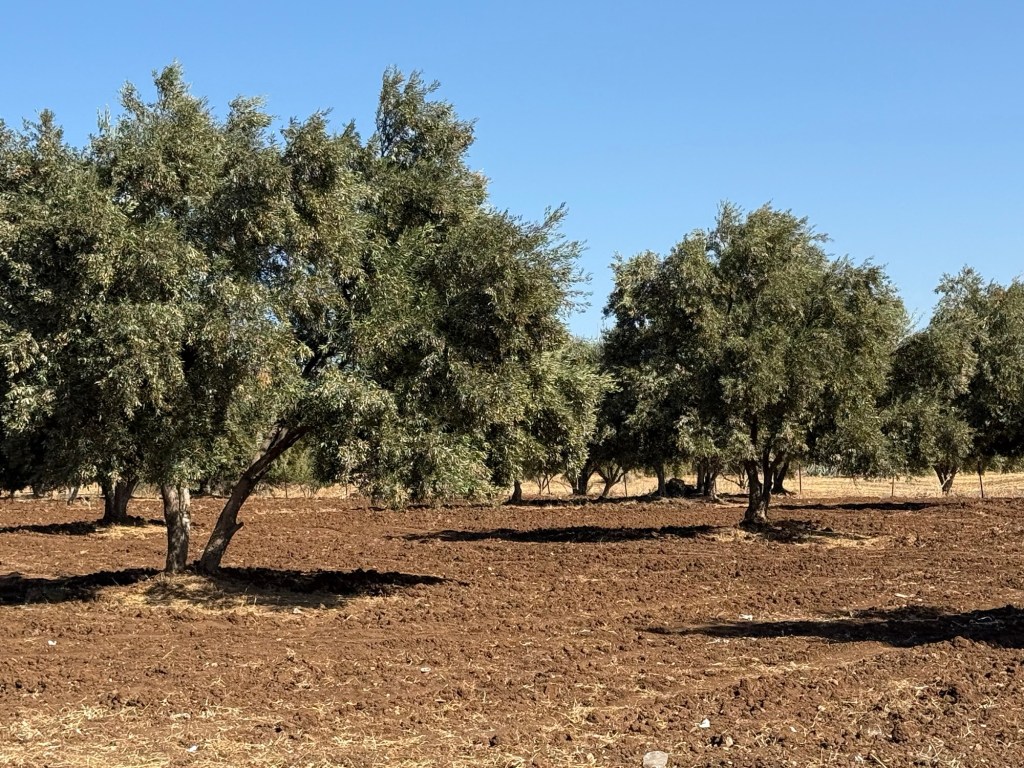
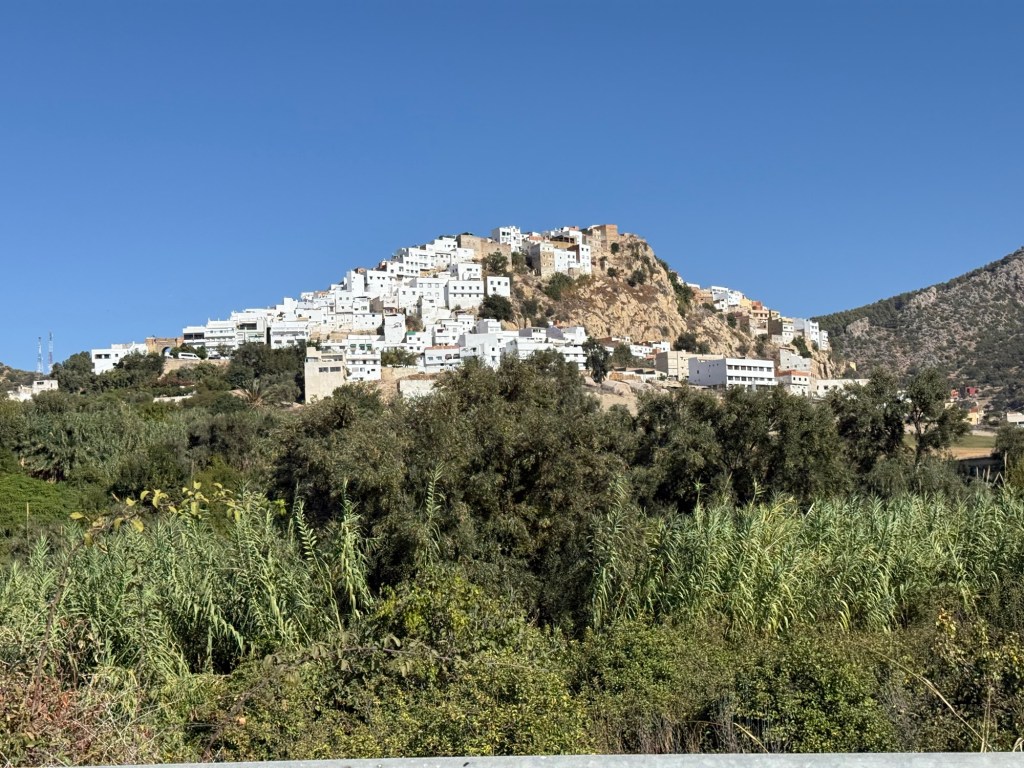
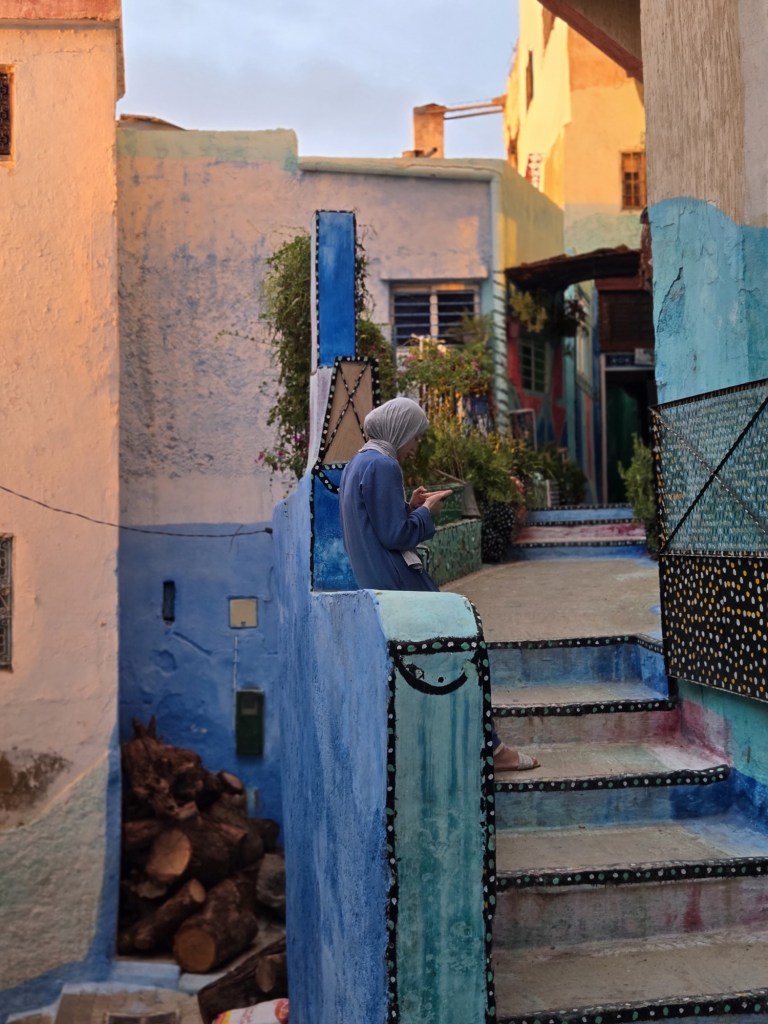
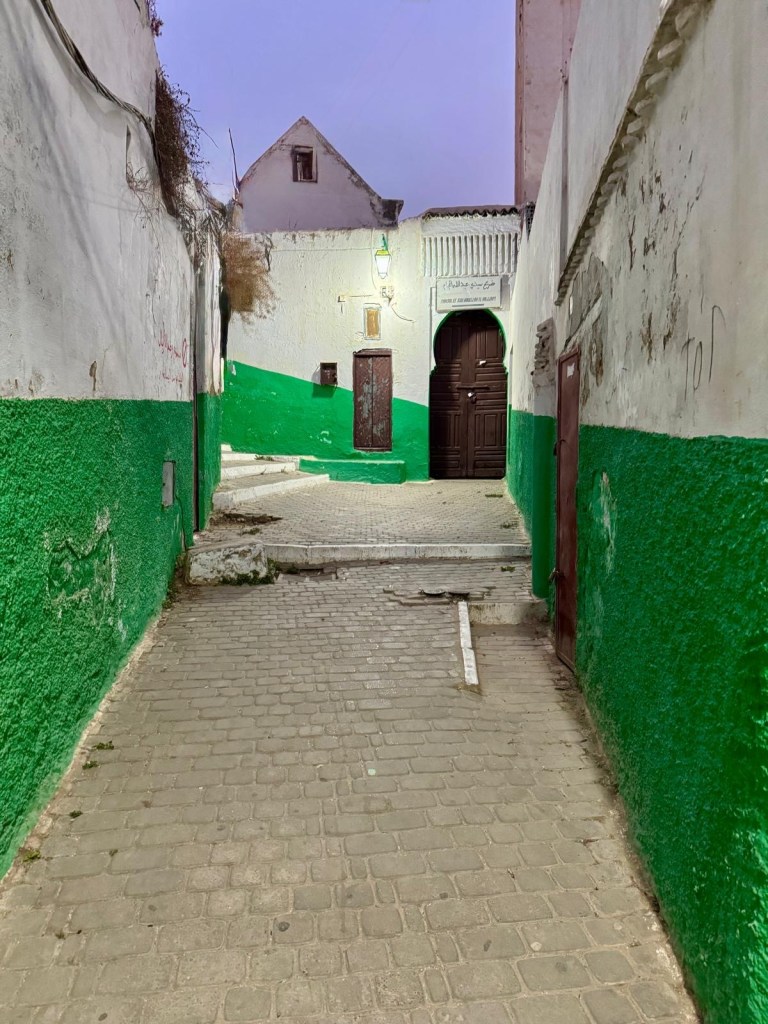
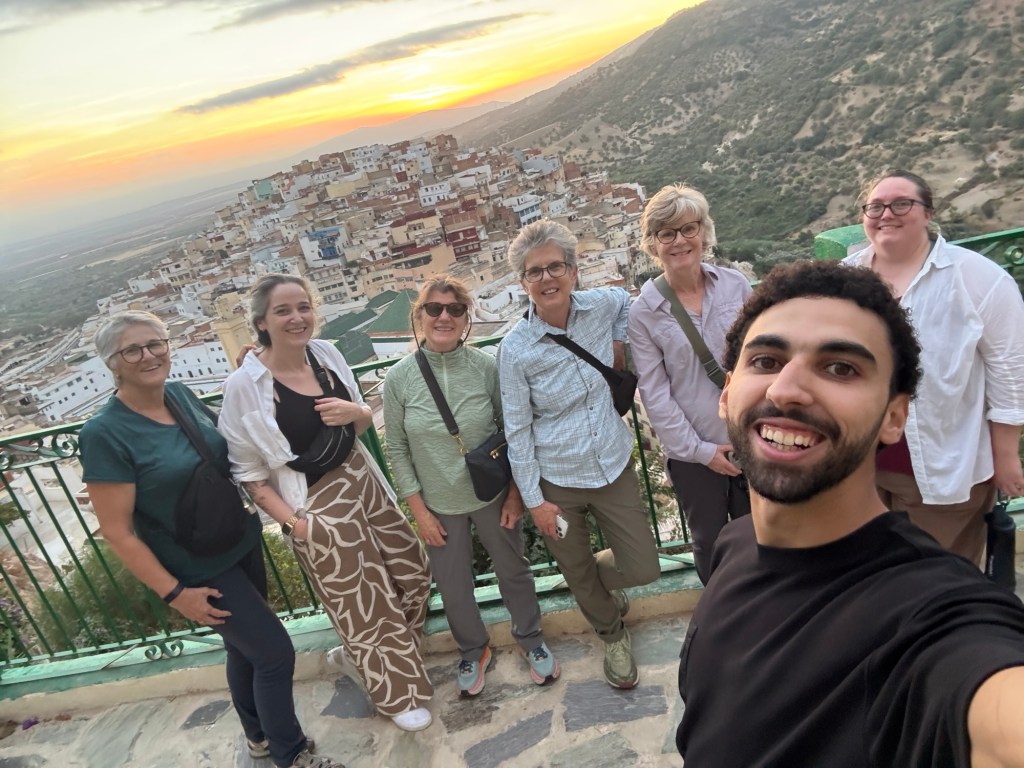
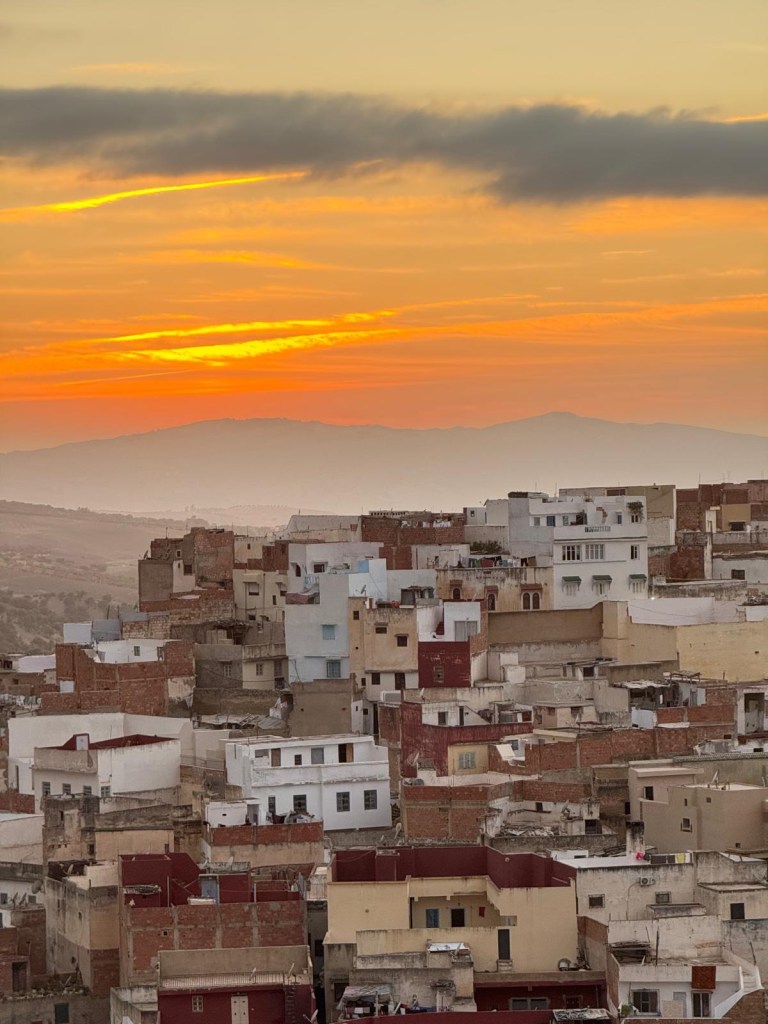
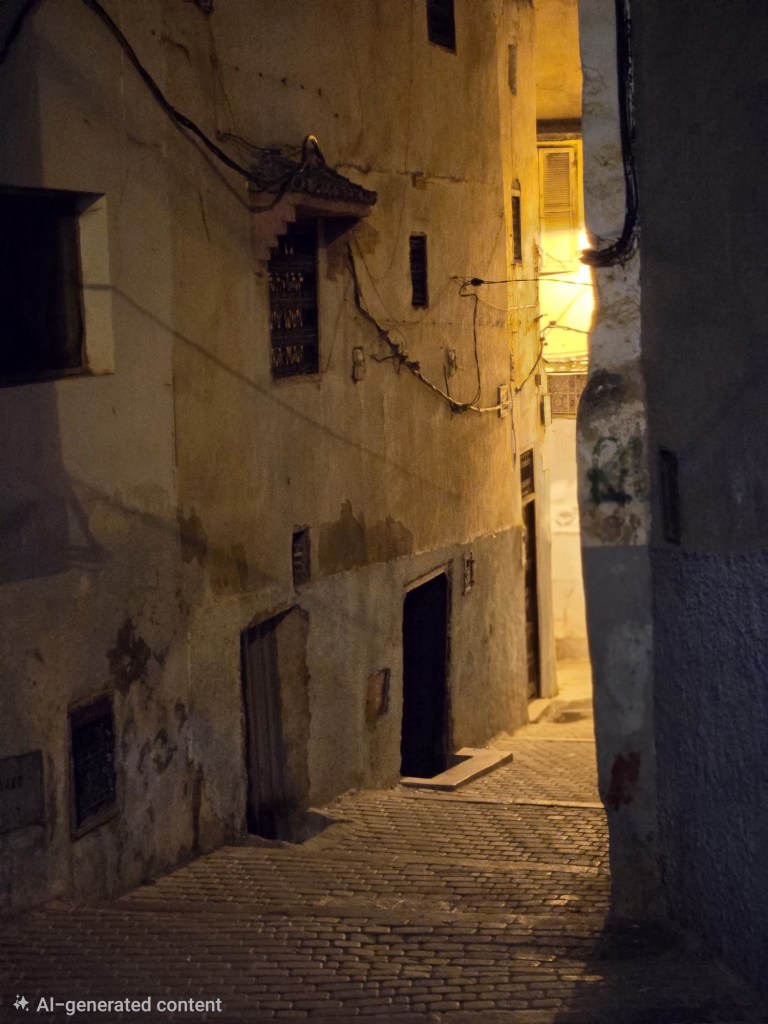
Moulay Idress is a hill top town, with lots of stairs and steep inclines. There are no cars once off the main street and deliveries are done by donkey, including our luggage.

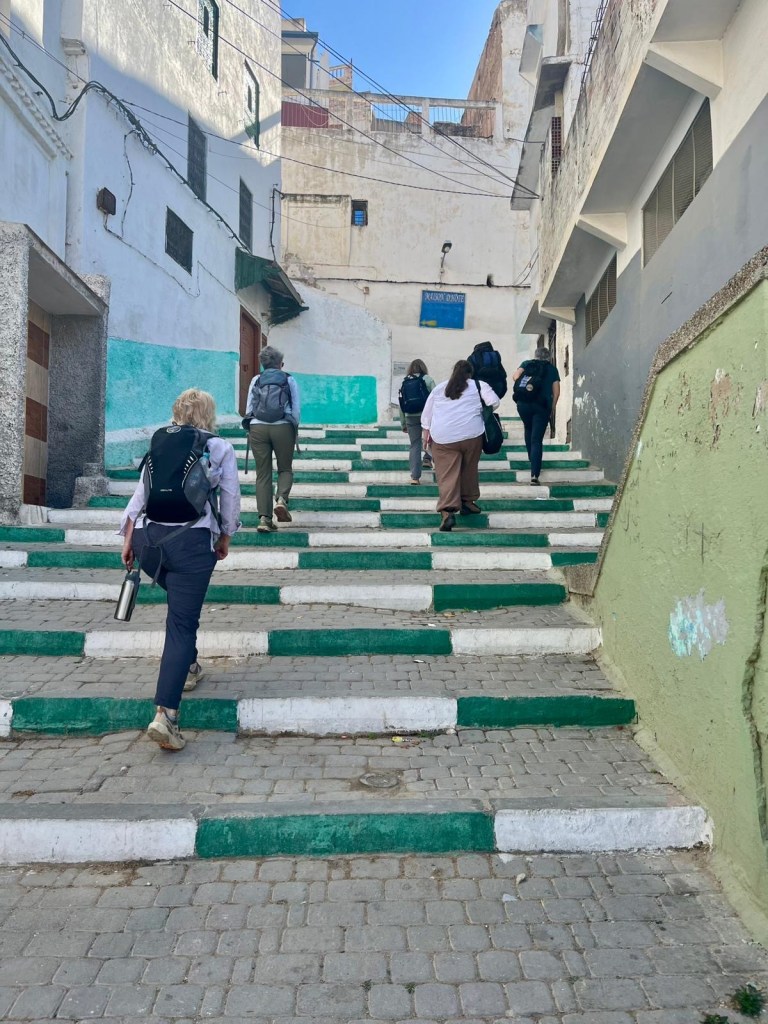
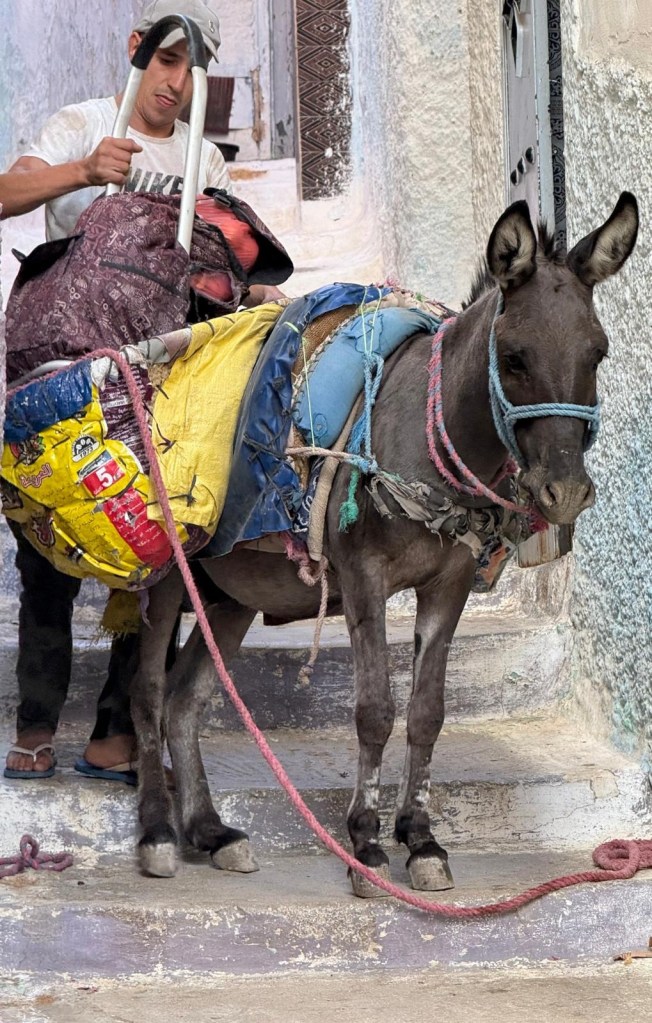
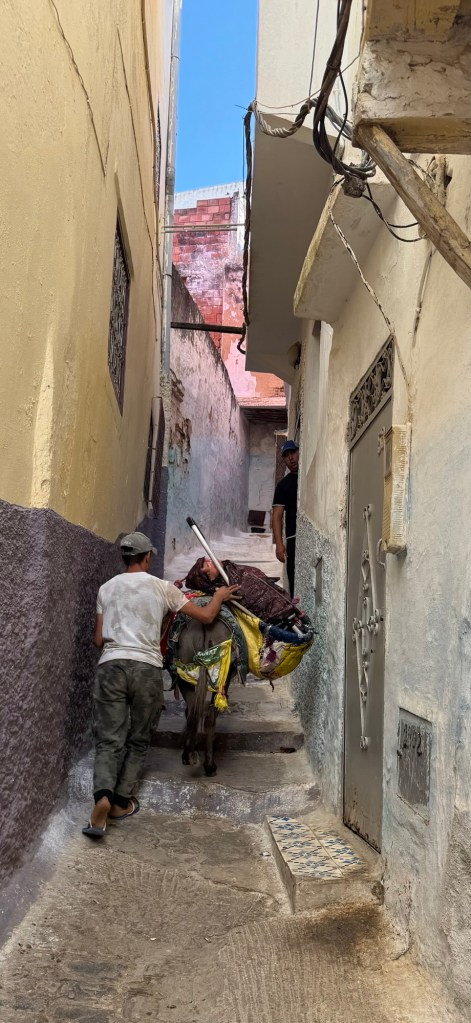
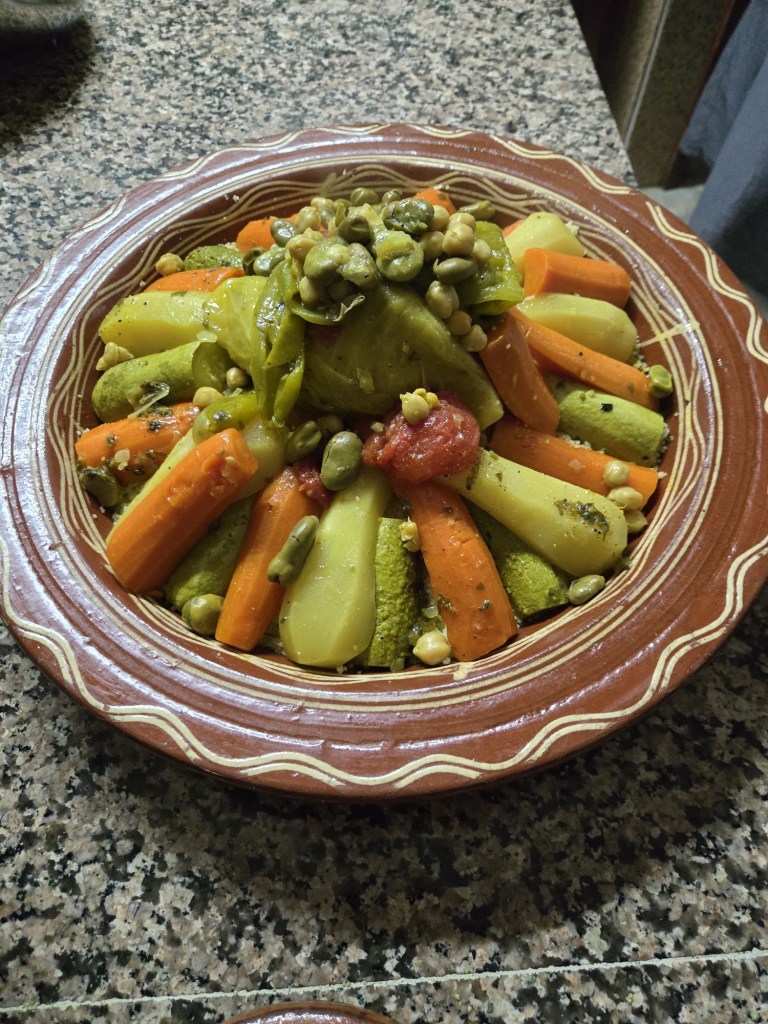
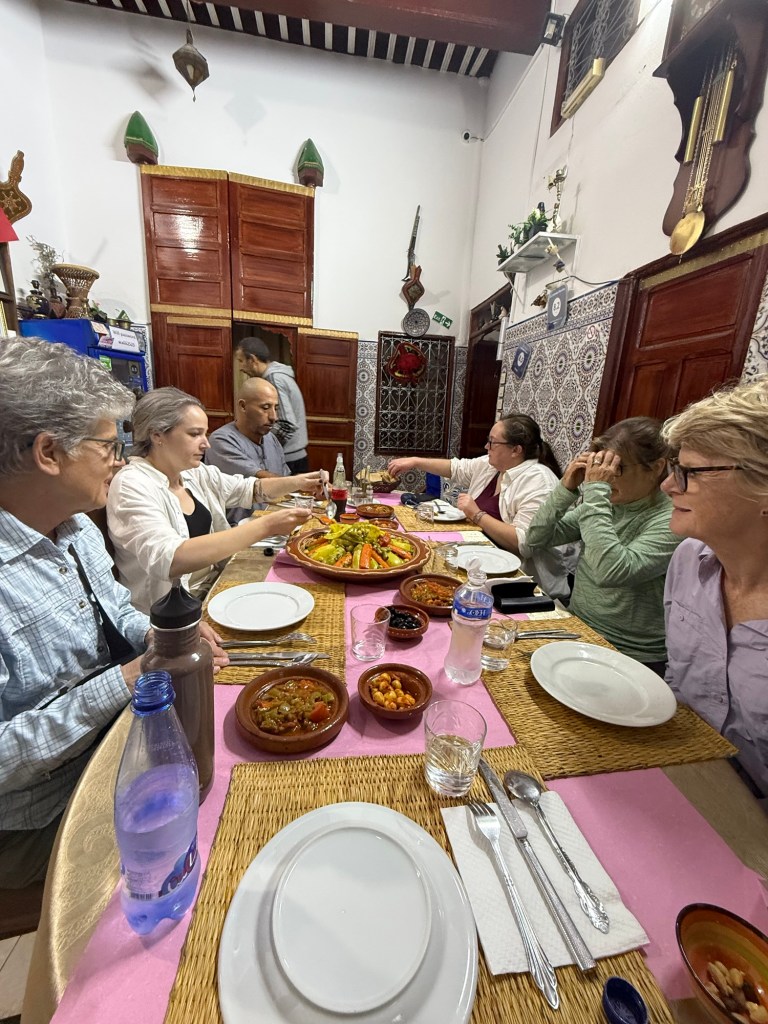
After a warm welcome from Ahmed and a brief rest in our rooms it was back down to the kitchen for a couscous making demonstration.
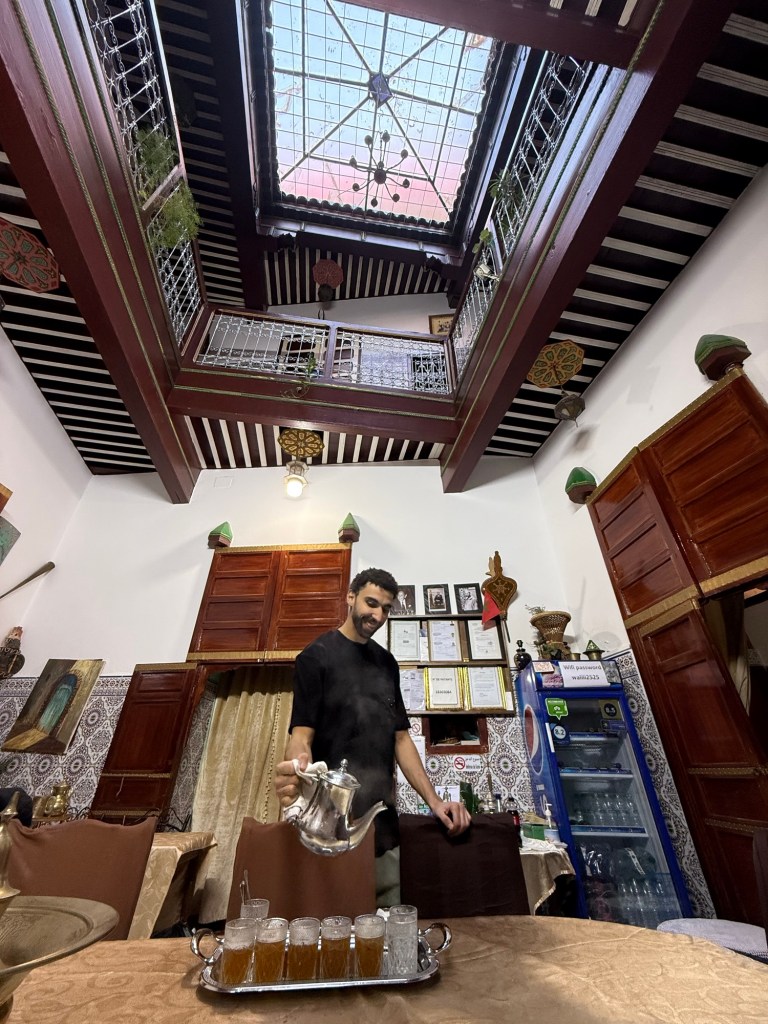
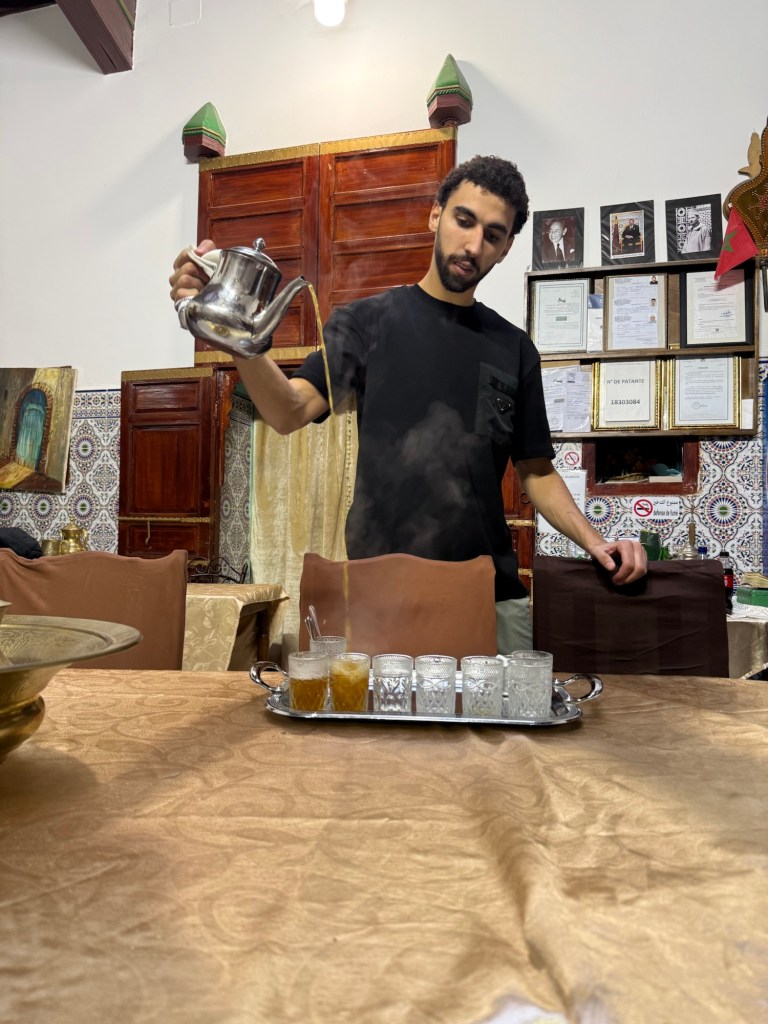
A quick rest in our rooms and then we joined Rashida in the kitchen to watch her prepare couscous properly
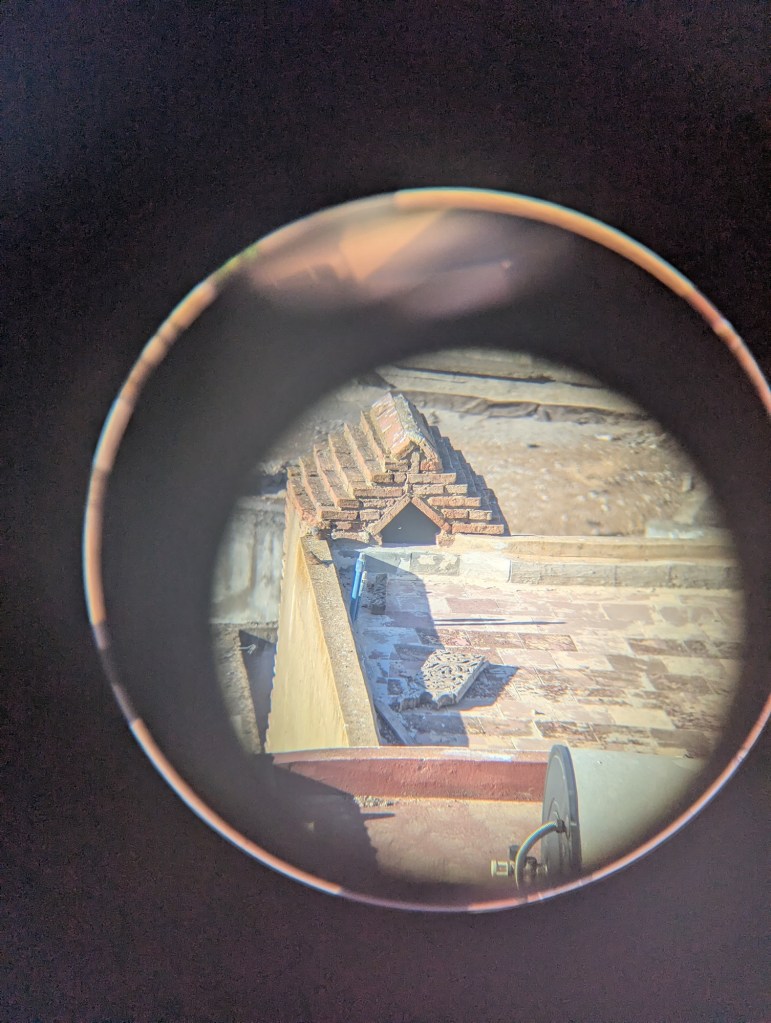

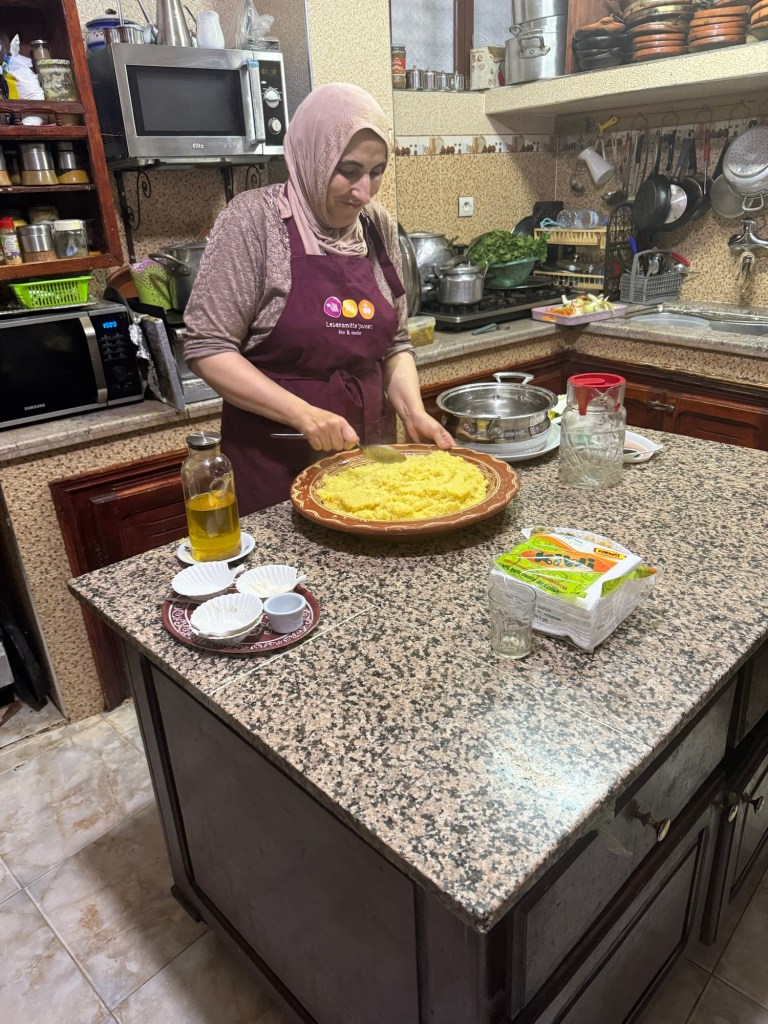
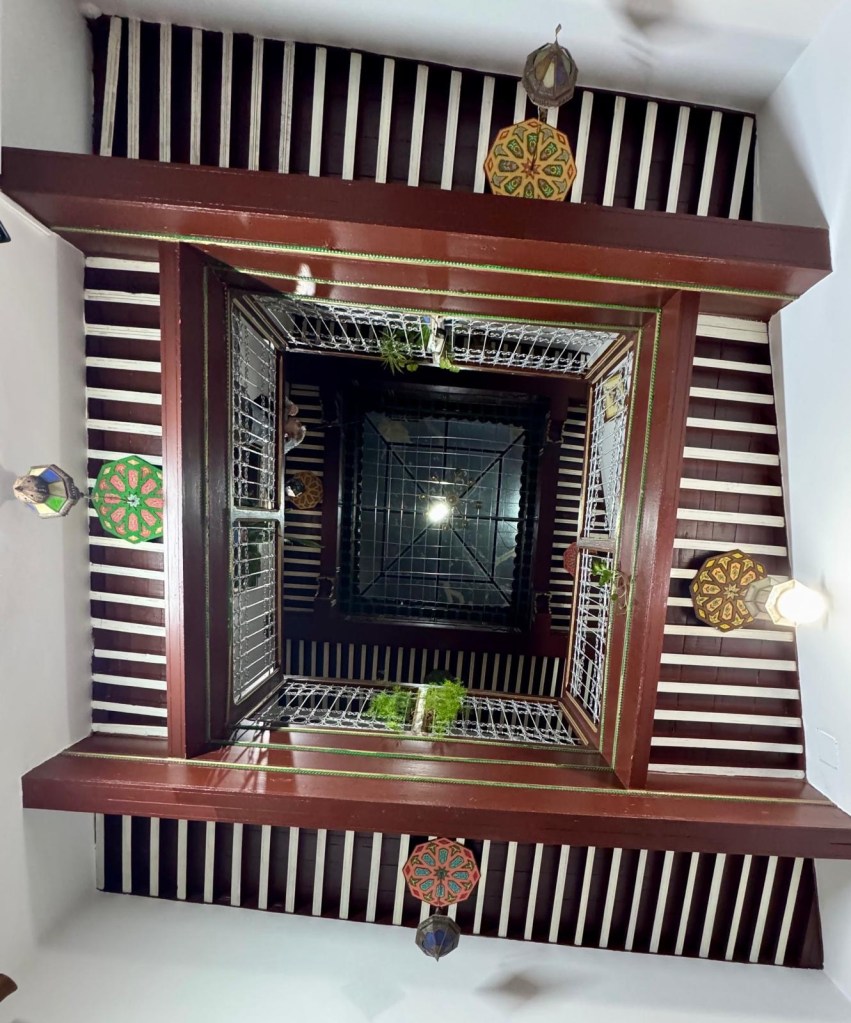
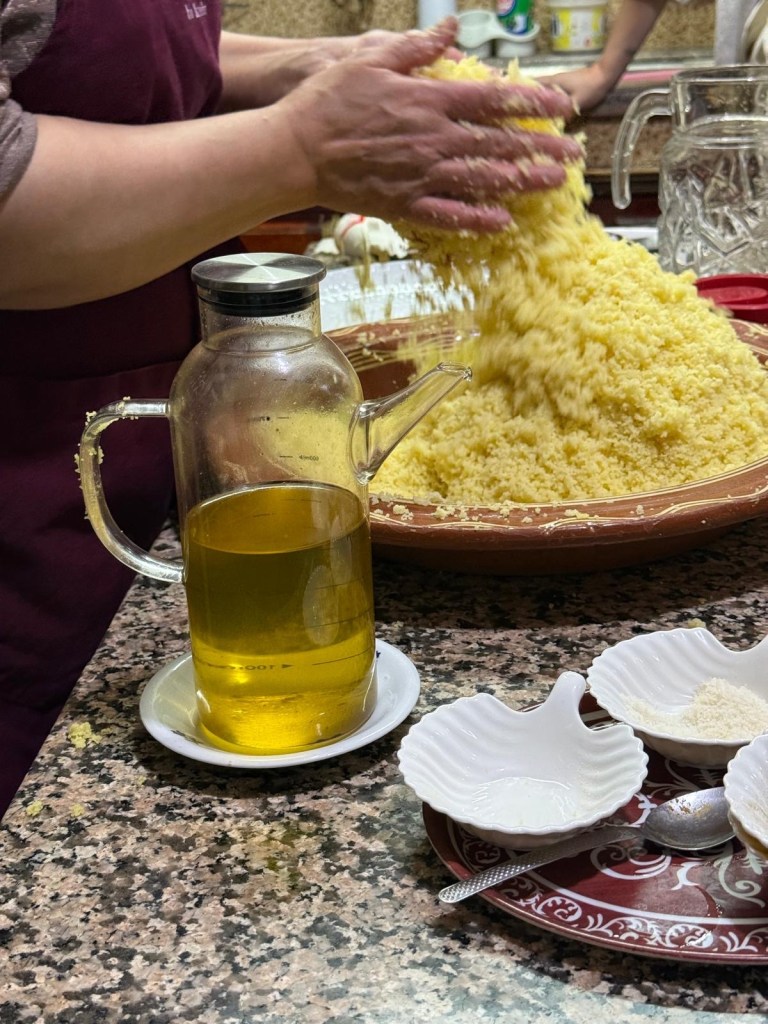
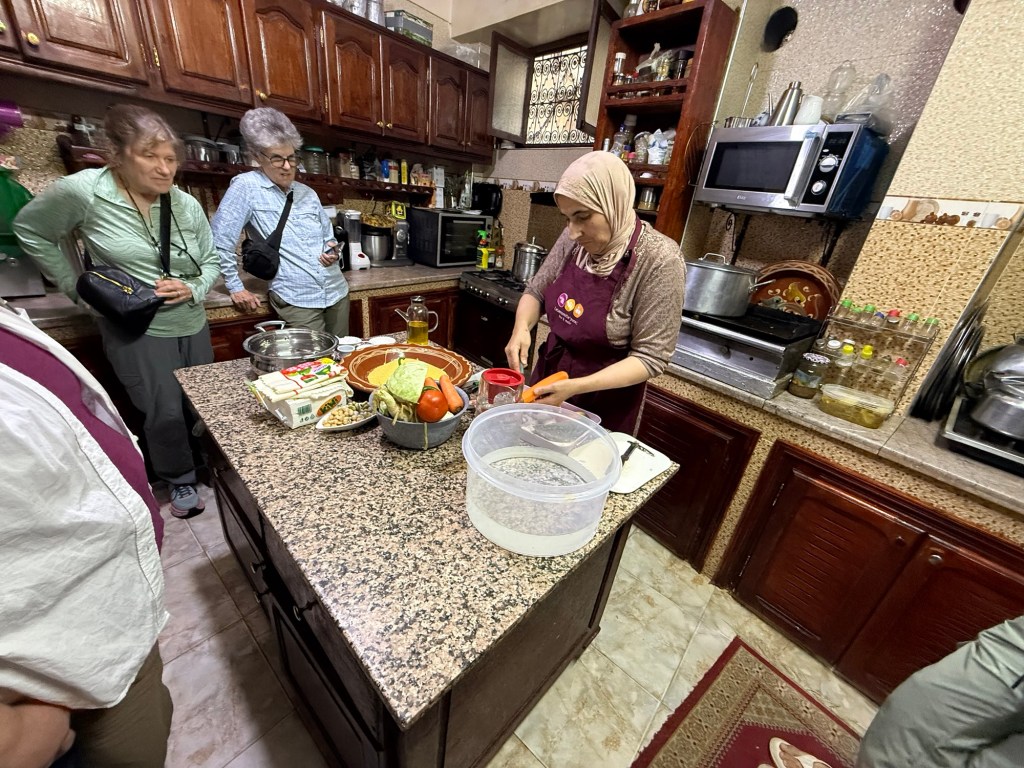
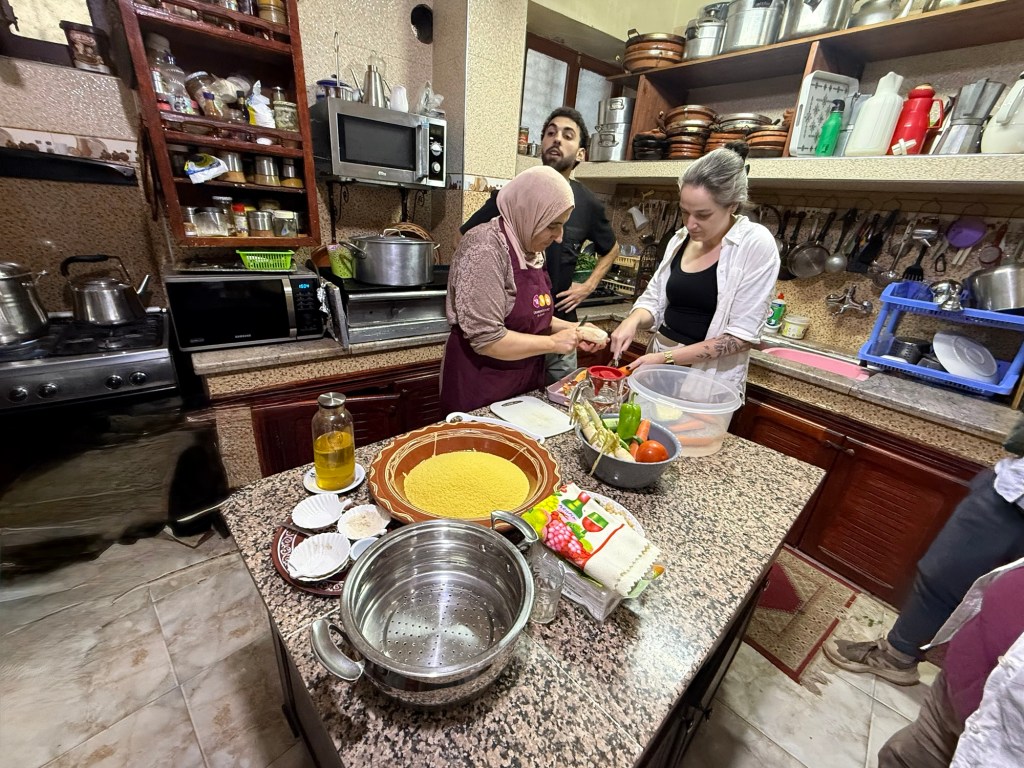
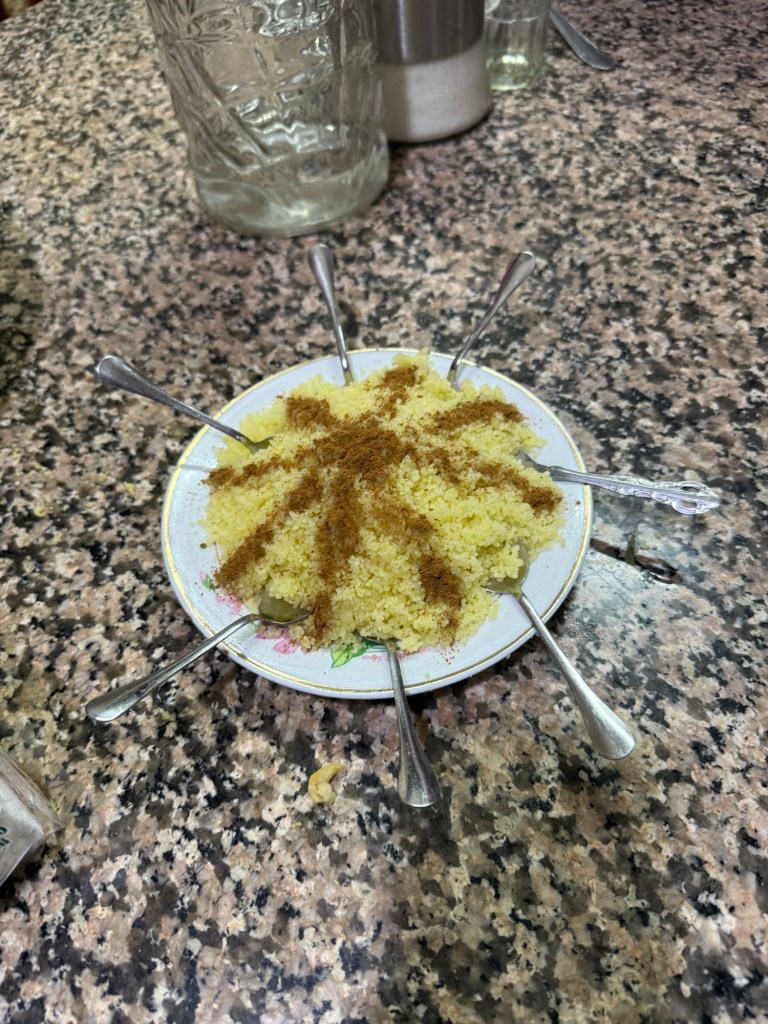
Then it was out for a walk around town while the chicken, vegetables and couscous cooked.
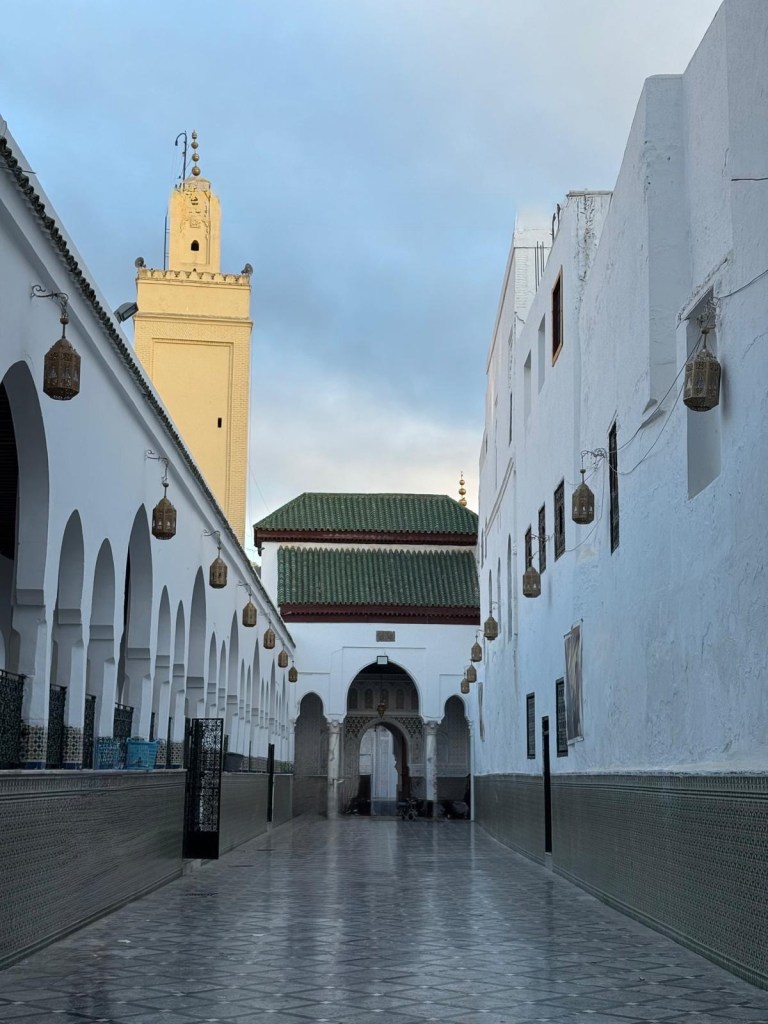
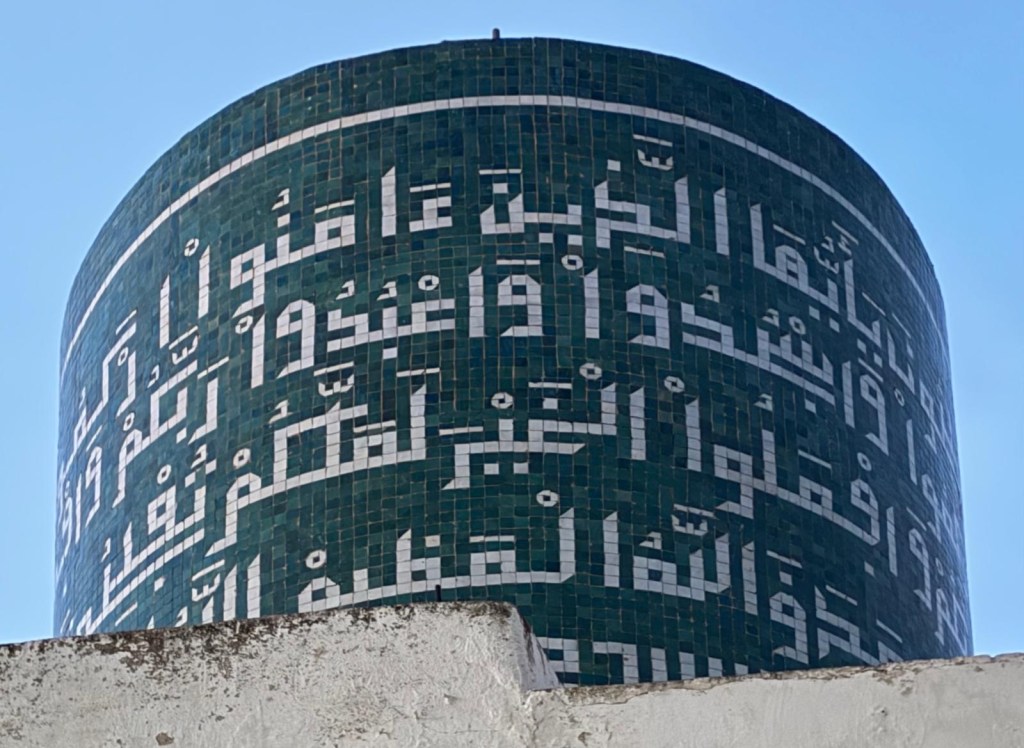
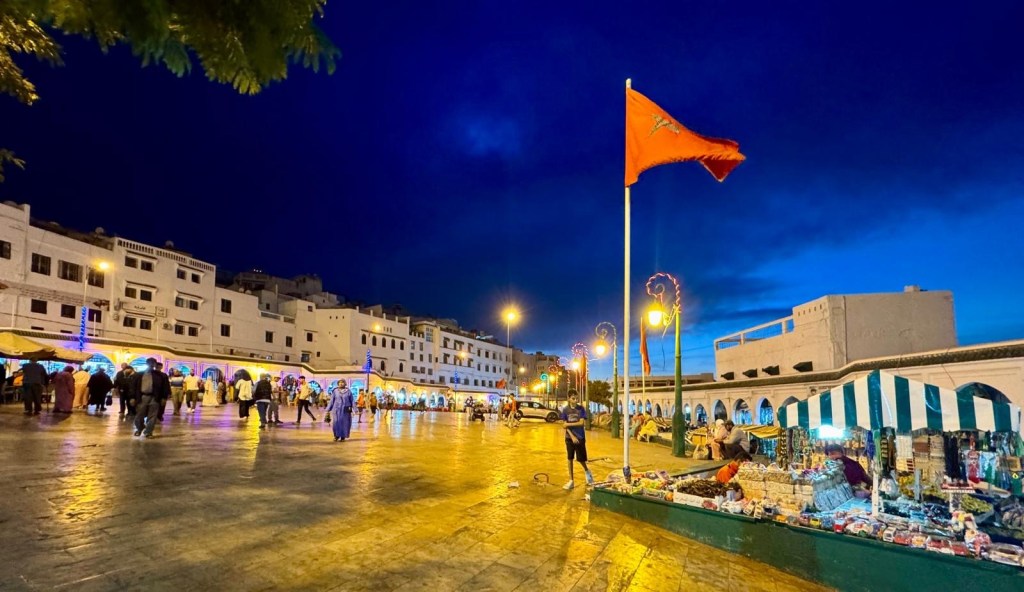
The town’s full name is Moulay Idress Zerhoun and it is sacred town considered to be the country’s most important pilgrimage site.
The town is named after Moulay Idriss I, the first Arab ruler and founder of the Idrisid dynasty, who arrived in 789 AD and brought Islam to Morocco.
The mausoleum was built by Moulay Ismail during the late 17th and early 18th centuries.
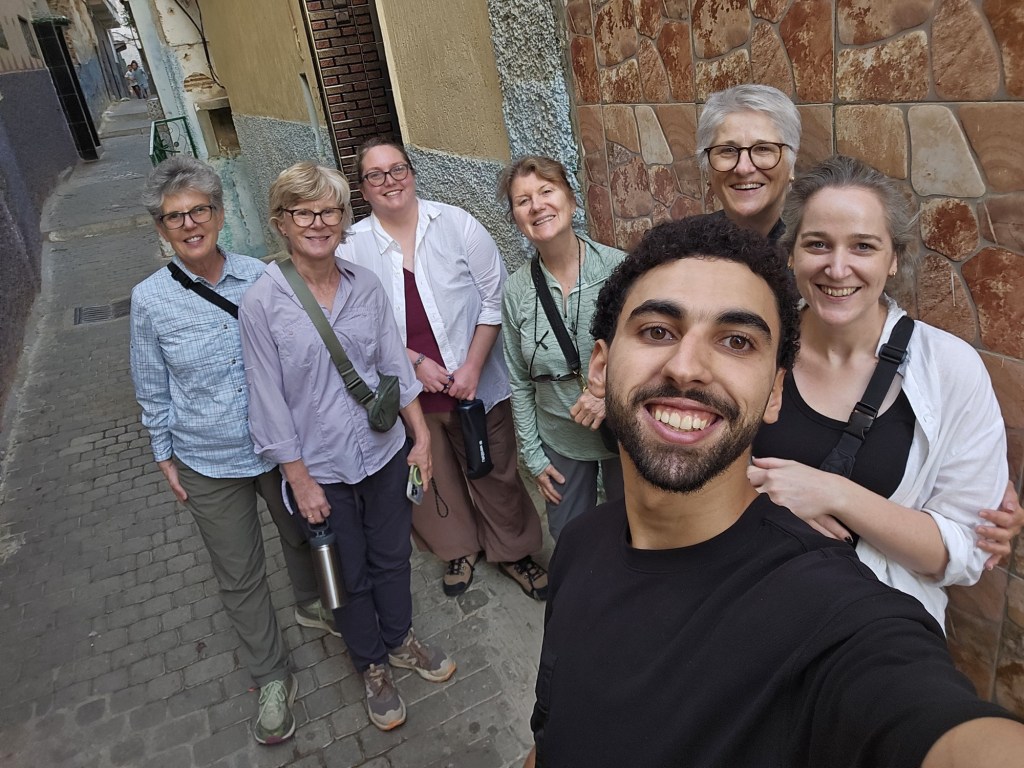

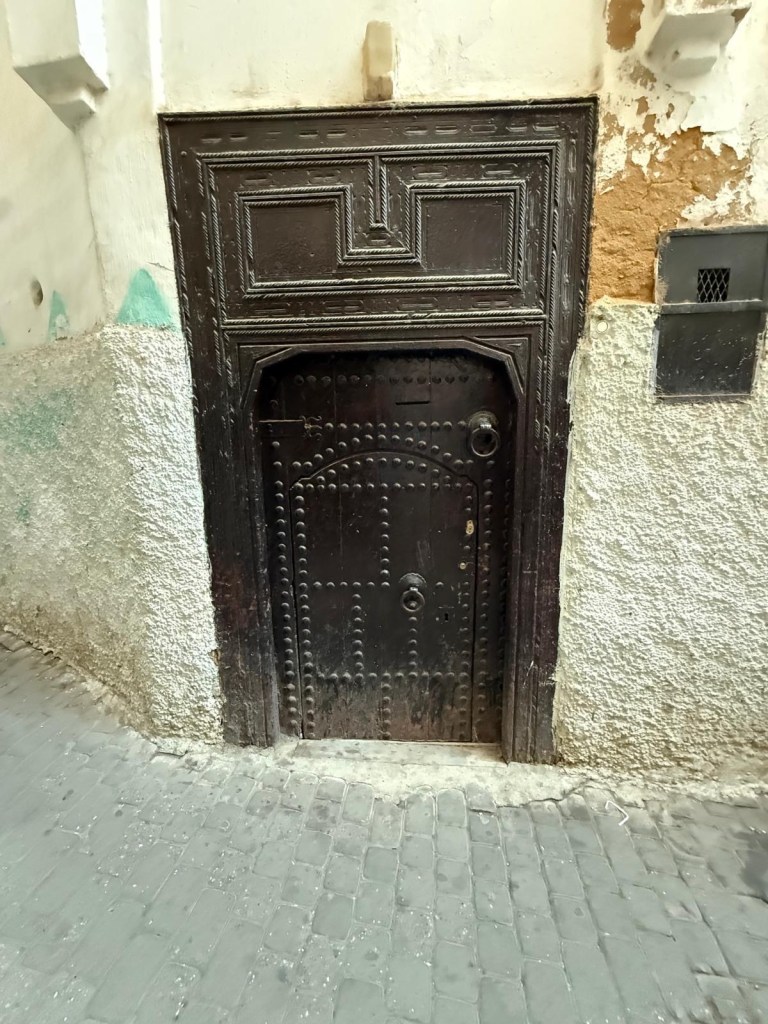
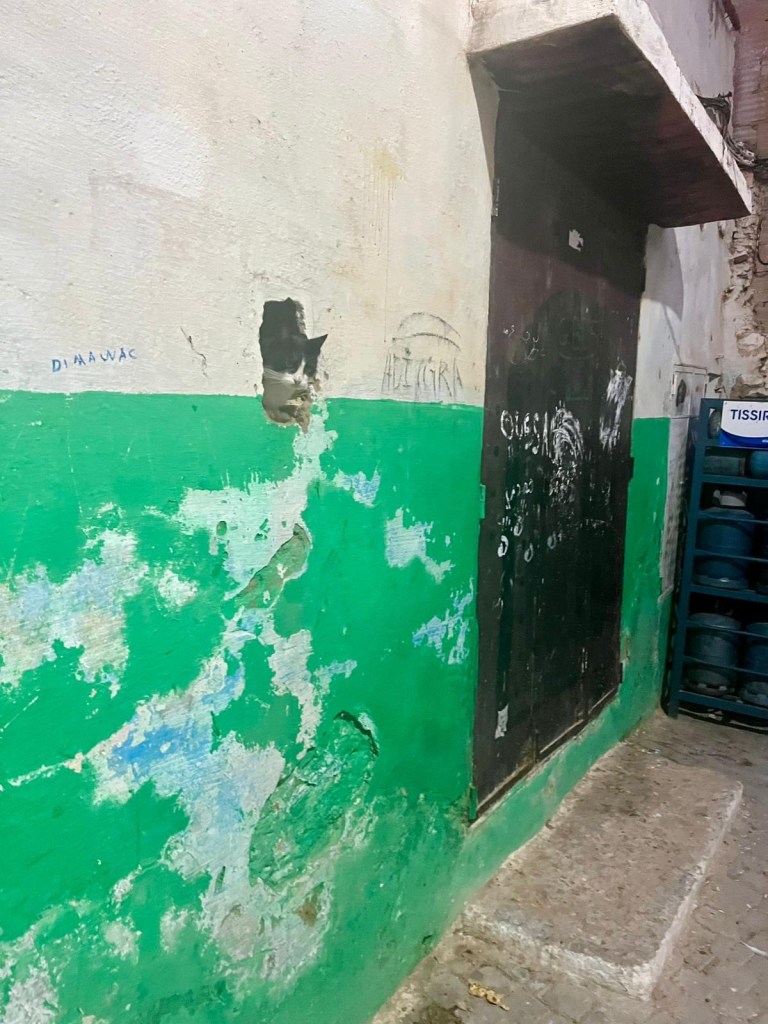
Both Youssef and Ahmed mentioned that it is important for Muslims to be modest and not showy about their wealth or status. That is why their houses are all simple on the outside, but inside they may be luxurious. Ahmed also explained that these door have two knockers and two doors. The smaller, lower one is for the family and when opened preserves the modesty as passers by can’t easily see inside. The larger, higher one is for guests and, if no men are around, flags to the women in the house that they may need to cover themselves before opening.





 Morocco Food Tour